
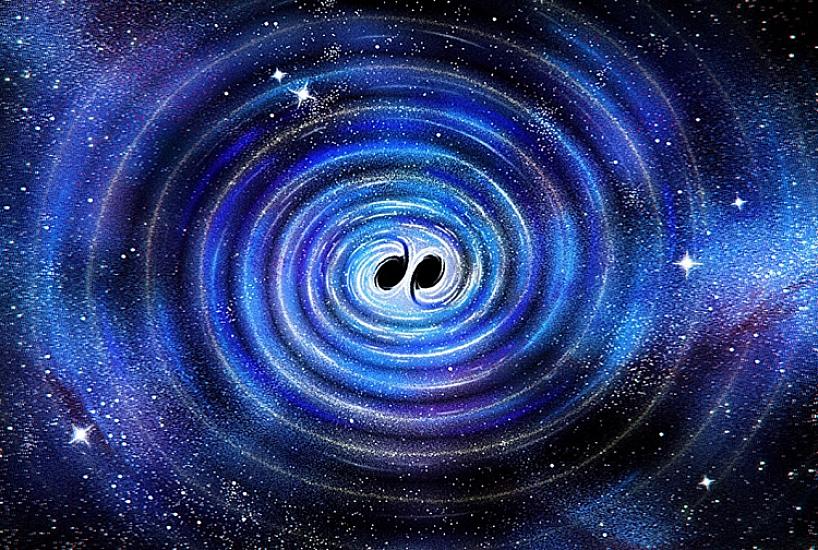
Astrophysicists at Maynooth University have proposed a new explanation for one of the fundamental mysteries of modern astronomy – how black holes could grow supermassively just a few hundred million years after the Big Bang.
Oxu.Az reports that the study was published in the journal "Nature Astronomy".
Computer simulations have shown that very dense and chaotic conditions existed in the early universe, and in this environment, even small "seeds" of black holes could grow at an abnormally high rate.
According to the study leader, Maynooth University postgraduate Dakshal Mehta, the first black holes formed just a few hundred million years after the Big Bang experienced actual "feeding frenzy" by swallowing surrounding matter faster than previously thought possible.
The high density of gas in early galaxies allowed these rapid growth phases to occur repeatedly, resulting in black holes that became tens of thousands of times heavier compared to the mass of the Sun.