
As Donald Trump intensifies his threats to apply force against Iran, thoughts about a US-Iran war being imminent are growing stronger. However, a divide persists within the White House between those defending the advantages of military intervention against Iran and strategists forecasting the problems that would arise.
Inside Iran, too, hesitations are visible between preparing for military confrontation with the US and conducting negotiations with Washington in parallel. However, at the current moment, Iran prioritizes reaching agreements with the US.
Firstly, Iran will not have favorable maneuvering capabilities in a potential war scenario due to its weakened geopolitical position.
Iran can respond to any US attack by striking Israel, as well as US military bases and other targets in the region. However, the axis of resistance, which ideologically complements Iran’s armed response and provides additional power support to Tehran, has been neutralized. This limits the multidirectional vector characterizing Iran’s strategy.
Secondly, the US goal may be a geopolitical breakthrough concerning Iraq, as Iran remains a strong hand there. At the same time, the US demands that the Iraqi government carry out a reliable and open fight against Iran-backed proxies. Iran is cautious about involving the Shiite movements under its control in Iraq in a potential conflict, as this could be considered a red line for Tehran.
Thirdly, Iran’s passing through a sensitive period, including the outcomes of protest actions engulfing the country, faced with a wave of foreign attacks before the consequences have cooled, will create intra-elite problems for Tehran. This can mainly be assessed against the background of conflicts within Iran between those who prioritize negotiations with the US and those who strengthen ties with Russia. From this perspective, the global power centers’ stance on protests in Iran might also have aimed to intervene in the calculations among Iran's elite and to guide them. On the other hand, the rehearsal of preparations for the post-Seyyed Ali Khamenei period in Iran poses difficulties for the regime.
Fourthly, there are possibilities of Iran's economy being further burdened by new sanctions, which could push the situation toward a more catastrophic direction.
Now, Iran is maneuvering to move out of these difficulties, with the spiritual elite led by Seyyed Ali Khamenei holding tightly to their ideological base. Finding consistency among the narratives used to direct the domestic audience with the language of resistance against foreign intervention is characteristic for Iranian ideologists and strategists.
From the US perspective, the risks that attacks against Iran could create are analyzed. Donald Trump mostly uses the transitional period between the nationwide strikes in Iran and the potential military force application. This period shapes the US capability to prepare a new plan against Iran.
On the other hand, the US calculates that a military attack on Iran could harden the regime’s resolve within the country, where it still has a large base of support. At least, broad-scale support actions for the regime as a counter to protests are a point the White House takes into consideration.
This creates obstacles to the US delivering a comprehensive devastating strike against Iran. Keeping military threats active, the US might find it more feasible to initiate an armed uprising phase against the regime from within Iran. This phase would be a moment when the US and Israel could benefit from the Kurdish and Baloch factors.
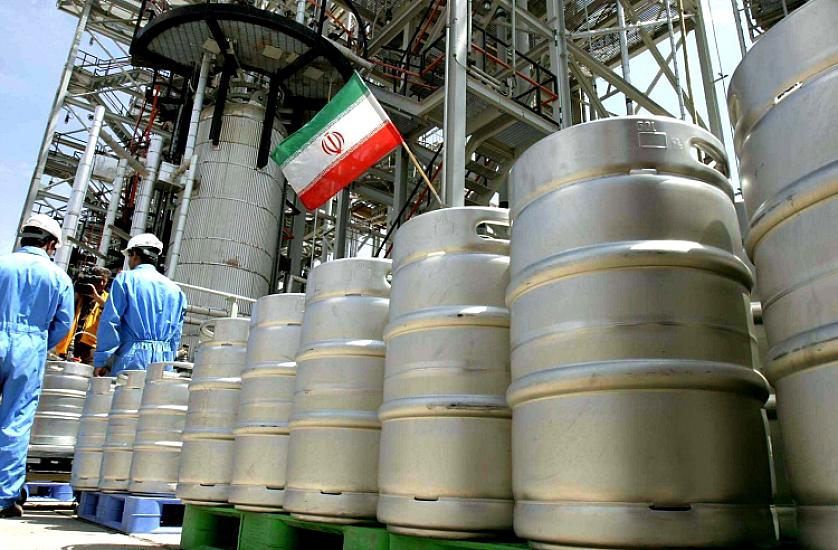
The listed factors provide both sides with excuses to avoid war, but the most important is the struggle for access to the 408 kilograms of enriched uranium Iran has obtained to acquire nuclear weapons.
It is unclear what concrete strategic story the US, Russia, Israel, and China have in this struggle. However, the nuclear factor affects the intensity and pace of the confrontation. Because of these effects, a meeting between US and Iranian officials is predictable, even though Trump tries to reject this program.
Aqshin Karimov,
Researcher at the Center for Social Studies