


The United Kingdom, Canada, Australia, India, Turkey, and Russia have called on their citizens to leave Iran. The demand by the United Kingdom, Canada, and Australia—countries represented in the "Five Eyes" intelligence alliance along with the USA and New Zealand—for their citizens to leave Iran is an indication that the probability of the USA launching a military operation against Iran in the near future is very high.
Unlike in June of last year, it can be assumed this time that Trump will continue military operations until the theocratic regime collapses. The regime, shaken by the impact of the uprising-like protests, has an extremely high probability of collapsing quickly as a result of strong external intervention.
The Trump administration, which is interested in the collapse of the theocratic regime, will try to preserve Iran's territorial integrity. This is also proven by the strong pressure the USA exerted on Israel to protect Syria’s territorial integrity. The USA, which brought the Syrian government and Israeli officials together in Paris, has succeeded in establishing cooperation under its control for the exchange of intelligence information between the two countries and for reducing military tensions. Although Syria, where radical Sunni Islamist groups have taken power, poses a greater threat to Israel than Bashar al-Assad’s Syria, the USA is forcing Israel to cooperate with Syria.
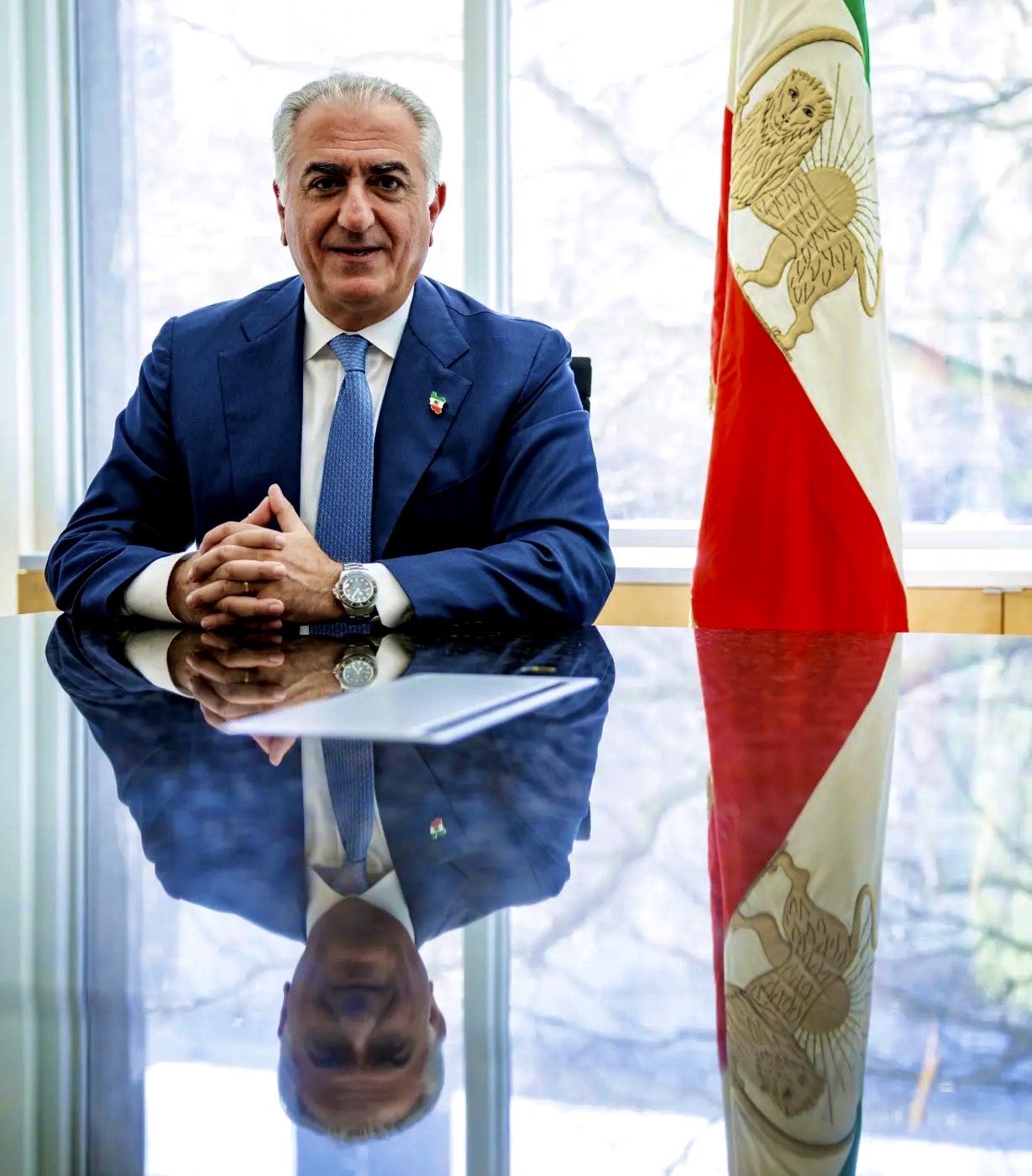
Compared to Syria, Iran’s influence in regional countries is many times greater. Most experts think that if Iran fragments, there is a possibility that the territorial integrity of all states located in the region stretching from Syria to Pakistan will be violated. The USA clearly demonstrates that it does not desire such a development of events. The promotion of Reza Pahlavi, the son of the last overthrown Shah of Iran, is related to this. Because there is no opposition that encompasses all of Iran, nor is there a leader likely to win the support of all of Iran, Reza Pahlavi is being pushed forward. Trump’s favorite Fox News channel acts as the main platform for promoting Pahlavi.
Overall, even an external observer forms the opinion that if in Syria, a bloody terrorist like Ahmad al-Shara can come to power, then why would it be disgraceful for the son of the former Shah, who grew up in the West, to come to power in Iran? Moreover, the Trump administration’s view of the Middle East is that elections in this region mainly result in radical religious forces seizing power, so the best option is a moderate monarchy. The USA’s ambassador to Turkey, Tom Barrack, expressed this very openly. To be fair, there is much truth in this approach. However, this perspective is flawed in regard to Iran. Iran is the country most ready for a secular state in the Islamic geography. This is due to its sect’s being Shiite rather than Sunni, and its comparably much clearer commitment to secular state principles. Therefore, Iran is completely different from other countries in the Middle East. In this sense, Pahlavi’s return to power in Iran will not be as easy as Ahmad al-Shara taking power in Syria. In fact, it is very doubtful that it will be possible at all. Because, unlike Shara, Pahlavi has no armed force on the battlefield. Shara’s seizure of power in Syria was actively supported by the United Kingdom, Turkey, Saudi Arabia, the United Arab Emirates, and Qatar.
Most importantly, in Iran the Azerbaijani Turks, Kurds, Balochs, and Arabs are fighting not for Pahlavi’s return to power but for determining their own destiny. Therefore, the effort to remove from power President Masoud Pezeshkian, who has legal, political, and moral legitimacy, and to bring to power Pahlavi, who lacks legal, political, and moral legitimacy, will trigger South Azerbaijan’s struggle to determine its own fate.
The duty that rests on us is to be ready for that moment.
Xagani Jafarli,
political analyst