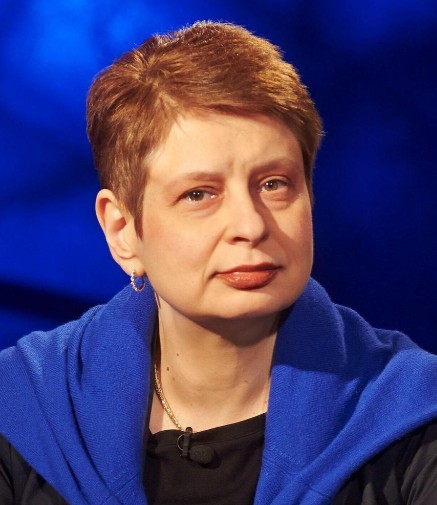
In the January 16 issue of Turkey's "Karar" newspaper, an article by Nina L. Khrushcheva, the granddaughter of Nikita Khrushchev who led the Soviet Union from 1953 to 1964 and now living as an immigrant in the USA, was published. Nina L. Khrushcheva is a professor of international relations at "The New School" University in the USA. Journalist Ibrahim Nebioglu translated this article into Azerbaijani. We present the article to the attention of Medianews.az readers.
The circles that most decisively support Russia's "special military operation" in Ukraine – patriotic bloggers and military correspondents – are seriously dissatisfied. The administration of US President Donald Trump sent military forces against Russia's ally Venezuela, captured the head of state Nicolás Maduro, and seized an oil tanker flying the Russian flag. In their view, Russia should have already sunk American ships, even launched nuclear missiles against its enemies. However, Russian President Vladimir Putin has not yet even made an official statement on these incidents.
It is true that the Ministry of Foreign Affairs ironically condemned the US's "armed aggression" against Venezuela as an "unacceptable interference in the sovereignty of an independent state." Besides, Putin usually does not react immediately to major events; he prefers to observe processes and adjust his response appropriately according to the situation. This approach can sometimes appear as a smart and confident position, but in this case, it indicates more a sense of weakness or at least deep uncertainty.
Before the attack on Venezuela, Putin seemed quite confident about Russia's position in Ukraine. Trump openly supported a "peace plan" that favored Russia, while applying serious pressure on Ukrainian President Volodymyr Zelensky to withdraw Ukrainian forces from territories they controlled. Adding to this, Russia's repeated attacks on Ukraine's energy infrastructure, causing continuous power outages in the middle of winter, made Putin believe that Ukraine would soon be ready to accept peace terms.
However, recent moves by the Trump administration have cast doubt on Putin's assessment. The US still claims that peace is a priority in Ukraine, and the recent security guarantees given to Ukraine do not include the step that Russia strongly opposes – deploying US troops on the ground. The seizure of the Russian tanker could have been interpreted as an attempt to humiliate Putin, but the Trump administration claims it was actually a Venezuelan ship flying the Russian flag to avoid capture, and the US has released two Russian crew members.
Nevertheless, it is clear that the Trump administration is openly dissatisfied with Russia's peace plan proposed in November. It is reported that Trump has given the "green light" to a law that includes delayed but severe new sanctions against Russia, as well as customs duties up to 500 percent on countries knowingly buying Russian oil or uranium.
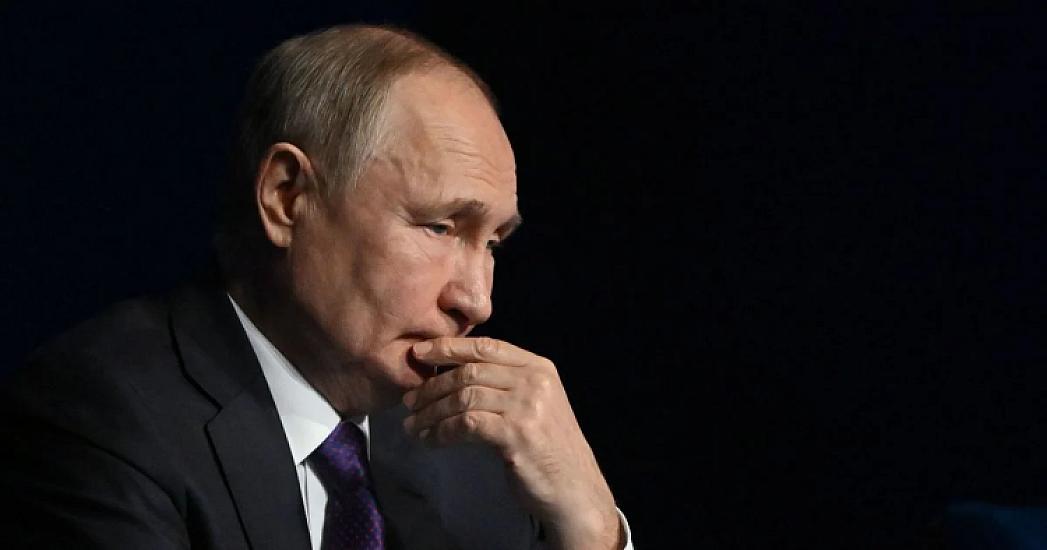
Putin undoubtedly does not want to appear weak; at the same time, he is not willing to take the risk of a sharp escalation in tension with the United States. For that reason, he prefers to remain silent. But there is a limit to everything. The main question is how persistent the Trump administration will be in testing where those limits lie.
According to many Western observers, now is the time to increase pressure on Russia: not only by tightening sanctions but also by providing more weapons to Ukraine and targeting Russia's "shadow fleet" of oil tankers using crafty means to evade Western sanctions. Zelensky has gone as far as indirectly encouraging Trump to replicate the strategy applied in Venezuela against Russia—not only in Russia itself but also in Chechnya.
Although the idea of Trump sending US forces to Russia seems like a fantasy, the apparent success of the Venezuelan operation has inspired the "hawks" close to Trump. The White House Deputy Chief of Staff and political advisor Stephen Miller recently insisted: "We are a superpower," adding, "And we will act like a superpower."
This aggressive mindset increases the likelihood that the US will cross a line that Putin deems unacceptable. For example, targeting numerous Russian oil ships, trying to impose extremely harsh peace terms on Russia, or inciting instability in Iran as happened there.
Putin’s options to respond to the US are quite limited. When the US Navy sought to seize an oil tanker, the presence of Russian armed guards on board or the deployment of Russian warships nearby could not prevent it. The only real card Russia holds is its nuclear arsenal. Putin can issue nuclear ultimatums to Trump at any time; however, there is also a likelihood that such threats will not be taken seriously. Threats from Russia would be more effective if voiced in coordination with a military power like China, but China has many other levers against the US, such as control over the global supply of rare earth elements.
Nonetheless, Putin has already resorted to nuclear threats. If he is cornered enough to believe that the only way out is to launch a nuclear strike, the US will undoubtedly respond likewise. As long as the war in Ukraine continues, the risk of an apocalypse scenario remains high.
As for Zelensky, he must strengthen his backing. Putin may not want a direct confrontation with Trump, but after the US captured Maduro—and especially after the alleged drone strike on Putin's residence in Novgorod region—Russia may decide to demonstrate that it is capable of responding in kind to its enemies. Ukraine denies any connection to the attack and accuses Russia of exaggerating it to sabotage peace talks. However, Moscow has promised to respond. In any case, Russia's attacks on Ukraine's energy infrastructure will continue—just like Putin's silence on the Venezuela issue.
Nina L. Khrushcheva,
professor