
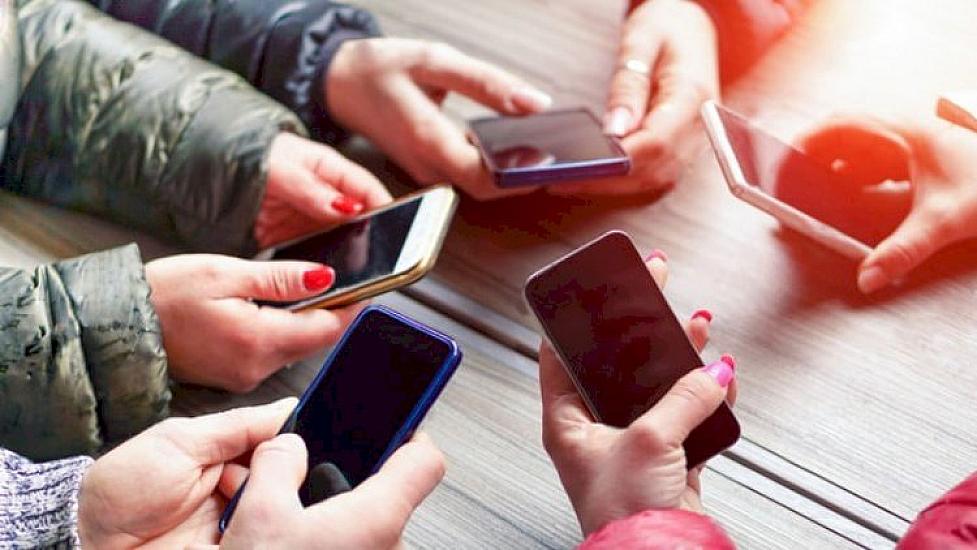
The digital world takes more from us than it gives. For example, our habits of live communication, chatting, reading newspapers and books are slowly disappearing. Today, the vast majority of people from ages 7 to 77 spend 7-8 hours a day on their phones. Even while eating, sleeping, and even during business meetings, our phone is next to us.
Medianews.az reports that now the phone has become our conversational partner, our life companion. Recently, ChatGPT has become the confidant of many of us. Some people write, talk, and even seek advice from this platform for hours.
Thus, we grow apart and become distant from each other. The majority of people today prefer loneliness more and direct all their inclination towards the digital world.
What is happening?
Let us not forget that communication is one of the main pillars of human society. People build social bonds, create empathy, and learn to live together by sharing thoughts, feelings, and experiences. However, in the modern era, it is observed that live and sincere communication between people is gradually weakening. This process is not accidental and is related to a number of social, technological, and psychological factors.
The rapid development of digital technologies has not only made people's lives easier but has also fundamentally changed the form of communication. Social networks, messaging applications, and virtual platforms have minimized face-to-face communication. Even when people are in the same place, they focus on the phone screen, reducing the need for real dialogue. As a result, communication becomes more superficial and distant from emotional depth.
Another interesting factor here is the acceleration of time and the increase in life's pace.
The modern person is always in a hurry.
This haste reduces the time allocated for communication due to social responsibilities and material concerns. Because of the rush, people prefer responding quickly and cutting conversations short rather than truly listening to each other. This turns communication into a formal and mechanical process.
Unfortunately, society is increasingly turning towards an individual-centered mindset. The concept of "I" rapidly squeezes out the concept of "we." People close into their own worlds rather than showing interest in the thoughts and feelings of others. This individualization leads to a decrease in empathy and, ultimately, a weakening of communication.
The decrease of trust in society also seriously affects communication. Instead of listening and understanding each other, people tend to judge and accuse. This situation prevents open and sincere communication. As a result, people prefer to remain silent and not express themselves. Those who close themselves off and favor silence gradually develop psychological and emotional fatigue.
It is especially necessary to note that stress, depression, and emotional burnout also play an important role in decreasing communication. A person struggling with internal problems hesitates to connect with others and tends toward solitude. This leads to social isolation and the disappearance of communication.
Is the digital world solely to blame?
Against the backdrop of the harmful effects brought by digitalization into our lives, we sometimes encounter interesting scenes. For example, in a park, cafe, or supermarket, we have very good conversations with strangers around us. Of course, brief contacts with strangers do not turn a troubled life into a joyful one. But they can make daily troubles a more pleasant experience.
People can talk more comfortably with strangers and express themselves better. Today, people who do not know each other on social networks not only understand each other well but even unite in groups. Sometimes group chats last for hours.
According to experts, people's conversations with strangers or ChatGPT are effective because the other party only listens. Very rarely are questions asked. But in relationships with close ones, this often does not happen.
So, it means not all of us are good conversational partners or listeners at the necessary level. Therefore, people avoid us and direct their tendencies towards social platforms.
Another and maybe the main reason is the prioritization of materialism.
People want to have more resources every day. For this, they mobilize all their possibilities. Naturally, those focused on materialism prioritize social responsibility over moral responsibility and avoid the latter. However, every one of us needs a kind word every day more than food, clothing, and other material things. Because a person surrounded by love is happier.
Money at most is a means to achieve some desire. It is strange that when a person attains the desired material goods, they are not necessarily much happier. On the contrary, newly acquired material wealth creates greater ambitions in a person. This keeps the person constantly in tension and stress. However, spending time with loved ones, listening to them, sharing thoughts and even problems brings comfort to everyone. It convinces a person that they are not alone in life and that life does not end.
Currently, in our country, people spend 55-60 percent of their income on daily food. On one hand, this reflects the economic situation in the country, and on the other hand, it is evidence of how much importance our people give to materialism.
For example, during Generation Y's time, people did not go to restaurants this much. Even their diet contained less meat, fish, and other foods. However, they were healthier. Because then, people enjoyed spirituality more than materialism. People would sit for hours discussing some book or artwork and receive spiritual nourishment from it.
Today, spiritual nourishment has moved to the background.
Everyone thinks about living more comfortably and eating expensive food. Thus, the struggle for materialism destroys our spirituality.
Let us not forget that by nature, humans are social beings and become healthier and happier when interacting with others. Isolating oneself and withdrawing into loneliness lead not only to psychological problems but also drive a person towards greater consumption. This creates both wastefulness and continuous weight gain among people.
Therefore, to restore communication among people, human relations should be valued again, and empathy, the culture of listening, and live dialogue should be promoted. Because a healthy society can only be built on healthy communication. Let us remember that communication and conversation are a need. If this need is unmet, our health suffers. Over time, people talk to themselves, virtual addiction increases. As a result, with time, lack of communication turns into illness... (Bizim.Media)