

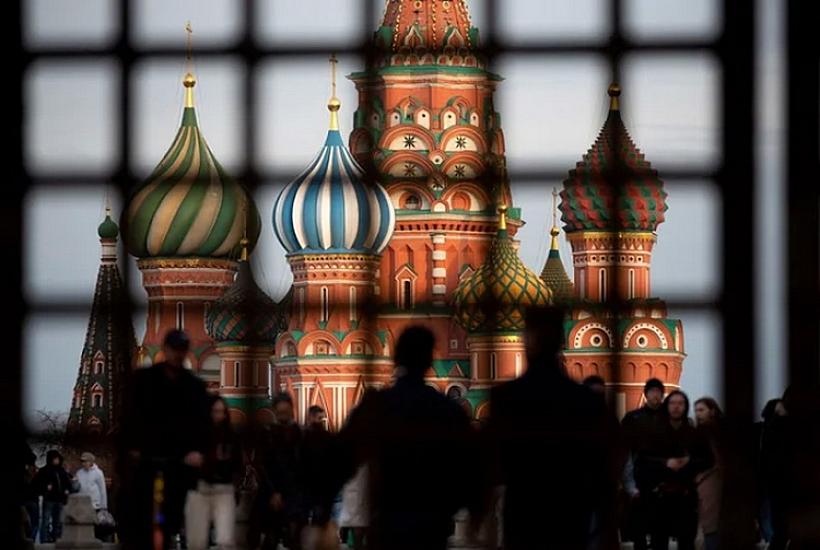

Russia is once again trying to revive the "3+3" format. This format can be considered one of the most discussed but unrealized diplomatic platforms in the South Caucasus in recent years.
This mechanism, envisaging the representation of the three South Caucasus states (Azerbaijan, Armenia, and Georgia) together with the three largest neighboring states of the region (Russia, Turkey, and Iran), at first glance appears as a regional cooperation initiative. However, it is striking that the state most consistent and persistent in advocating the creation of this platform is Russia. Russia tries to present this format as a platform for mutually beneficial regional economic cooperation.
I believe that although there are certain economic interests in this format, essentially geopolitical interests prevail. In the context of the new geopolitical reality emerging in the South Caucasus, this persistent demand can be considered an indicator of Russia’s transformation of its South Caucasus strategy and its search for a new position.
Several years ago, when the "3+3" platform project emerged as one of the mechanisms to strengthen Russia's dominance in the region and regional processes, today the attempt to realize this format serves a completely different purpose.
Namely, in the last five years the real geopolitical landscape of the South Caucasus has fundamentally changed. Azerbaijan has restored its territorial integrity and become the leading state of the region, Turkey’s influence over regional processes has increased manifold, the European Union and the USA have begun to participate more actively in regional processes and try to increase their influence, a process of establishing new transport communication lines is underway in the region, and Armenia, traditionally considered Russia’s stronghold, is gradually distancing itself from Russia and turning towards the West.
It can be unequivocally stated that Russia, which for a long time considered itself the sole security guarantor of the region and sought to mediate in the regional peace process without alternatives, no longer holds its previous geopolitical position. In other words, Russia has lost its former geopolitical position in the South Caucasus, and the process of Russia’s complete expulsion from the region is, practically speaking, at its final stage.
In such circumstances, Russia’s policy is at least aimed at not being left out of the region and regional processes, participating in some form, and creating the appearance of joining regional projects. In this regard, the 3+3 platform could turn into a new influence mechanism for Russia.
By insisting on the 3+3 platform, Russia pursues the goal of keeping the United States and Europe institutionally out of the South Caucasus together with Iran. Both Russia and Iran have long adhered to the principle that "the problems of the South Caucasus should be solved by the regional countries themselves, and other states that are not regional countries should not interfere in regional processes." The 3+3 format is the new diplomatic expression of this principle’s thesis and can be viewed as an institutional mechanism and also an attempt to limit the institutional participation of the collective West in the region. Iran’s participation alongside Russia in South Caucasus processes within one platform not only acts as an additional factor preventing the region from becoming a geopolitical space for the West entirely but can also serve as a mechanism for Moscow and Tehran to coordinate their activities in this process.
By insisting on the 3+3 platform, Russia also aims to soften the international diplomatic isolation arising after the aggression against Ukraine. As a result of this isolation, Russia’s opportunities to participate in many international platforms have been severely limited. Precisely for this reason, the Russian authorities show special interest in new multilateral mechanisms. In this regard, the 3+3 format tries to demonstrate that Russia is still an integral part of regional diplomacy and to send the message "Russia is not isolated" both to the collective West and to the internal audience.
Russia’s insistence on the 3+3 platform is also related to a number of other factors. These factors include Turkey’s and Azerbaijan’s growing international weight and their formation as a middle power, as well as how the future security architecture will be formed. Russia already accepts Turkey’s and Azerbaijan’s growing international weight and emergence as a middle power as a reality and gives priority to institutional cooperation with these states within the 3+3 format.
Russia’s insistence on the 3+3 platform should also be considered in connection with the struggle for the new security architecture of the South Caucasus. Here, the future regional security system and how it will be established is regarded as an important factor. The formation of regional security mechanisms within the framework of the 3+3 platform will turn Russia and Iran into necessary participants of this mechanism; in this case, Russia and Iran could obtain control levers over regional security mechanisms. If security mechanisms are formed outside this platform, Russia’s and Iran’s influence possibilities in the region will further decrease and be minimized.
Thus, the special interest shown to the 3+3 format stems from a geopolitical necessity and compulsion and is nothing other than Russia’s attempt to adapt to the changing geopolitical realities and achieve the goal of not losing its place in the new regional order.
Gulamhuseyn Alibeyli,
political analyst