

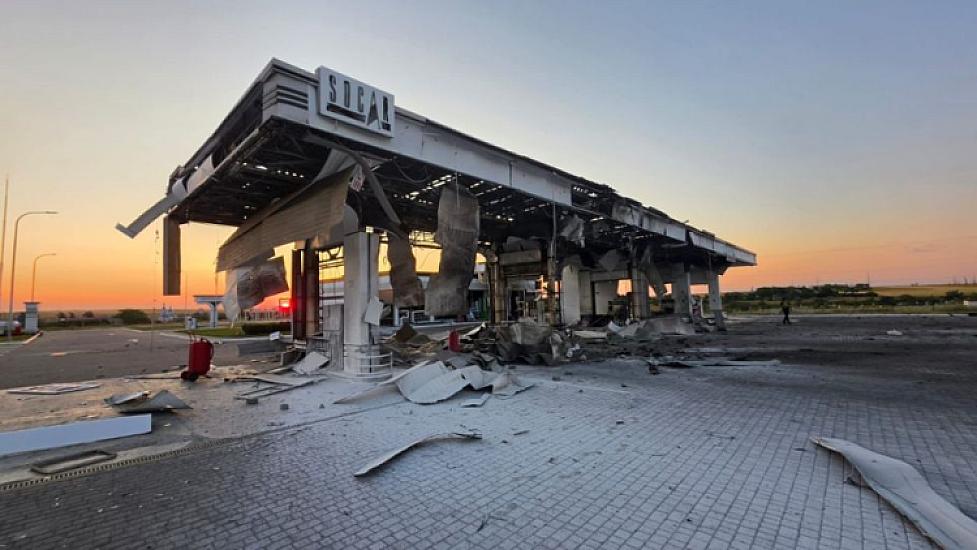

Russia has once again struck SOCAR facilities in Ukraine. This time, the target was a gas station belonging to the Azerbaijani company in the village of Nechayanne, Mykolaiv region. On the evening of July 5, three "Shahed"-type strike drones hit the SOCAR gas station, causing an explosion and damage to the administrative building. The absence of human casualties was only possible because the employees took shelter in time. This is not a coincidence. This is already a system.
Russia tries to hide behind the same lie each time: allegedly, military and energy infrastructure in Ukrainian territory is being hit, and civilian objects are supposedly damaged by accident. But if SOCAR facilities have been targeted not just once but repeatedly, talking about coincidences here is an insult to reality. The repeated strikes on the civilian infrastructure belonging to the same company and the same country are not "collateral damage." This is a chosen target.
SOCAR is not an ordinary commercial company. SOCAR is a symbol of Azerbaijan's energy presence abroad, its economic influence, and its regional strategy. The strike on SOCAR in Ukraine is not merely an attack on a gas station. It is an attack on Azerbaijan’s economic interests, energy position, investments, and national brand in Ukraine.
Moscow understands very well that Azerbaijan’s energy policy is dismantling the dependency mechanisms that Russia has built over many years. Baku is creating alternative routes, expanding energy cooperation with Europe, and establishing new connections via Ukraine and the Balkans. Azerbaijani gas, Azerbaijani capital, and Azerbaijani diplomacy are entering Russia's old zones of influence. This is precisely what the Kremlin cannot digest.
For this reason, the attacks on SOCAR cannot be presented simply as a wartime episode in Ukraine. This is an aggressive response to Azerbaijan’s energy independence and diversification policy. Russia, via drones, strikes not just concrete walls, fuel tanks, and administrative buildings. Russia targets Azerbaijan’s independent course and Baku’s transformation into a regional player without Moscow’s permission.
The picture is not limited to SOCAR alone. Azerbaijan’s embassy in Kyiv has also suffered damage several times due to Russian strikes. Damage to the diplomatic mission’s building, consular section, ambassador’s residence, official vehicles, and the territory is already a documented fact. Repeated damage to objects whose coordinates are known and which are protected by international law makes the “mistake” explanation meaningless. This is a disregard for diplomatic immunity. This is an open signal of hostility against Azerbaijan.
The most dangerous point is this: Russia strikes Azerbaijan not on its own territory, but in Ukraine. Because Moscow considers the risk here lower, and the message harsher. By targeting SOCAR facilities, the Kremlin wants to show Baku that Azerbaijan’s interests are not untouchable in Russia’s military-political calculations. This is a show of power. This is an attempt to intimidate. This is an imperial reflex.
Therefore, these events must be named properly. This is not an incident that took place in the context of war. This is systemic pressure against Azerbaijan’s civilian economic and diplomatic infrastructure. Attacks on civilian objects violate international law. Damage to diplomatic objects undermines the fundamental principles of the international order. The attack on SOCAR is a direct assault on Azerbaijan’s energy interests.
The response must also be harsh and clear. Every strike must be documented, every fact must be brought to international platforms, every episode must be converted into political and legal dossiers. Russia must understand: the blows to Azerbaijan’s interests will not be lost in the smoke of war.
Elchin Alioglu,
political analyst