
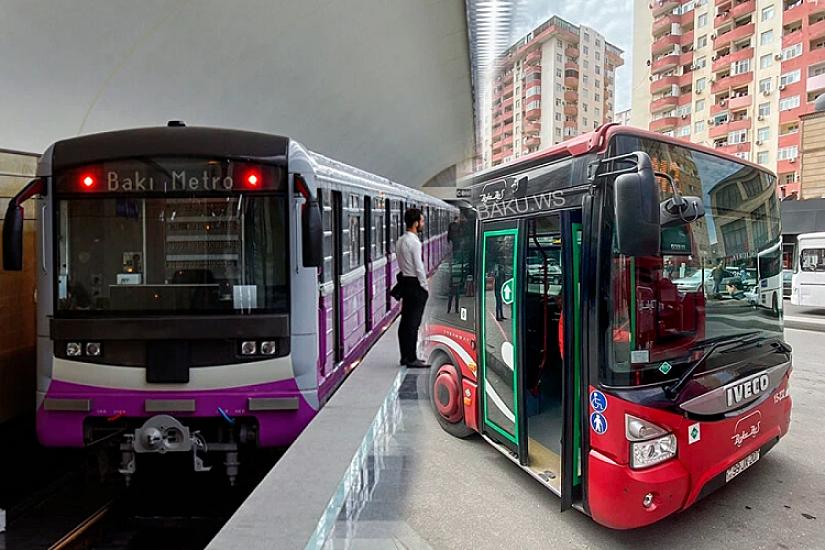
The role of the public transportation system in the sustainable development of modern cities is increasingly important. The population growth, rapid urbanization, and increase in automobile density necessitate the application of new approaches in transport policy. In this regard, not only the renewal of the vehicles but also the modernization of fare payment mechanisms are among the important issues.
According to Medianews.az, significant steps have been taken in recent years in Azerbaijan towards the implementation of electronic payment systems, and through the BakiKart system, a unified payment infrastructure has been established for metros and buses. However, monthly, weekly, and annual subscription cards, distance-based tariff systems, and in some cases, free public transportation models applied in many developed cities worldwide have not yet been introduced in our country.
Currently, passengers using public transportation in Azerbaijan generally pay separately for each trip. The unified tariff applied in the metro and city buses implies the payment of the same amount regardless of the distance traveled by the passenger.
Although this system is simple and manageable, it creates certain fairness problems. For example, a passenger paying the same amount whether traveling just 1 kilometer or another traveling 10 or more kilometers. As a result, passengers traveling short distances effectively subsidize part of the costs for those traveling long distances.
In many European and Asian cities, the fare is calculated based on zones or distance principles. This approach is considered more equitable and creates a more accurate relationship between the volume of service used by the passenger and the amount paid.
In most large cities worldwide, one of the main payment mechanisms for public transportation is weekly, monthly, and annual subscription cards. This system allows passengers to make unlimited or discounted trips within a certain period.
Azerbaijan's existing BakiKart infrastructure can be considered technically ready to implement such a system. The existence of an electronic payment platform facilitates the updating of the tariff policy relatively easily.
The main advantages of the subscription system are as follows: – Reduction of transportation costs for passengers;
– Increased usage of public transportation;
– Pre-formation of transport operators’ revenues;
– Decrease in the use of private cars;
– Reduction of traffic congestion and environmental load in city centers.
For example, a citizen who uses public transportation twice a day makes about 60 trips per month. At the current tariff, this means approximately 30 manat in expenses. If a monthly subscription card is set at the level of 25 manat, the passenger would save money, and the operator would receive stable income in advance.
In recent years, some countries have started implementing fully or partially free travel models in public transportation.
In Tallinn, the capital of Estonia, public transport is free for registered residents. Luxembourg made bus, tram, and train services free nationwide. Malta is also among the countries implementing a free public transportation model for residents.
The main objectives of these experiences are:
– Strengthening social equality;
– Supporting low-income groups;
– Increasing demand for public transport;
– Reducing automobile use;
– Lowering air pollution and carbon emissions.
However, international experience shows that the implementation of free transport does not always lead to a significant reduction in automobile use. Furthermore, the loss of ticket revenues requires additional subsidies from the state budget.
What could be an optimal model for Azerbaijan?!
Considering the current economic and social conditions, a multi-stage and combined approach seems more appropriate than a fully free transportation model in Azerbaijan.
In the first stage, the following measures can be implemented:
– Introduction of monthly and weekly subscription cards;
– Special discounts for students, pupils, and pensioners;
– Creation of unified transfer options between metro and buses;
– Discounted tariffs during non-peak hours;
– Implementation of a distance- or zone-based payment system;
– Implementation of pilot projects on individual routes.
Such an approach would protect the interests of citizens and ensure the financial sustainability of the transportation system.
In conclusion, the electronic payment infrastructure in public transportation has already been established in Azerbaijan, creating favorable conditions for the application of more modern tariff models. Weekly and monthly subscription cards, distance-based tariffs, and discounts for social groups can increase passenger satisfaction and also improve the competitiveness of public transportation.
International experience shows that successful transport policy in modern cities is achieved not only by reducing fares but also by improving service quality, enhancing the route network, and creating convenient payment opportunities. For Azerbaijan, the most appropriate path is precisely the phased implementation of reforms in this direction. (Globalinfo)