
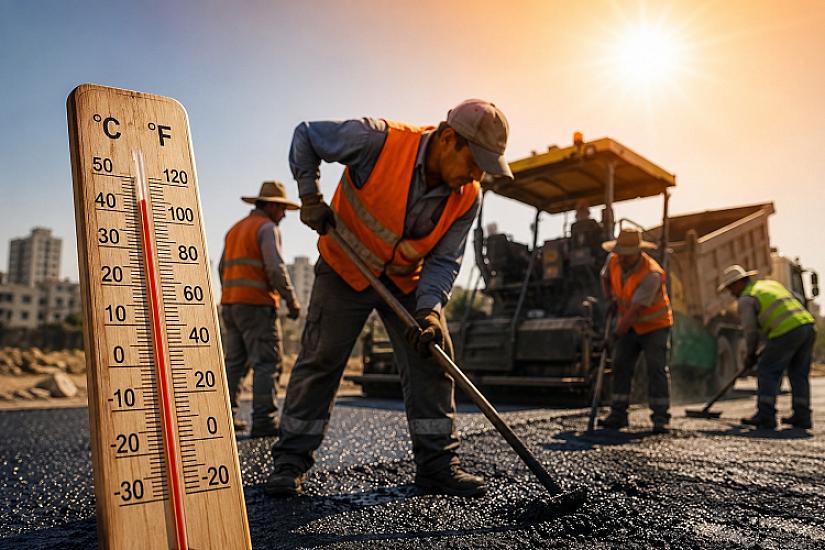
According to the Labor Code, in workplaces with hot and open conditions where the air temperature exceeds at least 41 degrees, breaks must be given to workers in the prescribed manner and work must be stopped. At the same time, when the air temperature exceeds 41 degrees, all types of work in the open air and in covered buildings, rooms, and other workplaces without cooling devices must be stopped, and breaks should be provided to workers with the opportunity to cool down.
According to legislation, breaks are included in working hours and during these breaks workers’ wages are paid according to their tariff salary. When work is stopped, downtime pay is provided at no less than two-thirds of the tariff salary, as downtime not caused by the fault of the worker.
Also, the employer must prepare rooms for the rest of workers who work outdoors and in hot workshops during the hot season.
In places where stopping work is impossible due to the uninterrupted nature of production, stopping work should be replaced by determining consecutive shifts. The replacement of shifts is determined by the employer with the consent of the trade union organization.
The suspension of work and giving of breaks, as well as the determination of the number and duration of these breaks, is carried out by a joint decision of the employer and the trade union organization.
All these are the legal requirements. But in reality, are these requirements being followed?
Let us remind that according to the information of the National Hydrometeorology Service, on July 25-26 in Baku and the Absheron peninsula, the maximum air temperature is expected to be 35-38, in some areas close to 40 degrees. In some districts of Azerbaijan, from July 25-29, the maximum air temperature is predicted to rise to 35-40, and in some areas of Central Aran and the Nakhchivan Autonomous Republic, up to 41 degrees.
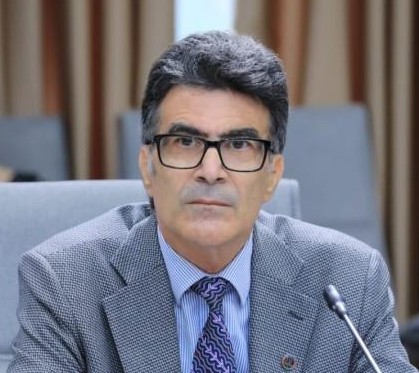
Sahib Mammadov, chairman of the League for the Protection of Citizens' Labor Rights, Medainaews.az stated that when it is impossible to artificially regulate the air temperature outdoors and when the temperature reaches a certain limit — according to our legislation, this is 41 degrees — work must be stopped: “However, there are some jobs that cannot be stopped. In this case, the employer must take special measures. Without violating safety rules, workers should be provided with light clothing (for example, straw hats, etc.).
In addition, workers should be given frequent breaks. Umbrellas should be installed near the workplace in open-air conditions. During breaks, workers should be offered cooling drinks (ayran, soda, etc.) to protect them from sunstroke and heatstroke.
Although all this is reflected in the legislation, unfortunately, we encounter a different picture in practice. Sometimes no measures are taken for workers paving asphalt in the desert steppe or working on infrastructure projects outdoors. As a result, even if workers are not exposed to severe heatstroke, the sun’s rays seriously damage their bodies and negatively affect their health in the long term.
In fact, the situation should not be like this. The legislation regulates everything, but certain problems still remain in practical application.”
Nailə Qasımova,