
US President Donald Trump, on one hand, said that Tehran is interested in negotiations, while on the other hand stated that his country will destroy all military targets in Iran within the next 2-3 weeks. This means that the war will continue for some time.
In his latest statement, Trump emphasized, as before, that Iran's navy and air forces have been largely destroyed, but indicated that the matter is not completely finished yet.
It also became clear from Trump's statement that he does not intend to give the military a strike order to open the Strait of Hormuz. For example, the White House said that since the US is currently the world's largest oil and gas producer, it does not need the Strait of Hormuz, and that countries using this route should ensure its security themselves.
Trump did not say anything about mediation offers from states wishing to stop the war. Meanwhile, various countries have been making mediation initiatives. The most recent such initiative was made jointly by Pakistan and China. Since China and Pakistan are allies, they share the same position on the situation in the Middle East. However, the White House seems to have ignored the joint Pakistan-China statement issued after talks between Chinese Foreign Minister Wang Yi and Pakistan's Foreign Minister Ishaq Dar in Beijing.
As the war in the Middle East enters its second month, the world’s energy supply is in serious crisis, and oil prices are skyrocketing, Pakistan and China are trying to intervene in the process as peacemakers. China is most concerned about the security threat to the Strait of Hormuz.
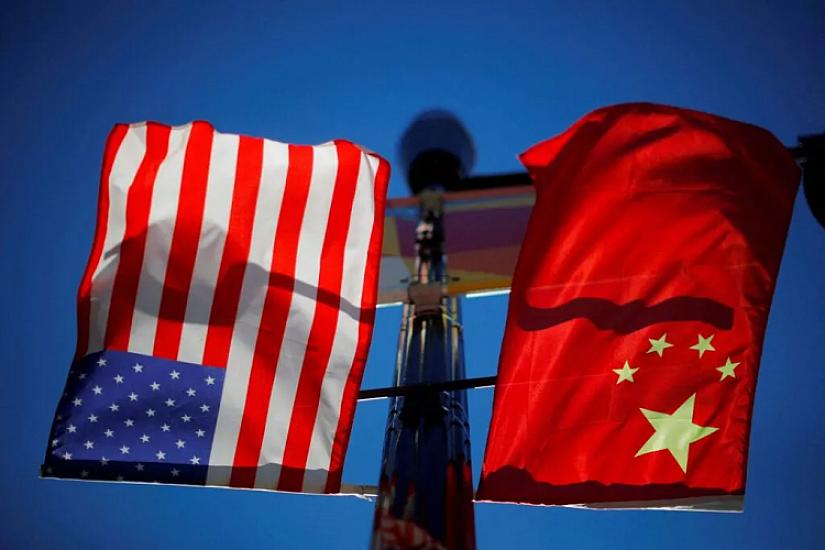
It is true that Iran has allowed tankers carrying oil to China to pass through the Strait of Hormuz. Nevertheless, the ongoing tension has limited China's access to the region's energy carriers. Beijing believes that the US is trying to intimidate its other rivals through military operations against Iran. For example, China plans to take control over Taiwan Island. China is waiting for the right time to realize this plan. Taiwan can only be controlled militarily. Washington will not remain a bystander if China tries to take control of Taiwan militarily. For this reason, the US military operation against Iran is also a message to China to abandon its plan to take control of Taiwan.
Donald Trump plans to visit China in mid-May. The US president plans to end the war by then. Beijing also hopes for this. The wars in the Middle East negatively affect China’s economy. These wars have caused problems for Chinese exporters. China has various projects in Saudi Arabia, the United Arab Emirates, Oman, and Iraq. Currently, each of these countries is under fire.
Iran’s weakening also affects China’s economic interests. There is a decades-long partnership between Tehran and Beijing. China is Iran’s leading trade partner and buys about 80% of Iranian oil. On the other hand, the wars negatively affect the entire supply chain—from China’s production of plastics to raw materials for modern synthetic fabrics, phones, electric cars, and hundreds of components for semiconductors. For that reason, Beijing is considering playing an active role in the Middle East peace process. The problem is that Washington will stand in China’s way again. The US will try to hinder China's diplomatic activity in the Middle East.
Iran has also allowed tankers carrying oil to India to pass through the Strait of Hormuz, alongside China. However, like Beijing, New Delhi is concerned about the prolongation of the war. At the G20 summit held in New Delhi in September 2023, a memorandum was signed about a new transportation corridor connecting South Asia, including India, with Europe through the Middle East. However, due to ongoing wars in the Middle East, the implementation of this project has been postponed.
Elkhan Shahinoglu,
political analyst