
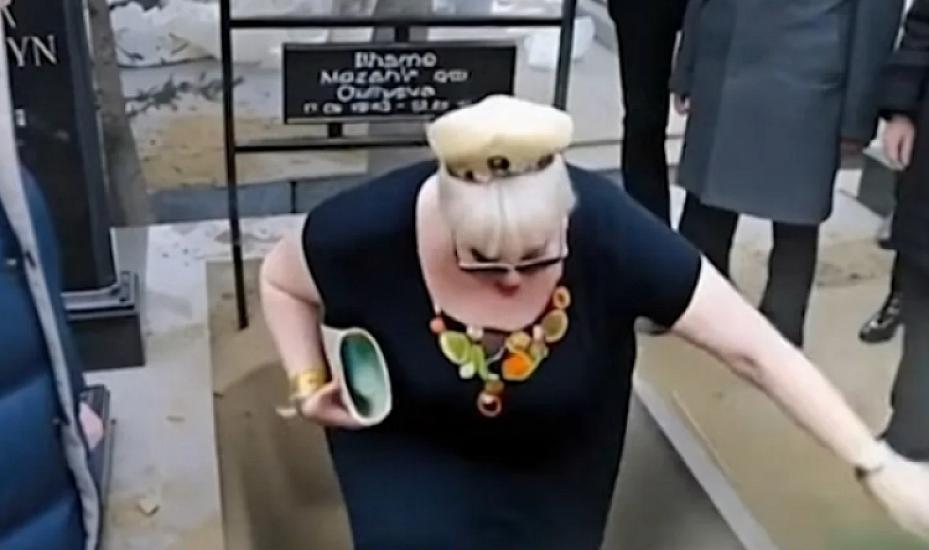
A new worrying trend has spread on social networks. Some pages create videos by "reviving" the images of deceased people through artificial intelligence for a fee.
While a group of people accept this as a technological innovation, others do not consider such posts ethical and regard them as a disrespect to the memory of the deceased. The issue is not limited only to ethical boundaries. Such content raises serious questions from both religious and psychological perspectives. So, how appropriate is the creation of such content? How do these kinds of videos affect people's thinking?
Baku TV conducted a survey among the residents of the capital regarding this topic.
"I don't look favorably on such things. When I think about it, it sends chills down my spine," said one citizen. Another resident noted: "No one has the right to make such posts."
The late actress Tünzalə Əliyeva's husband, Röyal Babayev, also commented on the issue. He said that these types of videos circulating on social networks affect him negatively:
"Sometimes images created by the program appear before me. Tünzalə seems to come out of the grave and clings to a stone. This upsets me a lot, even shakes me. Sometimes I get angry at the people who do this. Then I think that they do it for financial gain. I try to understand. But wouldn’t it be possible for everyone to make such videos only for someone from their own family, and not touch others? I am sure they have no bad intentions, but know that this does not affect us positively."
Theologian Tural İrfan stated that from a religious standpoint, the creation and dissemination of such images is not considered appropriate. According to him, the resurrection of people after death is a matter belonging to the unseen world, and this is a process that cannot be fully explained either scientifically or mundanely: "It is also regarded as disrespect to the memory of the deceased."