
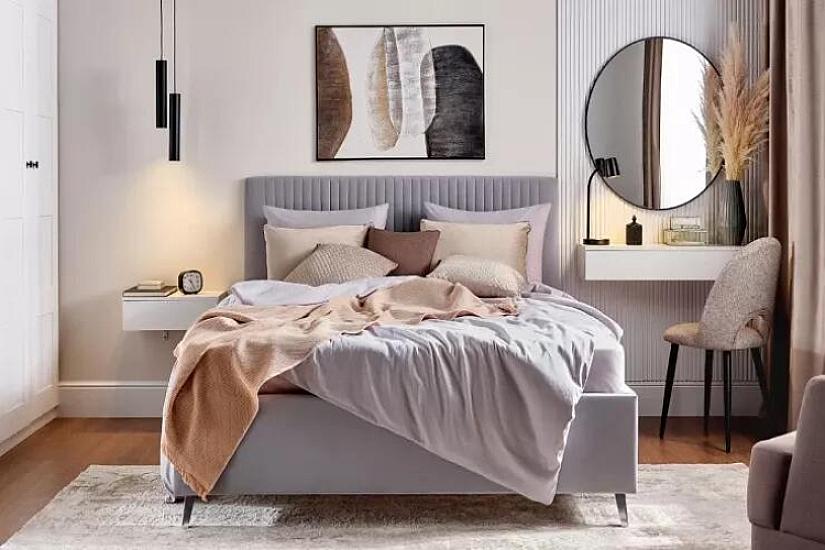
Many people pay attention to pillows, mattresses, and aromas to improve sleep, but they forget the simplest thing: the color of the walls. However, this affects the brain more than you think. Somnologists emphasize that the choice of the bedroom color can speed up the process of falling asleep. This is not just a matter of taste but related to physiology.
The soft blue color is considered the most relaxing. This color reduces heart rate and helps the brain transition to a calm state.
Bedroom
The blue color is associated with the sky and water. These images calm a person and create a sense of safety.
Light green color also has a good effect. It reminds one of nature and reduces stress levels.
Somnologists explain that green relaxes the eyes. The eyes tire less and a person falls asleep faster.
Beige and sand colors are also suitable choices. They create a soft background and do not tire perception.
But bright colors like red and orange stimulate the nervous system. This causes shallow and restless sleep.
White walls are not always a good choice either. Pure white reflects a lot of light, which can cause discomfort. It is best to choose warm pastel tones. These colors create a sense of comfort and help to relax. Somnologists note that not only paint but lighting is also important. Warm light enhances the effect of calm colors. Some people use night lamps that emit soft yellow light. This helps the brain gradually transition to sleep.
Dark colors can also be appropriate if they are deep and soft tones. But it is easy to overload the space with these colors. Color affects a person's mood more than you think. Proper choice can improve sleep quality without medication. When the bedroom is arranged in calm tones, the body relaxes faster and falling asleep becomes more natural and easy. (Lent.az)