

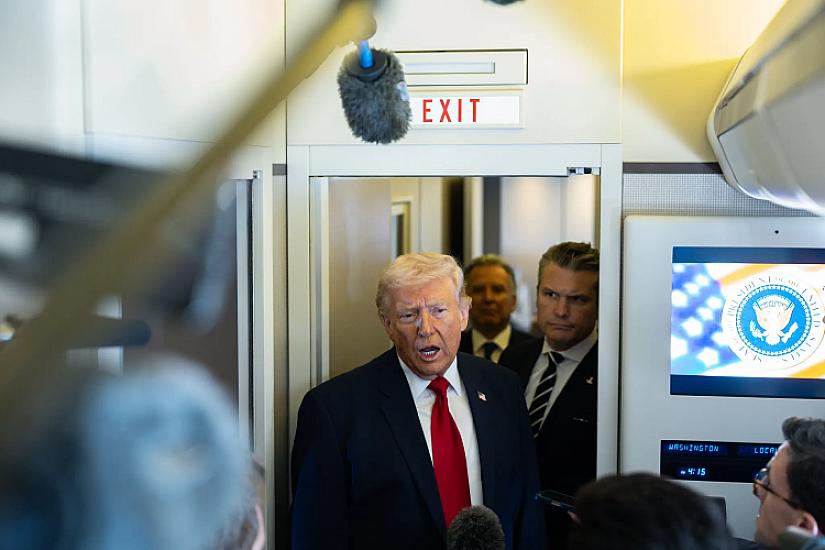

The third week of the war against Iran presents US President Donald Trump with one of the most difficult decisions in high politics: whether to continue the attack and deepen the conflict, or to declare an interim victory and start to withdraw.
The problem is that both options already entail serious costs and risks; it is not only about military losses but also about strategic consequences for the Middle East and the global economy.
The initial results of the campaign appear impressive at first glance. US-Israeli strikes have seriously weakened Iran’s air defense system, reduced Tehran’s missile potential, and damaged its navy. The elimination of Ayatollah Ali Khamenei was a historic event that many considered the end of an entire era.
However, the war soon showed that the destruction of part of the military machine does not mean the political collapse of the regime. The Iranian theocracy has maintained control, its power structures continue to operate, and asymmetric pressure tools—from cyberattacks to strikes on shipping—are still in Tehran’s hands.
Herein lies Washington’s main strategic mistake. It seems that the American administration did not properly assess Iran’s ability to respond not directly on the front line but by creating chaos. The paralyzed Strait of Hormuz, attacks on commercial ships, rising oil prices, market tensions, and strikes on the region’s energy infrastructure—all these make even weakened Iran an extremely dangerous adversary.
Today, although militarily weaker in the classical sense, Iran remains capable of imposing a heavy cost on the world in exchange for continuing the war.
This is a particularly sensitive point for Trump. His political capital has always been associated with an image of a leader who avoids long-term foreign adventures and acts pragmatically. Now, however, he is dragged into a conflict that demands additional forces, new naval operations, the expansion of the coalition, and perhaps even more dangerous decisions.
Anxiety is increasing among his electoral base: the promise to keep America out of new wars clashes with the growing reality of the Middle East front.
However, withdrawal does not seem like a way out either. If Washington stops now, Iran will retain its most important factor—the political will to resist and perhaps its stockpiles of weapons-grade uranium, the main object of concern. This would mean the military operation ends without achieving its fundamental goal. In that case, the current pause will not be peace, but merely a breath before the next, perhaps more dangerous, phase of the confrontation.
Two scenarios under discussion in Washington further aggravate the situation: the seizure of Kharg Island, through which the bulk of Iran’s oil exports pass, and an operation to extract highly enriched uranium reserves from underground storage.
The first option promises Iran’s economic strangulation but would in fact require occupation and long-term military presence. The second will be a raid requiring jeweler-like precision and carrying great risk, with an enormously high penalty for mistakes.
Trump has fallen into the trap of his own decision. Continuing the war promises new losses for the US, economic damage, and political fragmentation at home. Withdrawal, on the other hand, will appear as an unfinished operation, resulting in Iran wounded but not shattered.
The paradox of the moment is precisely this: Washington may win on the battlefield but lose on a broader strategic level. The war initially planned as a display of power is increasingly becoming a test of American endurance, nerves, and ability to calculate the consequences of its own decisions.
Elchin Alizade,
political analyst