

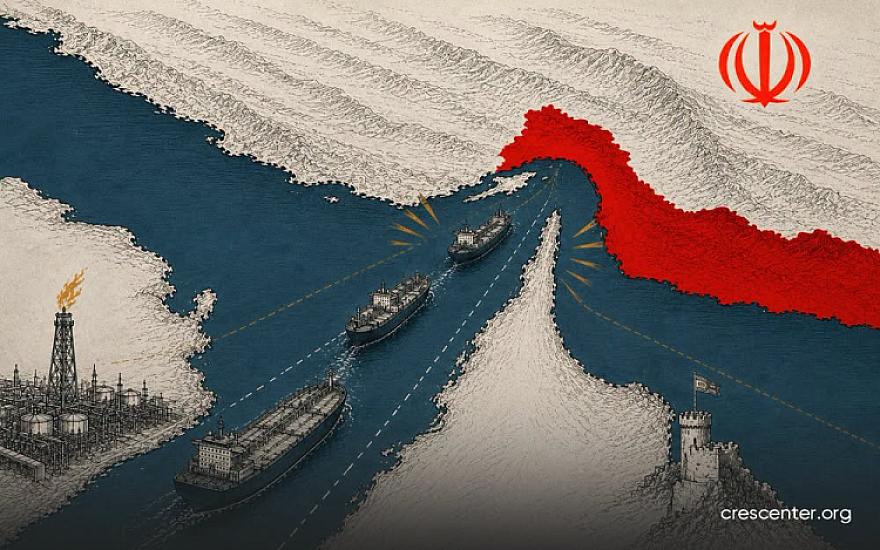

Tonight, the US once again launched airstrikes against Iran. According to information, Iran, without its permission, fired at a ship passing through the Strait of Hormuz, stopping it. In response, the US military forces deployed near the Strait of Hormuz fired at Iranian positions.
The US Army Central Command (CENTCOM) stated in a released statement: "US troops have carried out another wave of strikes against Iran. Today at 19:15 Eastern Time (03:15 Baku time), CENTCOM forces began the third phase of strikes against Iran."
According to journalist Barak Ravid of the "Axios" portal, the strikes were carried out in response to Iran firing at a ship in the Strait of Hormuz, which the US accused the Islamic Revolutionary Guard Corps (IRGC or SEPAH) of doing.
From CENTCOM's statement, it appears that the attacks on Iran are currently ongoing.
SEPAH also did not remain silent in response to CENTCOM's attack. In a statement from Iran's unofficial army regarding the incident, it states: "Last night, the criminal US regime imposed its will on the government of the Sultanate of Oman... creating an illegal route south of the Strait of Hormuz through several cargo ships, and this attempt was stopped by the decisive response of our Naval Forces."
The statement emphasizes that the "child killer" US carried out air attacks on military naval bases and telecommunications towers on the southern coast to "compensate for this defeat": "As promised, we have immediately delivered a devastating response to the aggression."
The valiant aerospace fighters of SEPAH targeted US military bases. In the first phase of this response, they destroyed important military infrastructure and facilities at the Prince Hassan Air Base in Jordan and launched several ballistic missile strikes on the base's command and control center and MQ9 drone hangars."
Regarding the story of Oman attempting to open a new route in the Strait of Hormuz, which the Iranian side declared as "a provocation and incitement by the US," according to information, Oman sent a proposal to Iran yesterday through diplomatic channels. The proposal envisages dividing the Strait of Hormuz into two routes:
1. Southern route: Passing through Oman's territorial waters, and the movement of ships on this route will be unrestricted.
2. Northern route: Passing through Iran's territorial waters. Prior Iranian consent will be required to use this route, but no transit fee will be charged from ships.
It should be noted that Oman's proposal fully complies with international maritime law norms. According to the UN Convention on the Law of the Sea, the Strait of Hormuz is a waterway where ships have the right of free passage, and coastal states cannot charge any fees or tolls from ships. However, Iran does not agree with these international law requirements and demands large amounts of tolls from ships passing through the Strait of Hormuz.
In our opinion, as a result of Iran's demands and obstruction, world countries, especially the Gulf states, may be forced to work on alternative routes bypassing the Strait of Hormuz. Just as the historical Silk Road was closed due to increasing toll demands by Turkish empires ruling the territories of the Ottoman and present-day Iran, new trade routes emerged. The same process is not excluded to happen today as well.
Heydar Oguz