

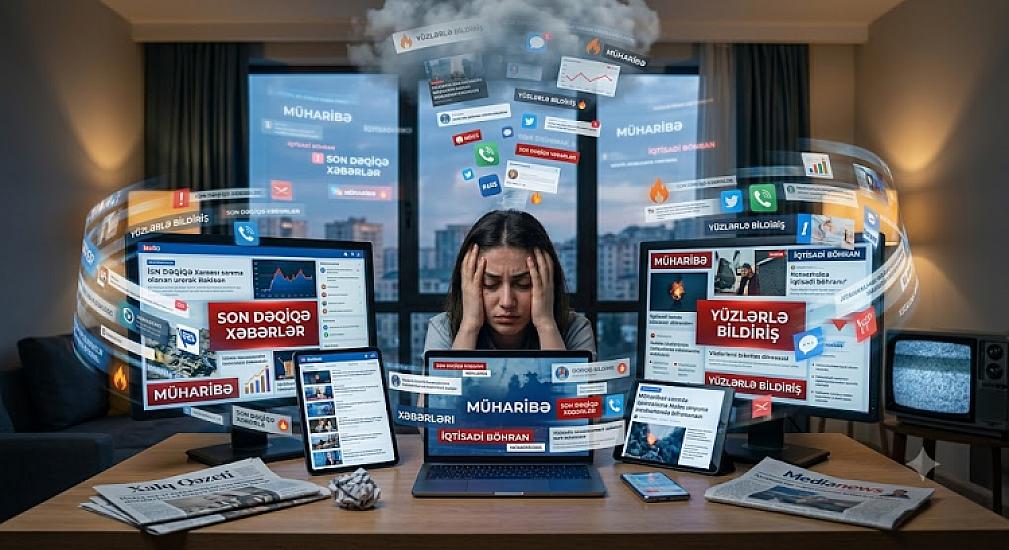

A few years ago, we mainly obtained news from newspapers, televisions, and news websites. Today, however, information is everywhere. Phone notifications, social media, news websites, and artificial intelligence platforms confront people with hundreds of pieces of information throughout the day. While the abundance of information makes access to news easier on one hand, on the other, it creates a load of information that exceeds what the human brain can process. This situation, which psychologists call "information fatigue," can lead some people to consciously distance themselves from the news, that is, exhibit "news avoidance" behavior.
So what exactly is "information fatigue"? How does the brain react to excessive information flow? How does this condition affect a person’s psychological state, attention, and daily decisions? What psychological mechanisms underlie the behavior known as "doomscrolling," characterized by spending hours following negative news on social networks?
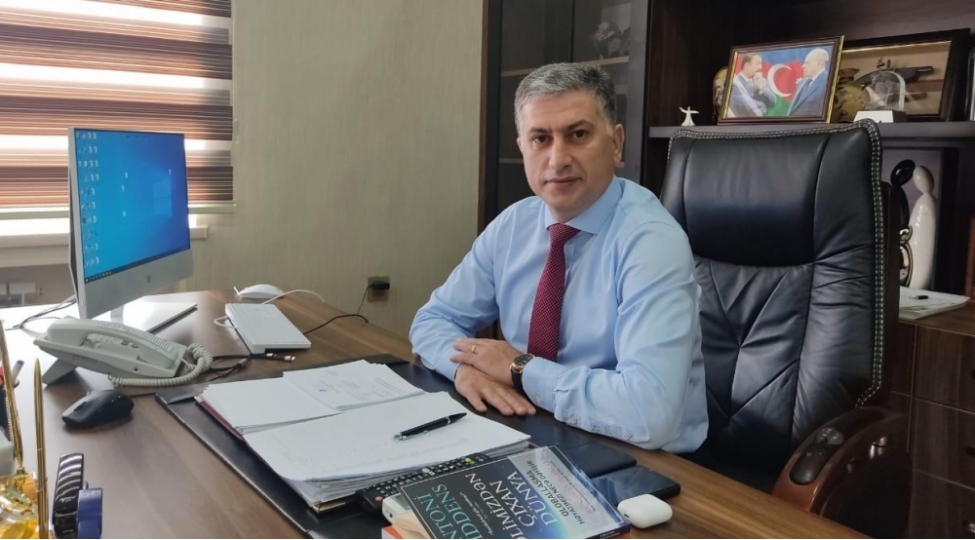
Elnur Rüstəmov, head of the Psychology Scientific-Research Institute, in his statement to Medianews.az, stated that in the modern era, humans are facing greater information flow than ever in history: "Our brain constantly tries to accept and process new information. However, the human brain’s capabilities for attention and information processing are limited. When the flow of information exceeds this limit, a psychological condition called "information fatigue" begins to develop. Information fatigue is characterized by a person’s difficulty concentrating due to exposure to a large amount of information, hesitation in decision-making, feeling mentally tired, and experiencing emotional exhaustion. The brain is constantly forced to select new information, evaluate it, and decide which is more important. When this process continues for a long time, cognitive resources begin to deplete. As a result, a person no longer retains the information they read as well as before, their attention quickly disperses, productivity decreases, and even making the simplest decisions becomes difficult.
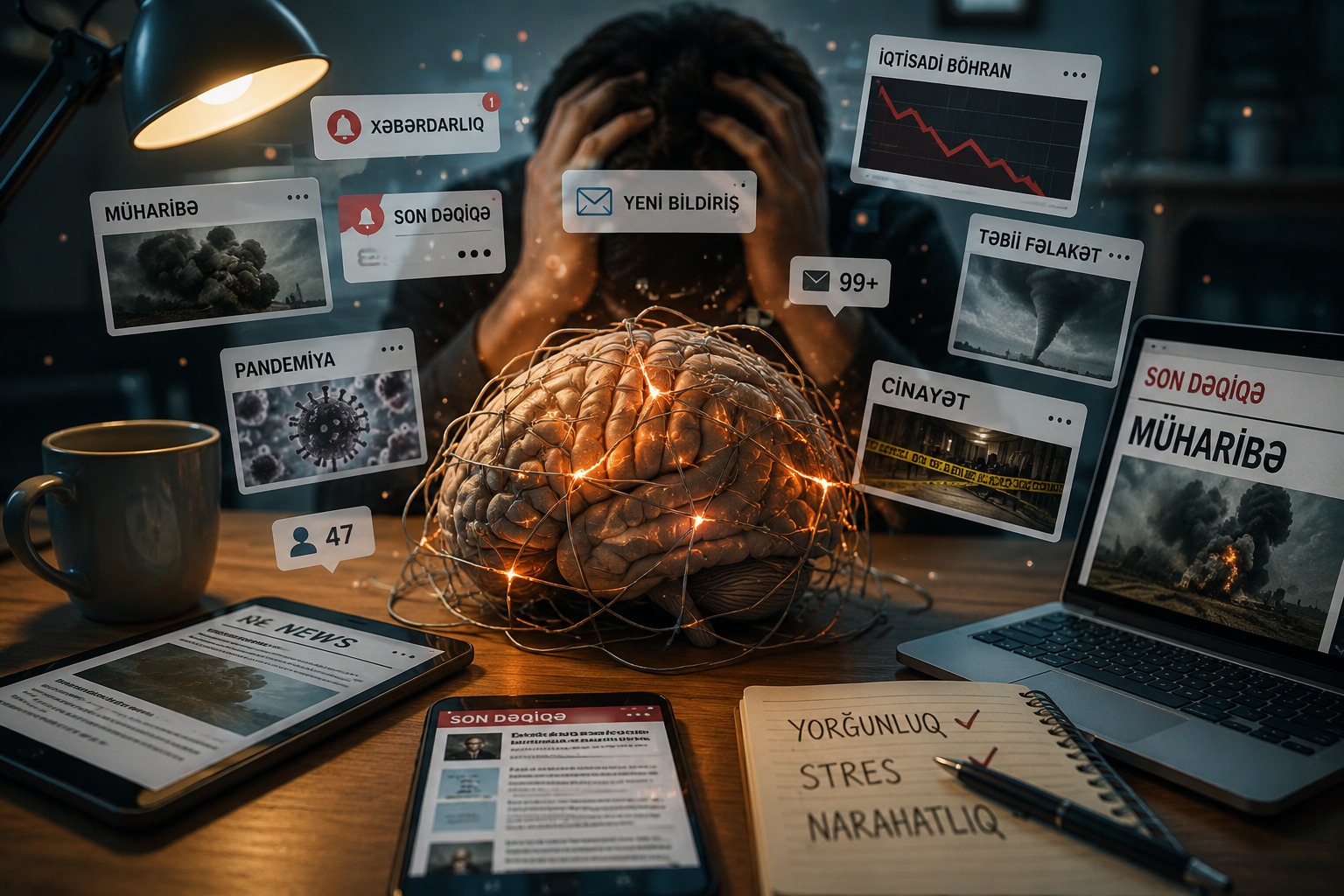
The abundance of information does not only cause mental fatigue. It also significantly affects a person's emotional state. Particularly, continuous exposure to negative news about war, crime, economic problems, diseases, and other unfavorable events can increase anxiety levels, strengthen feelings of danger, and form pessimistic expectations about the future. Even if a person lives in a safe environment in reality, the brain can perceive the constant negative news as if it were a real and immediate threat. This leads to an increase in stress hormones, tension, and emotional fatigue.”
The psychologist noted that in such cases, some people begin to completely avoid following the news: “In psychology, this behavior is called "news avoidance." It is sometimes considered one of the defense mechanisms the psyche uses to protect itself from excessive information load. People try to distance themselves from the news because they are tired of the abundance of information, contradictory news, and negative emotions. However, completely avoiding the news is not a healthy approach. Remaining unaware of important public events can negatively affect decision-making and social life. The main goal is not to reject information but to balance its consumption.
In recent years, the widely spread behavior of "doomscrolling" is also an important part of this problem. "Doomscrolling" means continuously following mainly negative news for an extended period on social networks or news platforms. Interestingly, even though a person feels that this causes anxiety, they continue to read. Several psychological mechanisms underlie this behavior. First, from an evolutionary perspective, the human brain is more sensitive to danger signals. Negative news catches our attention more than positive news. This is called the “negativity bias” in psychology. On the other hand, a person thinks that by following danger more closely, they will feel safer. However, in practice, the opposite happens. Continuous exposure to negative news does not reduce anxiety; instead, it increases it, causing the person to seek more information again. Thus, a kind of psychological cycle is created, and the person has difficulty breaking out of this cycle. The working principle of social media platforms also intensifies this process. Algorithms show content that provokes emotional reactions more often to keep the user's attention on the platform for a longer time. As a result, a person can unconsciously follow negative news on the same topic for hours. This leads to both a waste of time and increased psychological tension.”
E. Rüstəmov emphasized that to prevent information fatigue, it is important to develop information hygiene: “Watching the news at designated times throughout the day, using reliable sources, limiting social media use, avoiding negative news before sleep, and taking digital breaks during the day help the brain recover. A person does not need to try to know all the information. The main issue is not to get more news but to obtain reliable, accurate, and useful information.
The abundance of information in the modern era is inevitable. However, from the perspective of psychological health, the main point is not the quantity of information but how it is managed. Alongside information literacy in the digital world, psychological information hygiene has also become an essential life skill for everyone.”
Nailə Qasımova,
Medianews.az