

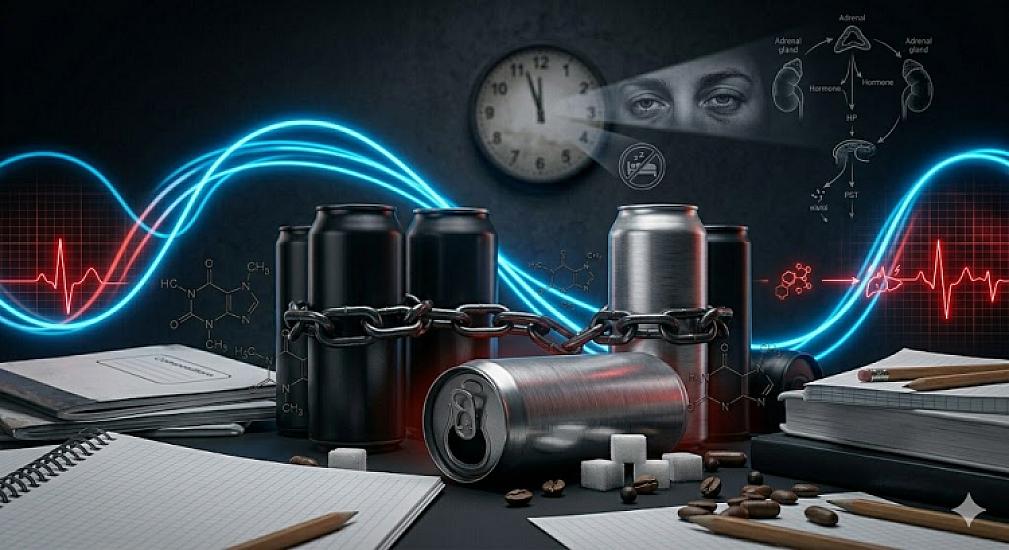

How do energy drinks affect health, and what are the most common misconceptions about these drinks in society? What risks do these drinks particularly pose to children and adolescents?

Speaking with Medianews.az about the topic, Eyyub Huseynov, chairman of the Free Consumers Union, stated that energy drinks are advised against for pregnant women, weak individuals, patients, and children: “Well, where is the logic in this? Will what is harmful to the weak be beneficial to a strong person? Let’s say once and for all that there is no logic here. In fact, the names of some popular energy drinks literally translate from English as 'hell.' This explains everything in itself.
When a new product is launched globally, if it doesn’t kill a person immediately, large companies begin aggressive advertising campaigns. Currently, worldwide human health is sidelined; the main issue is business. Therefore, such drinks and products are freely spread all over the world. Moreover, these contain addictive substances.
It is very positive that the Azerbaijan Food Safety Agency, three years ago, determined the maximum limits of addictive substances present both in energy drinks produced domestically and those imported from abroad. In fact, a limit far below the global standard has been set so that the effect and harm can be slightly prevented. Now, the energy drinks in Azerbaijan are produced according to this standard, meaning the amount of addictive substances is relatively low and they are less dangerous.”
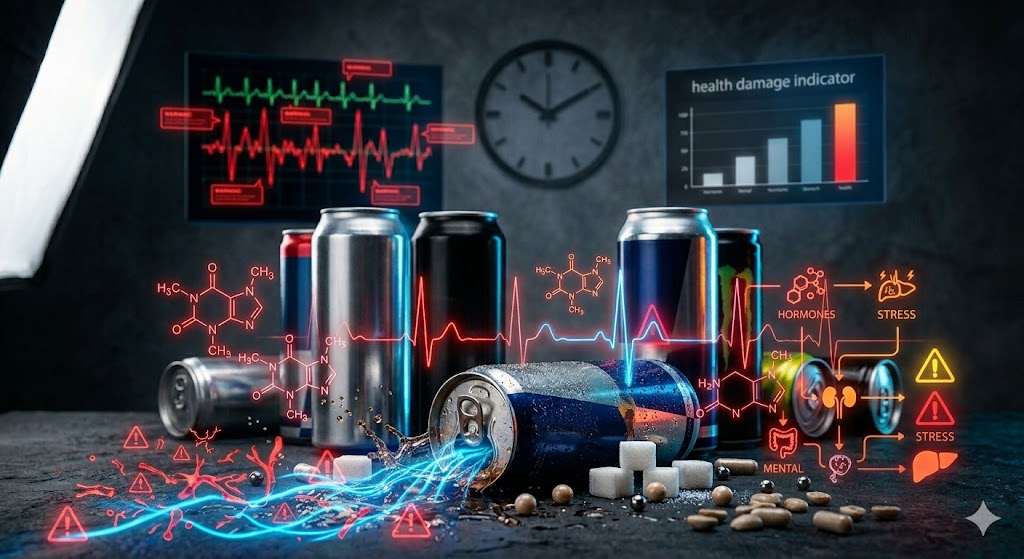
E. Huseynov noted that no medicine or energy drink externally provides instant energy to the body: “Both medicines and drinks like these simply activate the hormones in a person’s body. The person’s own body releases hormones. Improving mood, insomnia, or other conditions all happen due to the person’s own internal hormones. External substances only act as stimulants, irritating the body.
It is wrong to widely use such habit-forming drinks. Fortunately, the sale of these drinks in school buffets is prohibited. But wherever there is demand, there will be supply. Therefore, I recommend parents, teachers, and people to ensure children never get used to these. Do not keep such drinks at home or in the refrigerator. Babies and children should never know such a drink exists. If they insist and want it strongly, add a little pepper inside, let them take a sip and get disgusted once and for all. Personally, I recommend this to many children.
In short, this is by no means a desirable drink. Generally, "Coca-Cola," "Pepsi," "Fanta"—all colored drinks are harmful. Perhaps "Coca-Cola" is even more harmful than these. As an organization protecting consumer rights, we always run anti-advertising campaigns against "Coca-Cola" and others so that people use these less. Other colored, sweet drinks are also harmful. People should stay away from them.”
Nailə Qasımova,