
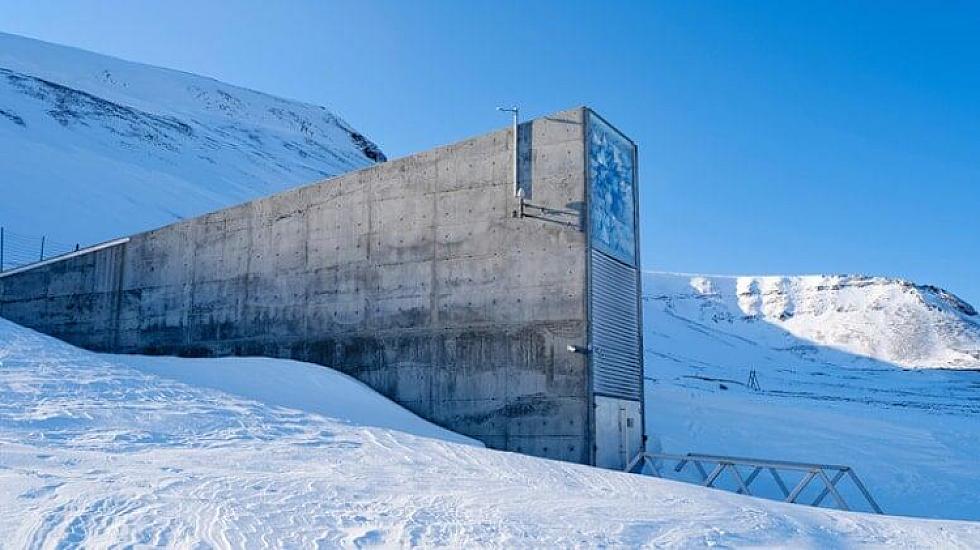
In the Svalbard archipelago of Norway, two enormous shelters located deep within a frozen mountain serve as the "backup memory device" of modern civilization. These vaults, situated away from political conflicts, natural disasters, and cyber-attacks, protect the biological and digital heritage necessary for humanity to rise again in the event of a possible collapse.
According to Milli.Az, located 130 meters above sea level and 120 meters inside the mountain, this depot ensures the sustainability of agriculture.
Currently, more than 1.2 million unique seed samples are stored here.
The seeds are frozen at a stable temperature of -18 degrees.
When the seed bank in Aleppo was destroyed due to the war in Syria in 2015, agriculture in Syria was revived thanks to the reserves in Svalbard.
This archive, located in an old coal mine near the seed vault, preserves humanity's technical and cultural knowledge.
It uses a special film technology called "analog-digital" without an internet connection.
Open-source codes from GitHub, documents from the Vatican library, and important historical archives.
These films have a lifespan of 1000 years and can be read only with light and a magnifying lens without any computer equipment.
There are three main reasons for choosing this area:
Thanks to the layer of "permafrost" (permanently frozen ground), the vault acts as a natural refrigerator even if the power goes out.
According to the Svalbard treaty, the area is closed to military activities and is politically neutral.
Its high altitude reduces the risk of the shelters being underwater to zero, even if the glaciers completely melt.