


“The exit of the United Arab Emirates (UAE) from OPEC can be considered a noticeable but not critical event for the global oil market.” Ilham Shaban, head of the Oil Research Center, said this in an interview with Medianews.az.
He stated that the UAE already has significant reserve production capacity and theoretically can increase production faster outside the quota system: “However, the real potential to increase exports is limited both by the technical characteristics of the fields and by the long-term resource management strategy. The main issue is not so much the ability to increase production but how appropriate it is to do so.”
The UAE traditionally pursues a balanced policy focused more on optimizing revenues than on price wars.
An increase in supply by the UAE may put pressure on oil prices in the very short term, but without the support of other major producers, it is unlikely that this effect will be sustainable.
Moreover, it should be noted that the additional oil volumes the UAE wants to bring to the market (theoretically 1 million barrels, practically about half of that) are not decisive against the backdrop of global demand exceeding 100 million barrels per day.
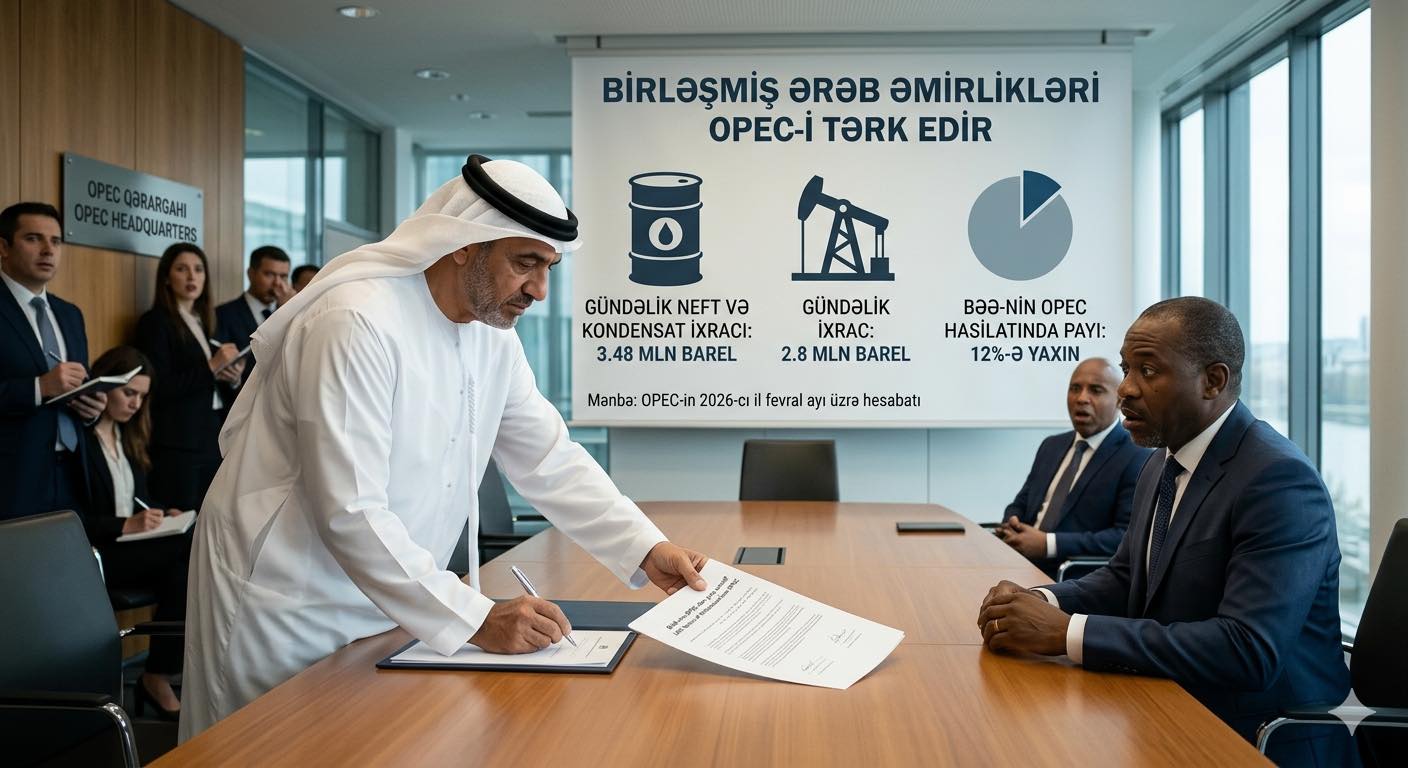
Thus, the exit from OPEC will not become a tool for a sharp drop in prices.
This move will rather strengthen the UAE's flexibility in energy policy and its negotiation positions in the market.
In the long term, the UAE will seek a balance between increasing market share and maintaining a comfortable price level.”
Regarding the reason for the UAE’s decision to leave OPEC, Ilham Shaban noted that there are political-economic factors: “Firstly, there is political tension between the UAE and Saudi Arabia, which plays the ‘first violin’ role in OPEC, and Abu Dhabi is not inclined to align its policy according to Riyadh’s wishes. Secondly, this year’s war with Iran has caused considerable damage to the UAE’s economy, so Abu Dhabi does not see any reason to limit itself with OPEC quotas to cover the losses.”
Nailə Qasımova,
Medianews.az