

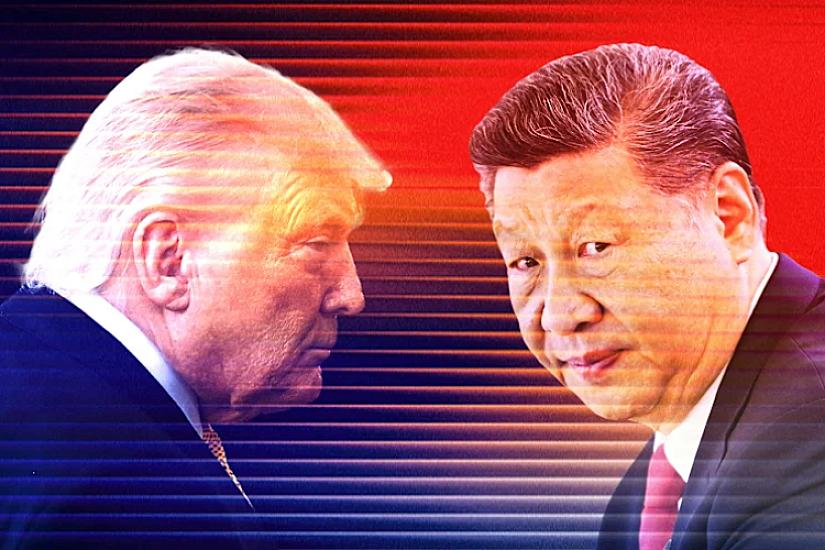
Tomorrow, US President Donald Trump is traveling to China, which he sees as his biggest rival. It is expected that Iran will also be discussed during the two-day visit. So, can the meeting with Chinese leader Xi Jinping play an important role in the diplomatic resolution of the Iran issue?
In short, no. The issue is that these two states approach the Iran problem from completely different perspectives. Most importantly, the US understands that it cannot compete globally with Beijing without holding onto the Persian Gulf, where more than half of the oil imported by China comes from. It is known that 60% of the rare earth elements, considered an alternative energy source worldwide, and 90% of the proven reserves are controlled by China. The US also has a great need for these natural resources. If China has free access to the Persian Gulf, from where it receives most of its fossil fuel supplies, all the world’s energy sources could come under Beijing’s control. It is impossible for Trump to agree to this, hence the US wants to ensure full control over the Persian Gulf and only compete with China on the rare earth elements issue.
In fact, China has no choice but to agree with the US’s determination; otherwise, it would have to face a war with the US. If that happens, China, which has concentrated a significant part of both existing and potential energy resources within its control or provided itself free access to them, could soon become the world’s main superpower and put an end to US hegemony.
For this reason, I believe that the Taiwan issue will come to the forefront in the talks starting tomorrow between Xi Jinping and Donald Trump. It is known that China, which sees Taiwan as part of its territorial integrity, is concerned about the US’s political ties with this island. Although Washington ostensibly recognizes Taiwan as part of China’s territory, it does not stop arming it. Especially since Trump came to power, the US realized its largest-ever arms sale to this island – worth 11.1 billion dollars. The complicated relations with Taiwan did not end there. On May 8, 2026, Taiwan’s parliament passed a new law envisaging the purchase of weapons systems worth 25 billion dollars from the US by 2033. Certainly, these steps taken just before Trump’s China visit to irritate Beijing are not accidental. The US President wants to deliberately tighten bilateral relations before the visit to sit at the negotiation table with strong cards in hand.
Moreover, deliberately fueling conflicts between Taiwan and China fits Trump’s MAGA ("Make America Great Again") strategy. It is no secret that Trump is trying to bring back American capital that flowed abroad due to cheap labor during previous administrations. To that end, he imposed heavy customs tariffs on imported products and urged US companies engaged in production abroad to invest in their own country.
Taiwan, which is revived by US investment, has also not escaped his attention. According to agreements signed with the semi-state entity of the island in January this year, if investments worth 250 billion dollars are made from Taiwan to the US, the Trump administration will reduce customs duties on the island’s products from 20% to 15%. Considering that Taiwan is the world's leading microchip manufacturer, it is also possible to guess the direction of the investments the US expects from Taiwan. In the current period when the world is transitioning to new energy sources, the flow of semiconductor engineering investment from Taiwan, the world’s most advanced microchip producer, to the US would be Trump’s greatest achievement.
Certainly, increased tensions between Taiwan and China could help US-centered investments on the island to return to the other side of the ocean. It seems that this is why Trump is interested in intimidating Iran on his own strength, encouraging the Gulf Arabs against Iran, and frightening China with Taiwan. The goal is also to share with Beijing the cards of semiconductors and rare earth elements in exchange for Gulf oil.
Nevertheless, I do not believe that the US will ever agree with China’s policy of gaining control over Taiwan. This is primarily related to the First Island Chain strategy that the US established and implemented in the Pacific Ocean after World War II.
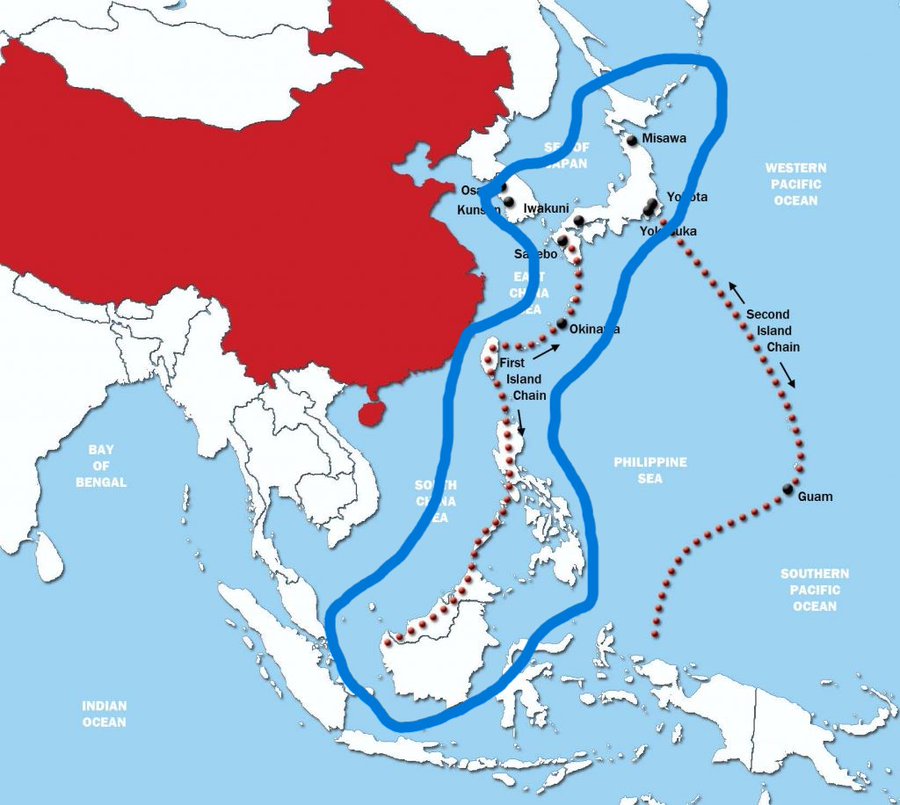
What is the First Island Chain?
This strategy is designed to build natural maritime fortresses over the island states in front of Russia and China. Although Russia broke this fortress by taking over the Kuril Islands, these obstacles still remain for China. If you look carefully at the map, this fortress, stretching from Japan, skipping some of South Korea’s islands, to Taiwan, then to the Philippines, and to the west coast of Malaysia, in fact prevents China from accessing the Pacific Ocean and passing to the Indian Ocean from there. Taiwan is considered a key geographic point in these natural sea fortresses. If the island falls again under China’s control, the fortress established by the US will be destroyed, and the busiest maritime trade area in the world will open up to its biggest rival. In this sense, contrary to what some analysts think, the US will not make concessions on Taiwan in exchange for Iran. At least for the reason that if China removes this obstacle, it will accelerate its development and consequently drag world hegemony into the deep waters of the Pacific Ocean.
Considering all this, I can say that Trump’s China visit will not be easy. However, it will not turn into major conflicts between the two giants either. Because the US and China are each other’s biggest trading partners and in the current tumultuous period of the world, no country wants to lose its largest trade partner. A common strategy that the two giants could agree on might be to share control over fossil fuels and alternative energy sources. Probably, the US will have to agree to China’s hegemony over rare earth elements, and China will have to acknowledge US hegemony over oil and gas. The mutual dependence of both sides makes it important that neither imposes an embargo on the other.
Heydar Oguz