

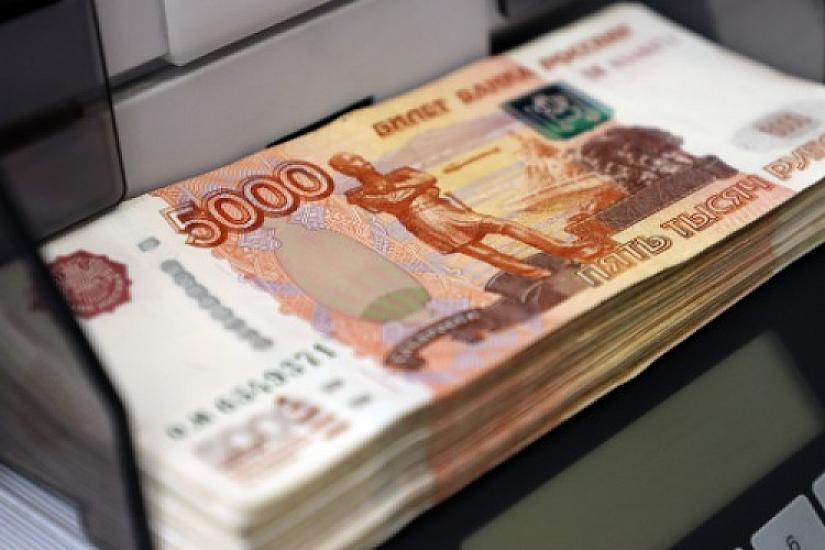

The Russian ruble is strengthening against the manat just as it is against the dollar.
According to the official exchange rate of the Central Bank of Azerbaijan, 100 Russian rubles were equal to 2.1157 manats on January 5.
On January 22, the rate rose to 2.2139 manats.
On April 14 it was 2.2320 manats, on April 30 it was 2.2701 manats, on May 5 it was 2.2836 manats, and on May 12 it was 2.3056 manats.
On May 19, 100 Russian rubles rose to 2.3386 manats.
The highest rate during the year was recorded on May 20: 2.3884 manats.
It should be noted that the Russian ruble has also reached its highest level against the dollar at present.
On May 12, 2026, the Central Bank of Russia set the official rate of 1 dollar below 74 rubles for the first time since February 2023.
On May 19, the rate decreased somewhat to 72.35 rubles.
On May 20, the Central Bank of Russia set the official exchange rate of 1 dollar at 71.2926 rubles.
Over the past year, the Russian currency has strengthened by about 10 percent against the dollar.
Overall, since the beginning of 2023, the official rate of 1 dollar in Russia has never been as low as 71.2926 rubles.
What does the strengthening of the Russian ruble indicate: the economy's continued adaptation to sanctions, increased national revenues due to rising oil prices amid tensions around Iran, or strict monetary policy and administrative measures to support the ruble?
What can be said about the real state and prospects of the Russian economy?

Rəsmiyyə Sabir (Abdullayeva), Head of the Inclusive Social Development Department at the Institute of Economics under the Ministry of Science and Education, Doctor of Economics, Professor, told Medianews.az that the recent strengthening of the ruble against both the dollar and the manat is related to several factors: "Among these factors are strict monetary policy, control over capital and currency flows, the impact of oil and gas revenues, weakening imports, and cooling of domestic economic activity. The Central Bank of Russia's long-term application of a high key interest rate has reduced the demand for foreign currency domestically, made keeping deposits in rubles more attractive, and weakened imports. This has become one of the main factors supporting the ruble's exchange rate.
From this perspective, the ruble's appreciation is to some extent the result of strict monetary policy. The key point is that one of the main pillars of the ruble's strengthening is not an economic boom, but rather the limitation of economic activity through a high interest rate policy.
Another important factor influencing the ruble’s exchange rate is capital controls. After the war and sanctions, pressure increased on exporters in Russia to sell currency, capital outflows abroad were restricted, and some currency operations were tightened administratively. Thus, the ruble’s strengthening can be assessed not only as a result of market mechanisms but also of administrative and regulatory interventions.”
According to the professor, the oil factor also plays an important supporting role for the ruble: "Increased geopolitical tensions in the Middle East, including around Iran, have provided certain support to oil prices. Rising oil prices have, in the short term, increased Russia’s export revenues and strengthened the ruble’s position. Predictions like ‘Russia will collapse immediately’ have not been realized. However, currently, a war economy is expanding in the country, while there are signs of weakening in significant parts of the civilian sector. High interest rates limit business activity, weaken investment opportunities, and deepen technology and capital shortages. At the same time, the departure of Western companies from the market and the loss of human capital pose serious risks for long-term development.
A significant portion of economic growth is already formed through military orders and government spending. Signs of stagnation are observed in many sectors of the non-military economy. Economic growth forecasts by the Central Bank of Russia also show a slowdown in growth rates.
The current strong ruble does not automatically mean that the Russian economy is completely healthy. While a certain short-term financial stability can be observed in the country now, structural problems continue to deepen. The main risks ahead will relate to high military expenditure, technological backwardness, shortage of investments, and changes in energy markets. In this regard, the current exchange rate stability can be considered more as a temporary balance created by high interest rates, administrative controls, and energy revenues.”
Nailə Qasımova,