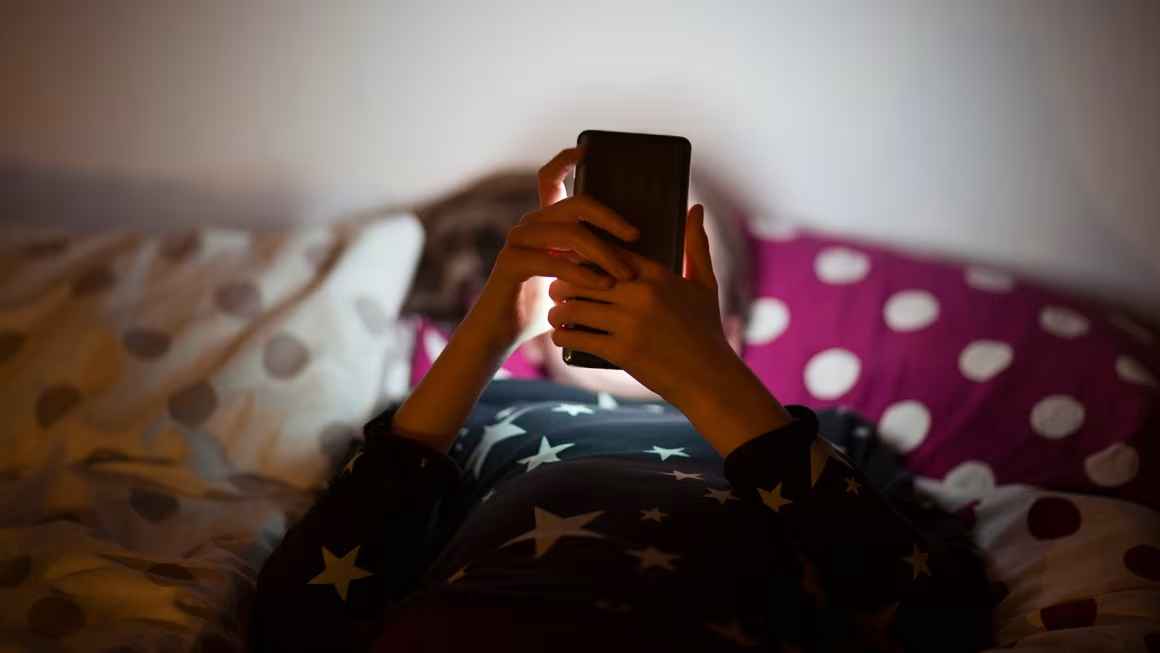
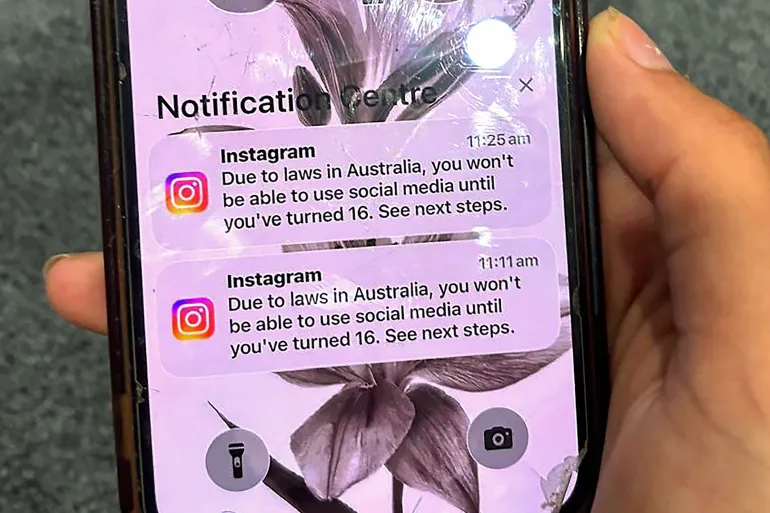
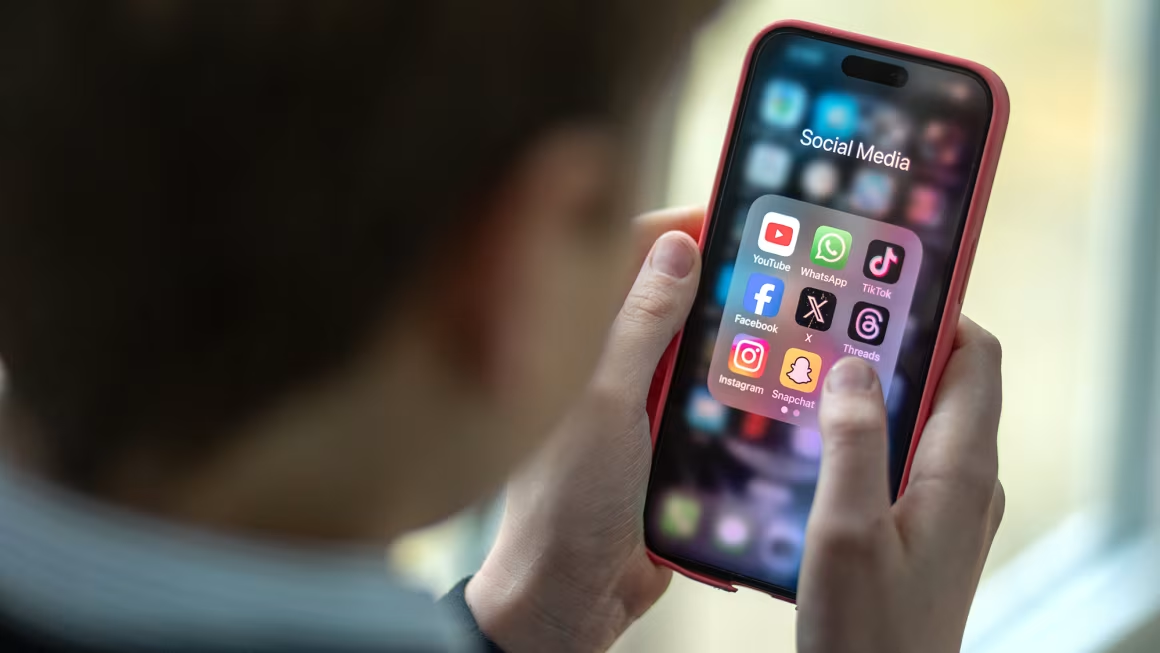
At the end of last year, Australia imposed a restriction on the use of social networks by persons under the age of 16, deciding to delete their accounts on platforms such as "Facebook," "Instagram," "Kick," "Reddit," "Snapchat," "Threads," "TikTok," "X," and "YouTube." Companies violating the law could be fined up to 50 million Australian dollars (approximately 56 million AZN).
It should be noted that Australia is the first country to impose a complete ban on this matter. The Australian government has obliged all social media platforms to delete profiles of citizens under 16 years of age from the network. Researchers call Australia a "live laboratory" because of this decision. They say that thanks to this decision, they will be able to study how restrictions imposed on social networks affect children's psychology.
According to information, France is also preparing to ban the use of social networks by persons under the age of 15. The ban is said to cover "Instagram," "TikTok," "Snapchat," "YouTube," and other networks. Additionally, restrictions on the use of mobile phones in schools are planned.
Discussions are also ongoing in Azerbaijan about prohibiting persons under the age of 16 from opening accounts on social networks. If such a decision is made, what would be the result? Should opening accounts on social networks by persons under 16 be banned? How does the use of social networks by children and adolescents up to this age affect their moral-psychological and intellectual development: is it more positive or more negative?
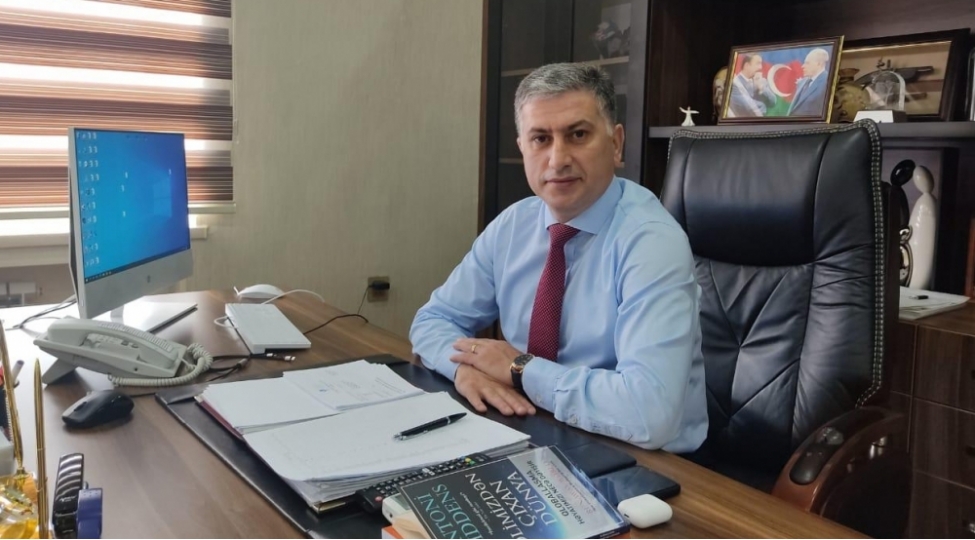
Medianews.az spoke with Elnur Rüstəmov, the head of the Psychology Scientific-Research Institute, who stated that this issue is not only technological or legal but a multifaceted topic directly touching upon the psychological development of children and adolescents.
The psychologist noted that Australia’s decision to close the accounts of persons under 16 on social networks has caused widespread discussions worldwide, and it is no coincidence that researchers view this country as a live laboratory: "Because for the first time, a state is intervening so harshly and systematically in children's interaction with the digital environment. The results create a real base for long-term psychological observations."
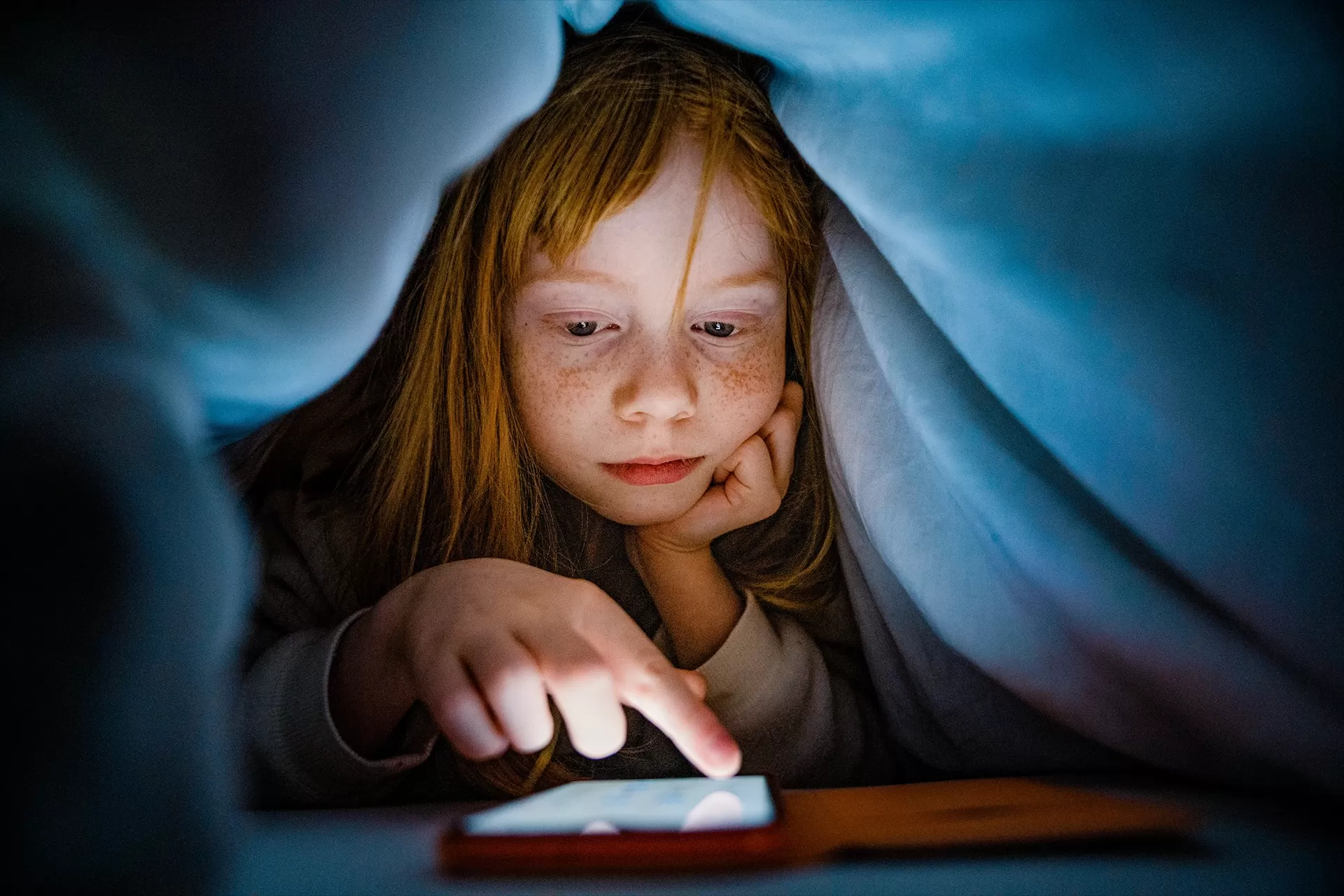
From a psychological perspective, the impact of social networks on children under 16 is not unequivocal. On one hand, these platforms are attractive to adolescents for self-expression, socialization, connecting with peers, and identity search. On the other hand, scientific studies show that intensive social media use at an early age is closely associated with attention deficit, emotional instability, feelings of worthlessness, increased anxiety and depressive symptoms against a background of social comparison. Especially the "like" culture, idealized images, and cyberbullying put serious pressure on the still underdeveloped psyche of children. At this age, the brain is still in a development phase regarding impulse control, emotional regulation, and risk assessment, and social networks complicate this process further."
E. Rüstəmov emphasized that despite this, the issue of a complete ban should be approached cautiously: "It is well known in psychology that strict prohibitions sometimes have a counter-effect: secret usage, weakened trust between parents and child, and increased risk of digital illiteracy. If a child is completely removed from social media but is not provided with alternatives such as emotional support, real social relationships, and safe digital behavior skills, this can also lead to problems. Therefore, the main advantage of the Australian model is not only the ban but also the simultaneous restriction of mobile phone use in schools, strengthening parental control, and establishing monitoring mechanisms directed at children's psychological wellbeing."
As for the Azerbaijani context, the possible consequences of such a decision will directly depend on the society’s level of psychological readiness, the education of parents, and the presence or absence of alternative support mechanisms. In my opinion, the main question should be "how do we protect children in the digital environment" rather than "should there be a complete ban or not." Automatically allowing children under 16 to open accounts on social networks is not right, nor is a total ban. A more balanced approach is possible through phased restrictions, parental consent, age-appropriate content filters, and psychological awareness."
According to E. Rüstəmov, social networks are neither entirely beneficial nor completely harmful for this age group: "Everything depends on the level of control in use, the child's psychological resilience, and the attention shown within the family–school–community triangle. If the goal is to protect children's moral-psychological and intellectual development, the main priority should be to create healthy alternatives, form emotional literacy, and cultivate a culture of digital safety rather than impose bans."
Nailə Qasımova,
Medianews.az
Note: The article was prepared within the framework of the competition and with the financial support of the Media Development Agency of the Republic of Azerbaijan on the topic "Physical and moral development of children and youth."