

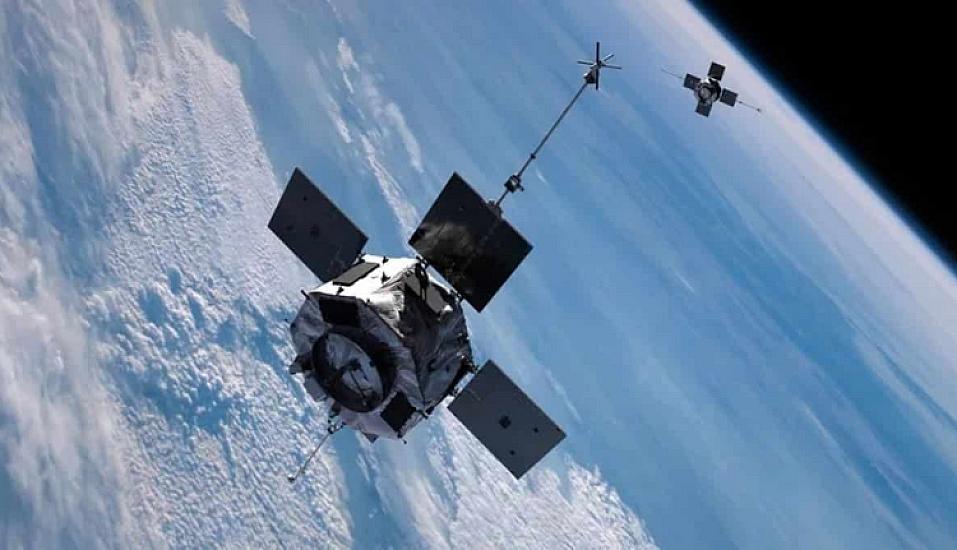

One of NASA's large satellites is moving toward Earth. According to experts, the apparatus called "Van Allen Probe A" will enter Earth's atmosphere in the coming days after spending about 14 years in orbit.
Medianews.az reports, citing Musavat.com, that the satellite is expected to fall to Earth on March 11, 2026.
Weighing approximately 600 kilograms, the satellite was launched into orbit in August 2012 together with its "twin" "Van Allen Probe B." Both devices were designed to study the radiation belts around Earth—known as the "Van Allen radiation belts."
NASA states that most of the satellite will burn up and be destroyed upon entering the atmosphere. However, the possibility that some parts of the device survive without burning and fall to Earth's surface is not excluded.
According to scientists' calculations, the likelihood of anyone on Earth being harmed by this event is extremely low—about 1/4200, or 0.02 percent. It is noted that roughly 70 percent of Earth's surface is covered by oceans. Therefore, after entering the atmosphere, the probability that surviving fragments will fall into the open ocean is higher.
Nevertheless, the exact time and date when the satellite will enter the atmosphere is still considered a preliminary forecast. Experts will refine their calculations as new information becomes available.
In fact, the mission was initially planned for only two years. However, the satellites operated for longer than expected. "Van Allen Probe B" functioned until July 2019, and "Van Allen Probe A" until October of the same year. The scientific data collected by the satellites is still being studied by scientists.
Studying the radiation belts around Earth is of great importance for understanding space weather and the impact of solar activity on technologies. According to NASA, these studies help predict the effects of solar activity on satellites and space missions, assess risks for astronauts, and protect ground systems such as communication, navigation, and power grids.
Originally, both satellites were expected to remain in orbit until 2034. However, increased solar activity in recent years has caused the upper layers of Earth's atmosphere to expand, resulting in satellites losing speed more quickly in orbit. Experts believe that this factor shortened the orbital duration of the "Van Allen Probe A" satellite.
According to NASA's forecasts, its "twin," "Van Allen Probe B," will not enter Earth's atmosphere until at least 2030.