



Artificial intelligence data centers (AIDC) are drying up one of the world's largest freshwater reserves – the Great Lakes. The water levels in the Great Lakes have fallen below average.
Companies purchase land in small towns near the lakes, where everything – land, water, and local taxes – is cheaper. However, for local residents, this leads to a drop in pressure in water pipes and poses a threat to agriculture.
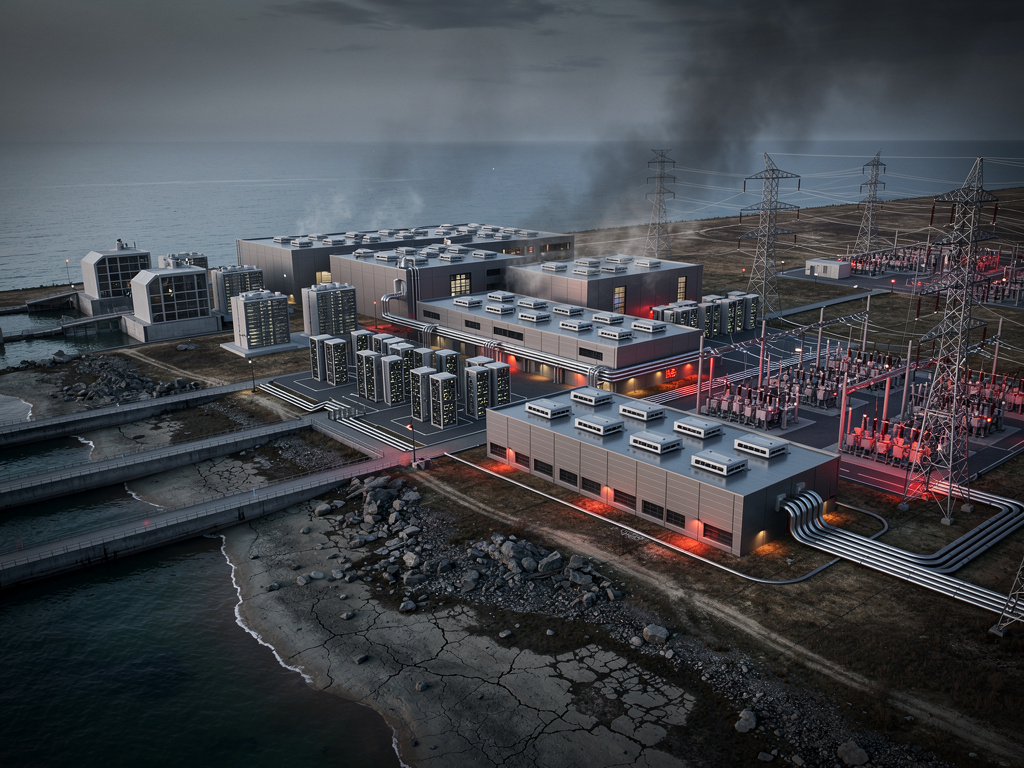
Cooling servers and producing energy, a single large AIDC can consume enough water to serve hundreds of thousands of people. Big Tech companies rarely disclose information about resource consumption to avoid criticism.
AIDCs consume as many bioenergy resources as humans – for them, water is the second most important resource (the first is energy). In other words, a battle for water has already begun between humans and artificial intelligence. This raises the question: which is more important – humans or artificial intelligence?

Due to water shortages, India, Iran, and countries of the Arabian Peninsula have no future as artificial intelligence powers – they are doomed to depend on other country(ies) in the field of artificial intelligence.
So why not use seawater? It is possible. However, there are consequences: cooling servers significantly increases water temperature, which causes the destruction of the sea's biological resources. For this reason, for example, it is difficult to fully adapt China's coastal zone for AIDCs.
The ideal zone for AIDCs is the Arctic – where the natural temperature is low. Most of the Arctic is under Russia's control. The US also wants to control the Arctic partly for this reason. To do so, it must acquire Greenland and Canada and, since it cannot defeat Russia, at least improve its relations with it.
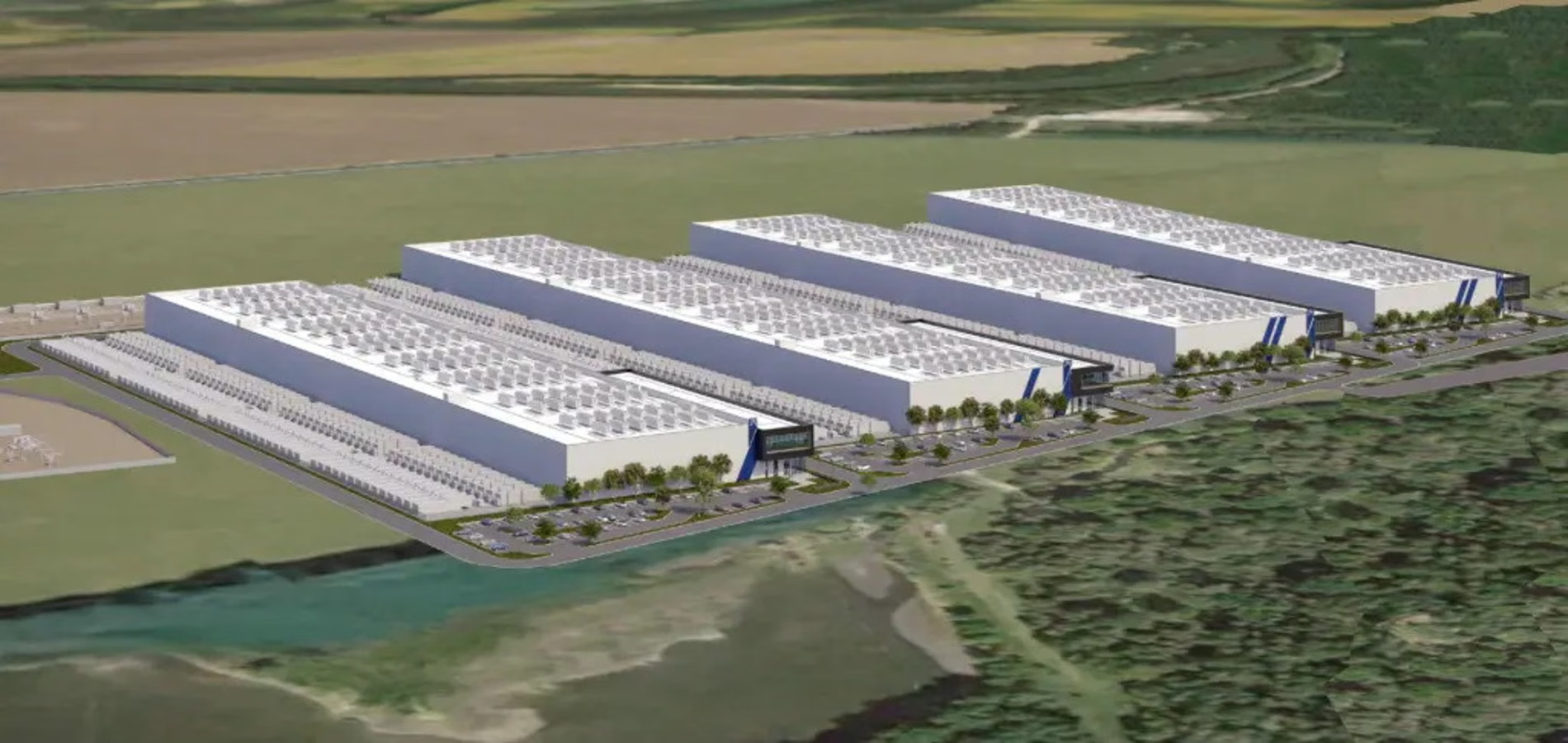
The US has lost to China in all fields except artificial intelligence for now. Its development depends on the creation of huge AIDCs. Now, for the US to remain a superpower in the future, having strong AIDCs is a matter of vital importance.
The construction of a Russia-US tunnel under the Bering Strait was not considered in vain.
Asif Shafaqatov