

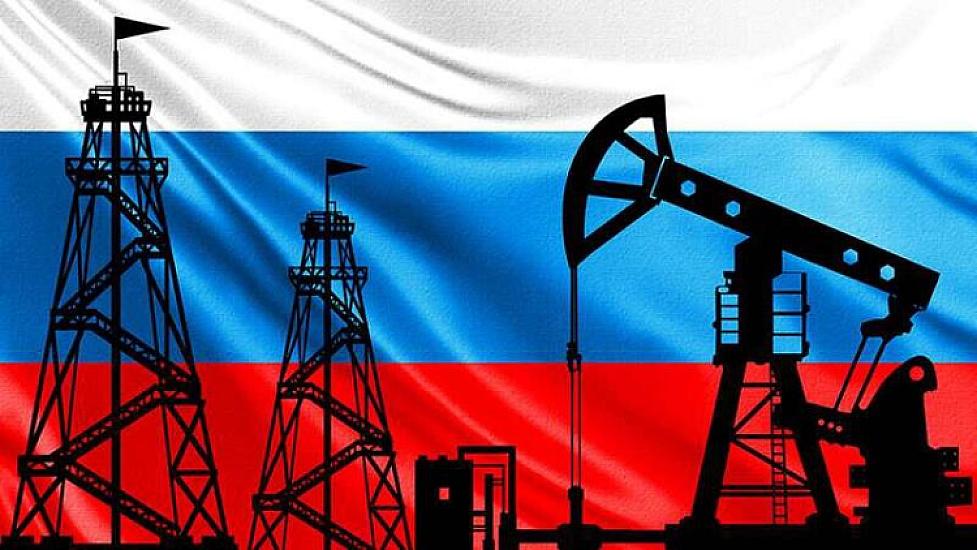

According to information from the US newspaper "Wall Street Journal," citing informed sources, the US plans to push Russian oil out of the Chinese market by offering Beijing its own energy resources and favorable economic incentives.
The newspaper writes that before President Donald Trump's visit to Beijing, US Treasury Secretary Scott Bessent is considering including in the agenda of upcoming talks with his Chinese counterpart a topic that will provoke Beijing's objection. This is Washington's request for China to reduce its purchase of oil from Russia.
Bessent will meet with his Chinese counterpart, Deputy Prime Minister He Lifeng, in Paris in mid-March. The main goal of the Paris talks is to finalize the structure and key parameters of future agreements between Trump and Chinese leader Xi Jinping at the April summit, which will serve as a basis for dialogue between the two leaders.
Within the framework of preparation for the summit meeting, the US has offered Beijing an increase in supplies of liquefied natural gas, soybeans, and Boeing aircraft in exchange for lifting restrictions on the export of rare earth metals. China, in turn, has put forward counter-demands. These include lowering trade tariffs, lifting sanctions on artificial intelligence and microchips, and Washington changing its position on Taiwan's independence.
Meanwhile, tensions are also rising in relations between the United Kingdom and China. Although UK Prime Minister Keir Starmer visited China in January and discussed issues of cooperation development between the two countries, the UK has imposed sanctions on Chinese companies cooperating with Russia. London's claims concern so-called dual-use products, i.e., goods used both in industrial sectors that meet state economic needs and in the defense sector. Beijing has deemed the UK’s interference in China-Russia trade relations unacceptable.
What worries Beijing now are not the problems faced with Western countries due to the Russia-Ukraine war, but the expansion of the war in the Middle East. China is experiencing difficulties in importing energy resources. China has been deprived of cheap Iranian oil and is unable to buy oil from Gulf countries because of the war in the region. Beijing's message to Tehran to "block the Strait of Hormuz" also did not yield results.
In such a situation, the White House administration's call to China, "Do not buy oil from Russia," will be ineffective. Washington had also demanded India to purchase cheap Russian oil. However, the expansion of the war in the Middle East prevents India’s refineries from completely abandoning Russian oil.
Elkhan Shahinoglu,
political analyst