
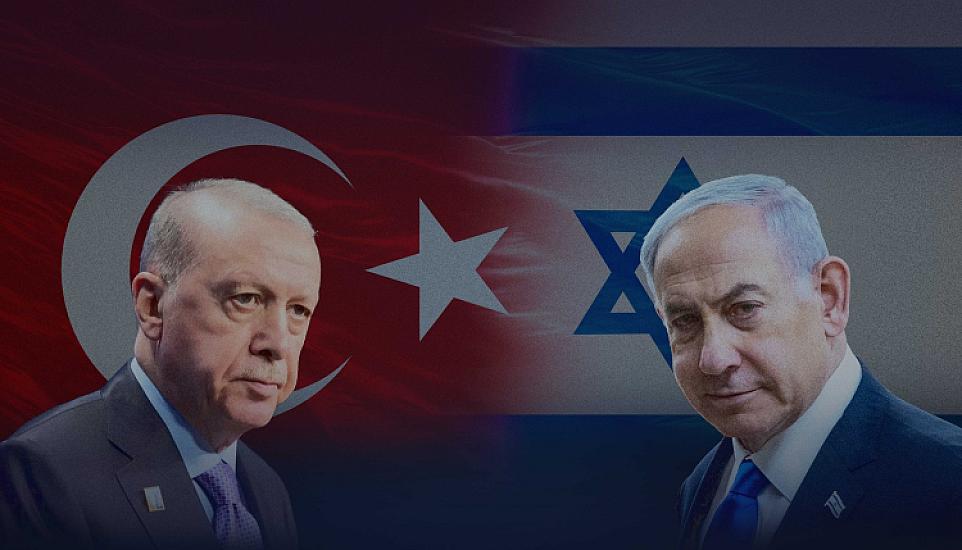
The purported predictions of an imminent "inevitable military clash" between Turkey and Israel have today become a favored topic on both regional and international political agendas. Although harsh statements, threats, and accusations are voiced in the political rhetoric of both countries, the real picture behind the events is entirely different. In fact, this is a long outdated geopolitical game rule – tension for the public, calculated cooperation behind the scenes.
Looking at the relations between Turkey and Israel, a paradox immediately stands out: although the two countries sharply criticize each other, they neither want to sever economic nor security ties. For Ankara, Israel is a gateway to high technologies, strategic markets, and energy infrastructure. For Israel, Turkey is a unique transit bridge between the Mediterranean and Asia. In this system of mutual interests, coordination, not war, is the dominant concept.
For example, the trade turnover between the two countries has approached 9 billion dollars. A significant portion of the goods exported from Israel’s energy, agriculture, and technology sectors is transported via Turkey. The Turkish industry protects Israel's access to microelectronics and defense equipment. Despite the military rhetoric, the economic mechanism operates continuously.
One of the main intersection points in the region is Syria. Although the parties criticize each other in official statements, their interests often overlap in real politics. Ankara tries to prevent Kurdish separatism in northern Syria, while Tel Aviv attempts to weaken Iran’s military bases. Both goals complement each other. Therefore, Israel and Turkey indirectly demonstrate coordinated behavior in airspace, intelligence level, and logistical contacts.
Sometimes this coordination is not visible openly but can be understood from the results. It is no coincidence that Turkish and Israeli forces do not come into direct conflict in operations in northern Syria. This is a manifestation of the silent rule formed over years: everyone acts within their sphere of interest but avoids touching the other’s "red line."
History shows that relations between Ankara and Tel Aviv have often passed through political storms but have never turned into armed confrontation.
During the 2010 "Mavi Marmara" incident, diplomatic relations were frozen, but economic channels were not closed. In 2021, the Turkish president allowed the ambassador to return, followed by the restoration of ties in energy, tourism, and intelligence lines. Each time, a logical calm follows an emotional outburst.
This model still works today: Ankara uses harsh rhetoric to send messages both to the domestic audience and to maneuver diplomatically for influence in the region. Israel accepts this rhetoric as part of the political theater and prioritizes preserving relations in practical fields.
The invisible but decisive player in Turkey-Israel relations is the USA. Washington’s relations with both countries are shaped within the framework of NATO and Middle East strategy. For the US, a clash between these two allies would mean losing control in the region. Therefore, the Pentagon and State Department constantly maintain minimal coordination of these relations.
The US plays the role of a "security locomotive" for both Ankara and Tel Aviv – on one side providing F-16 and Patriot systems, and on the other, high-level intelligence support. Under such circumstances, a real war scenario does not appear reasonable economically or politically.
Information warfare also plays a significant role in escalating rhetoric. Every statement in the Middle East, especially rhetoric along the Israel-Turkey line, carries a dual meaning both for domestic politics and international public opinion. Harsh attacks against Israel in Turkey appeal to national sentiments of the domestic electorate, while accusations toward Turkey in Israel justify the government's security policies.
In reality, this is mutual "controlled tension." Both capitals know that keeping the emotional background high increases public support, but operationally this tension must remain balanced.
Experience shows that economic ties have not stopped even in the harshest political periods. Israel’s increasing investments in the energy sector and Turkey's access to Israeli technologies in the defense industry create interdependent economic chains between the two countries. This is no longer merely trade but a mechanism of mutual dependence.
Turkey wants to maintain its decisive transit role in Eastern Mediterranean gas projects. Israel sees Ankara as a stable partner in the region because without Turkey, the energy logistics of the Eastern Mediterranean would not function fully.
When combining all these factors, the picture becomes clear: the war scenario between Turkey and Israel is part of political theater, while in reality these relations are managed with strategic calculation.
Both states understand the same thing – whoever acts with calculation rather than emotion in the Middle East wins. The main threat to Turkey is not Israel but the fragmented structure of Syria and Iran's expansion. For Israel, the threat is not Turkey but the collapse of stability in the region.
Therefore, behind the scenes, diplomacy, logistics, and intelligence relations continue, while on the forefront, a public display of emotion is played out. This is not war but a game of balance – and as always, the winner of this game will be the coolness of reason.
Elchin Alioglu,
political scientist