

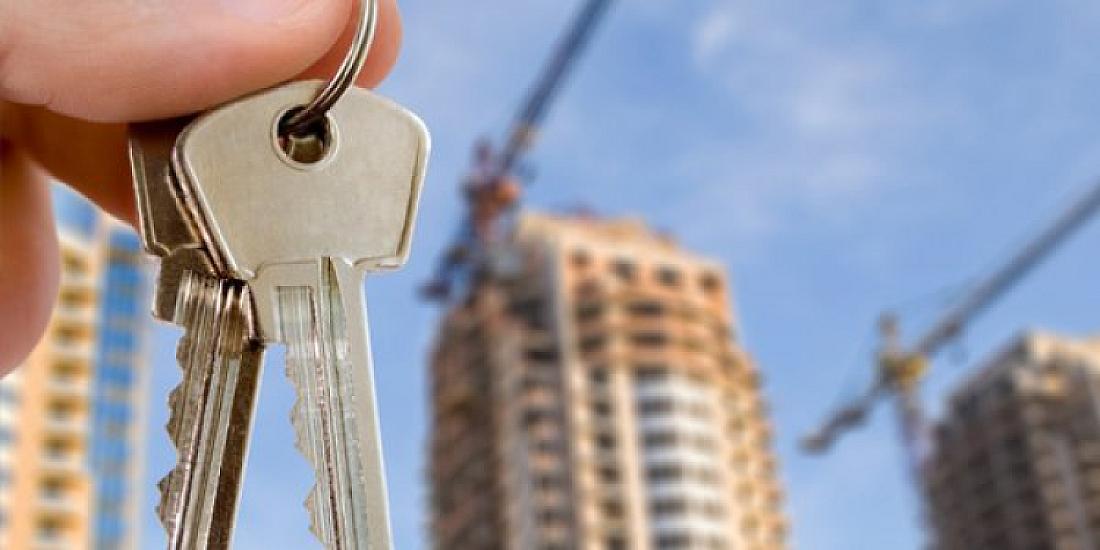

In recent years, the concern caused by the concept of "sale at the foundation stage" in the country's housing market has attracted more attention. It is about selling a property that does not exist and is not yet legally established. This weakens the rights of buyers and increases non-transparency and fraud cases in the market.
The inside story of the "sale at the foundation" business
By sale of an apartment at the foundation stage, it means that the construction object is either not yet started or is only in the initial phase, while the apartments in the building to be put into use in the future are sold to citizens based on an "order" or "contract." This form of sale is usually presented on advertising platforms with attractive expressions such as "the cheapest price," "initial phase," "buy now, it will get more expensive later."
The widespread adoption of this model actually stems from the financial needs of construction companies. Because many institutions operating in this direction do not have enough investment to fully finance construction. In other words, under the conditions of expensive bank loans and limited investment resources, construction is attempted to be carried out at the expense of funds paid by citizens. Thus, the buyer is approached as the "creditor" to the construction company.
However, there is an important difference here: banks conduct collateral, guarantees, audits, and risk analyses when giving loans. An ordinary citizen usually signs the contract based only on the advertisement and the company's promises. So, how legal are these sales considered? According to real estate expert Qulu Gasimov, the main point here concerns the essence of the legal problem. That is, the sale and purchase of real estate without an extract (registration document from the state registry) is not envisaged by law.
Q. Gasimov draws attention to the seriousness of this issue, stating that property without an extract is not yet fully formed legally as "real estate," in other words, there is no real ownership right. He also reminds that what the citizen receives is only the "hope to obtain that apartment in the future" and the "obligation of the company." Such contracts are usually prepared in forms such as initial sales with the housing-construction cooperative, shareholder contracts, apartment reservation documents, or receipts and payment protocols.
However, most of these documents are not certified by a notary, are not registered in the state registry, and as a result, have weak legal protection. In practice, such agreements are more considered civil obligation contracts. That is, the buyer legally does not acquire the apartment but just pays funds, and the other party assures to build and deliver the building in the future in return.
But the biggest concern here is the buyer not having ownership rights. In other words, a person paying at the foundation stage of a multistory building often thinks that the apartment specified in the contract already belongs to them. However, legally, this is not the case. If there is no extract in the buyer's name, then that apartment is not considered their property. The apartment cannot be sold, donated, or used as collateral. The construction company can even sell the apartment to another person. Or if the company goes bankrupt, the buyer is in a legally weak position. This puts the buyer in a "non-guaranteed investor" situation both legally and financially.
One of the most common problems in this area is the construction company not fulfilling its obligation. That is, the citizen pays, but after a while, construction stops and the building remains incomplete. Thus, the construction process is prolonged and delayed for years. The company moves on to another project, incurs debt, and the institution goes bankrupt. In this case, even if the buyer appeals to law enforcement, often the problem turns into years of court discussions. The company exploits the argument "we will build, just delayed," and the buyer cannot achieve real results. This creates widespread social discontent in society, and hundreds of families are forced to pay both rent and the loan for the "apartment" they "bought" for years.
Those falling into a legal vacuum...
Real estate expert Hasan Valiyev states that one of the serious problems in this field emerges after construction is completed. Often, the buyer pays based on the square meters specified in the contract. But when the building is delivered, it turns out that the apartment's actual area is smaller. Because the project plan was changed, room dimensions differ. At the same time, it is found that balconies were later added or removed in the project, and utility lines were placed differently. In some cases, due to neglect of quality during construction, issues such as wall cracks appearing, use of cheap materials, poor sound insulation, elevator and utility problems are encountered with dissatisfaction.
At this time, the buyer again disputes with the company. However, contracts often contain clauses that minimize the company's responsibility. For example, most agreements are not certified by a notary. This weakens the buyer's evidentiary power during future legal disputes. Meanwhile, notarization gives a contract a more serious legal status and increases the responsibility of the parties. Even such an agreement does not replace the extract but relatively strengthens the buyer's legal protection. At least, the amount paid by the buyer, contract terms, and the parties' obligations are formalized more precisely.
The expert further notes that housing-construction cooperatives have played an active role in the real estate market in the republic for many years. Formally, these bodies are based on the principle of citizens uniting to build a building. But in practice, cooperatives have often become alternative legal mechanisms to construction companies. Some structures operating under the cooperative name collect money from citizens, prepare contracts non-transparent, do not fully provide construction documents, and finally carry out sales without state registration. This deepens legal uncertainty in the market. Citizens consider the document received from the cooperative as an "official document," but later see that it is only an internal paper stamped with the cooperative's seal.
According to experts, sales transactions without an extract are illegal. In other words, the extract represents the fundamental legal basis of the real estate market; thus, apartments without such a document have a problematic legal existence on the market. The offered apartment is only valued as an area specified in the project. In fact, there are two different stages here: one, related to land documents and construction permits, and the other, issuance of extracts after the construction process ends. If the construction company does not have land ownership documents and construction permits, then the funds paid by the citizen are at much greater legal risk. Because if state agencies deem the construction illegal tomorrow, the building might be demolished or not put into use.
"Sale of hope" in the housing market
According to real estate expert Abdulla Abdullayev, the sale of multistory buildings at the foundation stage is not only a legal violation but also a social problem. Because this model is presented to buyers with a promise of low price and future profit. Citizens, fearing price increases in the market, think "if I don’t buy now, it will be expensive tomorrow." Under this psychological pressure, the buyer does not carefully check documents, signs the contract without reading, does not investigate the company's history, and does not consult a lawyer. As a result, the "sale of hope" is spreading in the market — the apartment is sold not as a real property but as a future promise.
Such sales often lead to law enforcement involvement. The reason is simple: the citizen pays money, but either the building is not constructed, is delayed, or the apartment is sold to another person. In such cases, the issue goes beyond civil disputes and contains elements of fraud. It is especially concerning if the company deliberately deceives buyers and collects funds.
However, the problem is that in many cases legal evidence is insufficient. This is clearly seen in the imprecise drafting of contracts, cash payments, lack of bank transfer and official documentation, which complicates the work of law enforcement.
So what should the buyer do in such cases? How to reduce concern? Although it is not possible to eliminate the difficulties completely, it can be minimized. For this, the buyer should investigate the construction company's previous projects, check the company's tax and legal registration data, request documents for the land plot of the construction site, examine construction permit documents, and have the contract reviewed by a lawyer.
They should pay only via bank, pay attention to delay and penalty mechanisms included in the contract, demand notarization of the agreement, and most importantly understand that "if there is no extract, then that apartment is not legal ownership."
The state should implement certain projects to solve this issue. First of all, minimum legal requirements for construction companies to start sales should be defined, sales rights should be given only to projects with official construction permits and land documents, and a financial control mechanism should be established to monitor how the collected funds from citizens are spent.
At the same time, legal sanctions for construction delays should be strengthened, illegal construction sales on advertising platforms prevented, and educational programs conducted to inform citizens.
Opinion of Vuqar Oruc, Chairman of the Appraisers Society:
In the republic, sale and purchase of real estate without obtaining an extract from the state registry, i.e., without state registration, is prohibited by law. This creates serious concerns for citizens. Many construction companies start pre-sales to attract financing. In such cases, contracts are signed between buyer and construction company, but these agreements are often not notarized.
Generally, the law does not allow sale and purchase of real estate without an extract issued by the relevant state authority. This means that sales operations for apartments without an extract cannot exist. A different situation occurs only after construction is completed and extracts are issued for apartments in the building, and the construction company has beforehand obtained all documents for the entire land plot. In that case, the registration process proceeds without legal obstacles.
In such cases, many times law enforcement is involved. Because despite agreements signed at the foundation stage, the construction company does not fulfill its obligations and does not deliver the apartment to the person. To prevent such risks, buyers are advised to carefully verify the construction company's operations, consult experts, and demand ownership or legality documents for the construction. Such documents help minimize potential risks.
Properties purchased at the foundation stage do not transfer ownership rights to the buyer. This is only based on mutual obligations of the parties. One party pays, and the other undertakes to deliver the apartment within the agreed period after construction is completed. Documents issued by housing cooperatives are usually certified by the company's seal and given with its consent. If necessary, such documents can be notarized as debt obligations or other contract guarantees.
Apartment sales should begin only after construction completion. However, in practice, cases often arise where the buyer prepaid but after construction, the apartment's actual area is smaller than specified or repair quality does not meet standards. The most serious problem concerns construction delays. To prevent such issues, state agencies should develop unified standards and strengthen control in this field.
Vagif BAYRAMOV
"Xalq newspaper"