

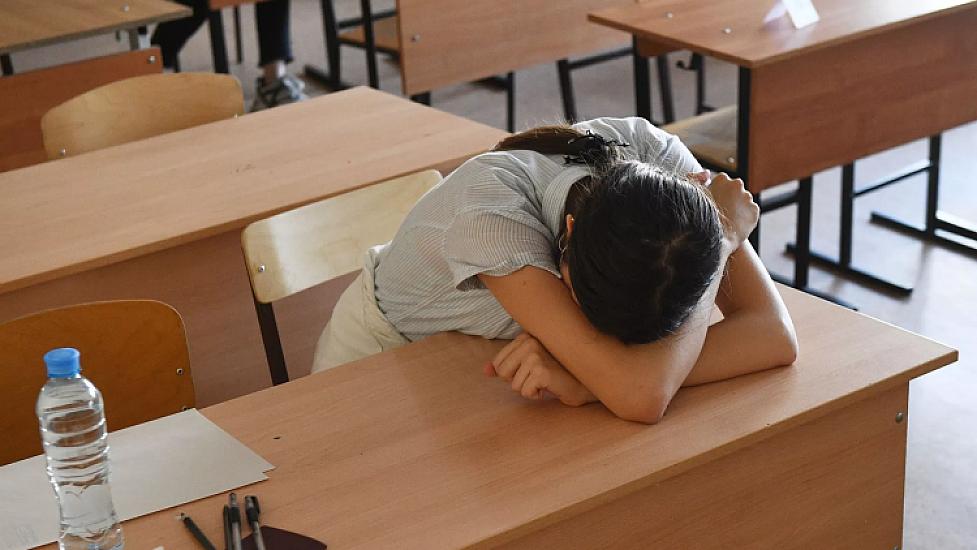

One of the most sensitive issues in high school graduation and university entrance exams is when a student or an applicant fails to achieve any positive result, i.e., fails the exam. How should parents’ attitude be towards students or applicants who fail the exam?

Elnur Rustemov, Chairman of the Institute of Psychology Scientific Research, in his statement to Medianews.az said that parents’ attitude plays a very serious role in the future psychological development of students or applicants who fail the exam: “Unfortunately, in some families, exam results are accepted not only as an academic indicator but as a measure of the child's worth. However, failing one exam does not determine a person's intelligence level, future, or personality. It is simply a result experienced at a certain period and presenting it as the end of life can leave deep marks on the psyche of adolescents and young people in their early youth. Some of the children who fail the exam already experience serious internal tension. They feel guilty in front of the family, experience disappointment, feel ashamed, and are affected by social comparisons. At such a moment, the parent's harsh reaction, yelling, insult, comparison, or emotional pressure aggravates the situation even further. Especially expressions such as "you will never succeed," "so-and-so succeeded, you didn't," "you have brought shame upon us" damage the child's self-confidence and create a feeling of worthlessness.”

First and foremost, the parent should understand the child’s emotional state. At this stage, what the child needs most is not blame, but a sense of security. They need to know that even if they fail, their family accepts them, stands by them, and believes in them. Children who receive psychological support overcome failure in a healthier way and are more motivated to prepare for the next stage.
There is also an important point here. Not every child has the same potential, the same field of interest, or the same learning pace. Sometimes parents project their own desires onto the child. When a child does not want to be a doctor but is pressured in that direction or when high expectations are formed without considering the child's real abilities, the exam becomes a symbol of family pressure rather than the child's personal development path. This causes both emotional exhaustion and loss of motivation.”
E. Rustemov emphasized that parents should communicate calmly and understandingly with children who show unsuccessful results in the exam: "This result does not define you," "mistakes can be worked on," "we will find a way out together" — such approaches strengthen the child’s psychological resilience. The main goal should not be to control the child with fear, but to develop responsibility and self-confidence in them.

As a society, an excessively dramatic approach to exam results sometimes places a serious psychological burden on young people. However, life is not just one exam. In the modern era, a person’s success is determined not only by a diploma but by skills, emotional intelligence, adaptability, and continuous development potential. Parents must not forget that what remains most in children’s memory is not the result itself but how their family treated them after that result. Sometimes one understanding sentence can save the child’s future.”
Naile Gasimova,
Medianews.az