
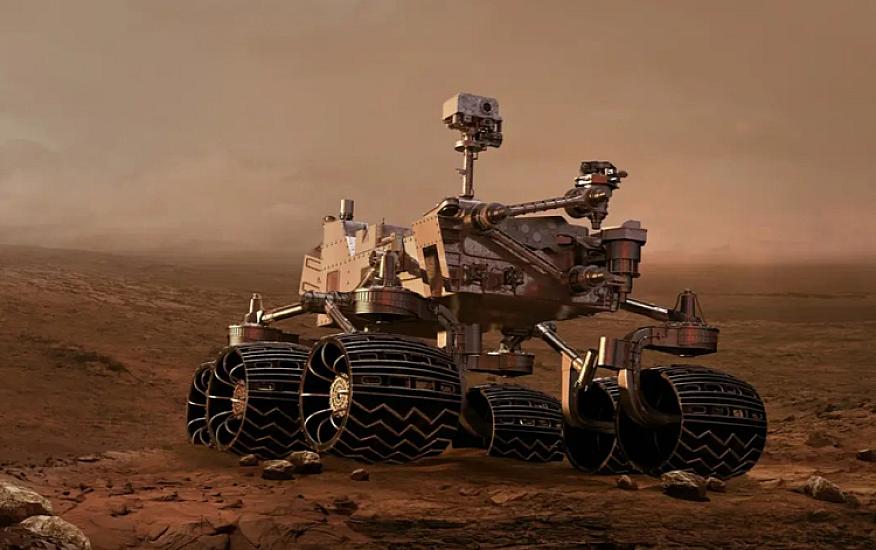
NASA's "Curiosity" rover has discovered organic molecules considered important for the formation of life during its recent research on Mars.
Medianews.az reports that scientists regard this as important evidence that the planet had favorable conditions for life in the past.
In the framework of the research, more than 20 organic molecules were identified. These substances are considered the chemical foundations that play a role in the emergence of life. Among them is a compound called benzothiophene, which is also found in meteorites and asteroids.
Scientists note that such molecules could have formed as a result of natural processes on Mars or could have been transported to the planet via meteorites. Therefore, the findings do not directly prove the existence of life on Mars but strengthen the possibility of such.
According to the research, chemical traces over three billion years old have been preserved on the surface of Mars. Experts believe that at that time, lakes and rivers existed on the planet's surface, which is considered one of the main conditions for life.
Landing in 2012 at Gale Crater, which is considered an ancient lakebed, the "Curiosity" rover has been investigating traces of past life on Mars since then.
Astrobiologist Amy Williams, who participated in the study, stated that the rocks on Mars have preserved the main elements of life and prebiotic chemistry for billions of years. Nonetheless, scientists emphasize that these results do not confirm the existence of life on Mars.
It is reported that to obtain more accurate results, it is necessary to bring rock samples taken from Mars to Earth for laboratory examination.//Qafqazinfo