

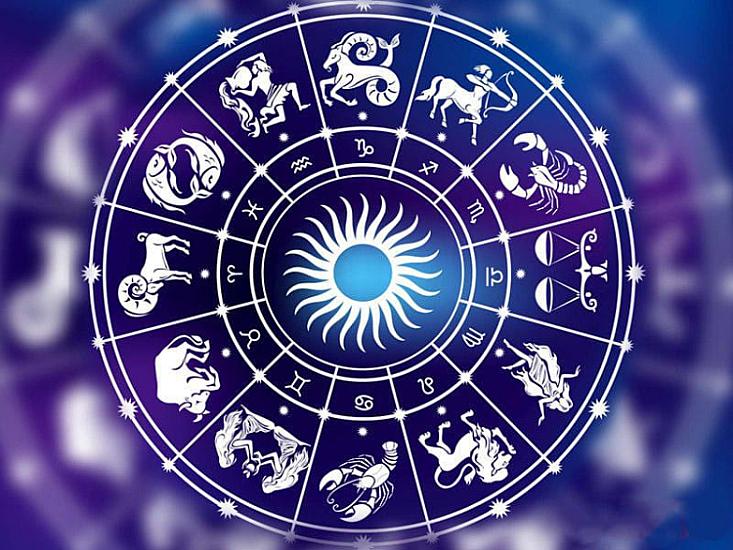

Elshad Miri: “Believing in horoscopes is a pointless and meaningless matter”
The issue of believing in horoscopes and astrology is one of the frequently discussed topics in society. Some theologians consider such beliefs to be religiously incorrect and potentially misleading to people. How acceptable is it from a religious perspective to believe in horoscopes, and how can it affect a person's faith? Does trusting horoscopes change a person's view of fate and predestination?
Regarding this topic, theologian Elshad Miri told Medianews that the main issue in Islam is not just belief but knowledge.
According to him, a person only trusts and believes in what they know:
“Believing without knowledge can lead a person to superstition and delusion. Therefore, believing in horoscopes is pointless and meaningless. Thinking that the arrangement of stars and planets affects people's lives is wrong and absurd. Scientists never make predictions based on horoscopes, and they have no relation to religion. Such beliefs lead people astray. A person who believes in God does not concern themselves with such things.”
Theologian Akram Hasanov also shared extensive thoughts on the topic with our website.
“Actually, horoscopes are not considered an exact science and do not reflect the truth. What is said about horoscopes does not represent scientific truth. It is true that nowadays horoscopes are widely trusted in society; some individuals practically act on the forecasts given by horoscopes, accepting them as true. As a result, people sometimes unknowingly distance themselves from a religious perspective on this matter. Therefore, it is possible to reach some conclusions by examining the sources.
First, let's state a fact: Islam does not deny celestial bodies. On the contrary, the Quran speaks extensively about stars and the heavens. Allah says that We adorned the sky with stars and made them a means for guidance. This meaning is clearly seen in verses such as Al-An'am, verse 97, and An-Nahl, verse 16. That is, there is wisdom in the creation of stars. People find direction from them, understand the order of the universe, and see God's power. This is astronomy, and this science is encouraged in Islam. Today, atheist scientists, being opposed to Islam, also reject matters related to horoscopes and state that they are not true.”
The theologian noted that astrology, that is, claiming that horoscopes affect a person's fate, is a different field:
“Here, a person's life, character, and future are associated with the positions of stars. Nearly all Islamic scholars have taken a clear position on this point. Our Prophet Muhammad (peace be upon him) expressed a very clear attitude towards this matter. In an authentic hadith, he said that whoever learns anything from the stars has taken a portion of witchcraft. This hadith is mentioned in Sunan Abu Dawood in the context of astrology sources. In another hadith, it is stated that whoever goes to a soothsayer or fortune teller and confirms what they say will be guilty of disbelief against what was revealed to Muhammad. This is narrated in Ahmad ibn Hanbal’s Musnad in the hadith collections about divination and soothsaying.”
A. Hasanov emphasized that according to Islam, only Allah knows the unseen:
“The Quran explicitly says, ‘Say, None in the heavens and the earth knows the unseen except Allah.’ This meaning is established in An-Naml, verse 65. Astrology is indirectly claiming to know the unseen. Determining a person's fate, future events, or character based on their birth date has no scientific basis and presents serious religious problems.
Modern science has also produced interesting results on this issue. Astrology does not withstand scientific testing. Numerous studies worldwide have clearly shown that people born under the same zodiac sign have different characters and lives. This field is confused with astronomy, but in reality, astrology is not a science; it is a belief system built on psychological influence. A person subconsciously accepts horoscope forecasts they read and adjusts their behavior accordingly. This is psychological guidance. That is, a person deceives themselves through horoscopes and believes themselves to be correct. However, in doing so, a person distances themselves from God, remains constantly anxious, and never finds peace within themselves. In such cases, their faith diminishes and eventually disappears. If a person reads horoscopes just out of curiosity and does not believe in them or arrange their life accordingly, it is considered just a weakness and a waste of time. This does not harm the person's faith. But if someone truly believes that their fate is determined by horoscopes and their future is set by stars, the problem becomes serious. At this point, their understanding of predestination changes. Because in Islam, fate is written by Allah, and stars cannot write fate.
Allah says in the Quran that there is no event on earth or that happens to you but is recorded in a book before We create it. This meaning is clearly indicated in Al-Hadid, verse 22. That is, a person's fate lies in Allah's knowledge, not in the positions of stars.”
Oghuz Ayvaz