



Will a peace agreement be signed between Azerbaijan and Armenia this year?
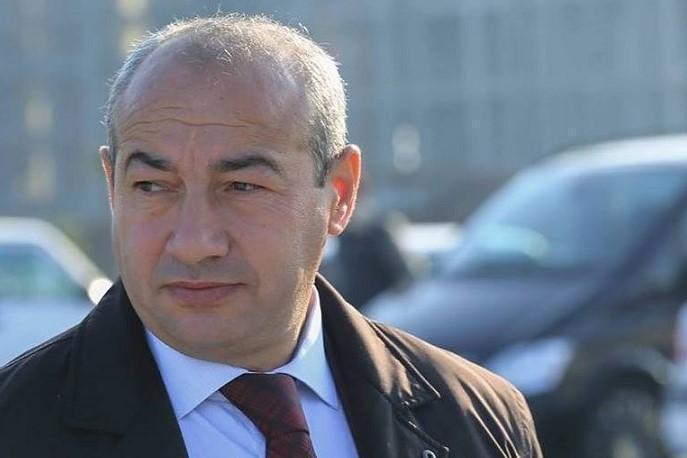
Medianews.az asked this question, and political analyst Xagani Jafarli stated that the conflict between Azerbaijan and Armenia is not the result of the will of the Azerbaijani and Armenian peoples, and similarly, peace does not fully depend on these two peoples: “The intervention of great powers plays an important role. Russia’s intervention has always been in favor of freezing the conflict. The weakening of Russia and the skillful intervention of US President Donald Trump led to the initialing of a peace agreement. If the processes continue in this direction, the peace agreement could be signed in the second half of the year. If Russia's attempt to change the government in Armenia yields results, the signing of the peace agreement may at least be postponed.
My assumption is that Russia's intervention will be insufficient and Nikol Pashinyan will maintain his power in Armenia. At the same time, events in Russia and Iran will further reduce, or perhaps completely eliminate, Moscow and Tehran's influence in the South Caucasus. Since this is the main condition for the establishment of lasting peace in the region, cooperation will deepen regardless of whether the peace agreement is signed.”
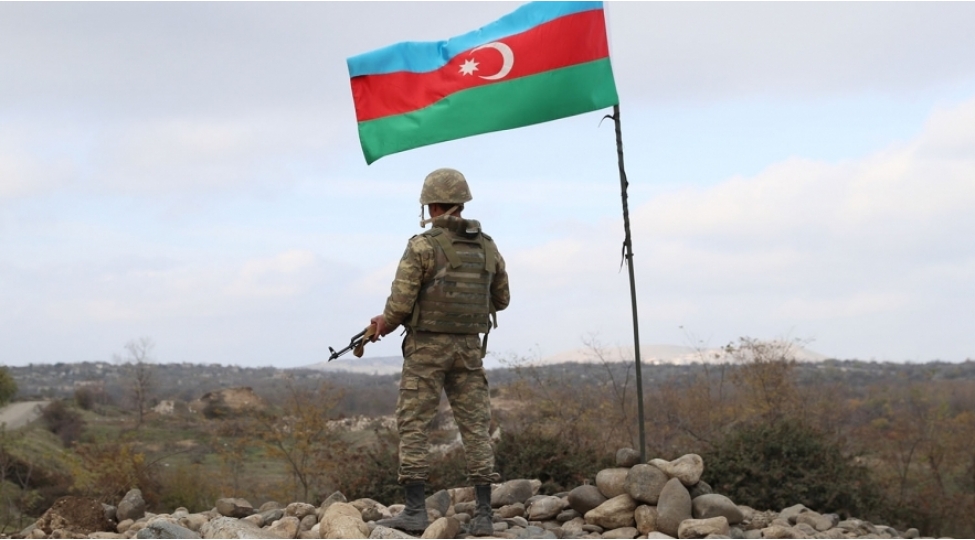
Medianews.az recalls that on December 1, 1989, in a joint session of the Armenian parliament and the so-called “Nagorno-Karabakh National Council,” a decision was made to unite the mountainous part of Karabakh with Armenia.
On August 23, 1990, the Armenian parliament adopted a declaration of independence. The declaration also referenced the December 1, 1989 decision, thereby indirectly recognizing Nagorno-Karabakh as part of Armenian territory.
On September 2, 1991, the Nagorno-Karabakh Armenians declared the region an “independent state,” and on September 21, an independence referendum was held in Armenia. Subsequently, military aggression accelerated, and by May 1994, one-sixth of Azerbaijan was occupied. A ceasefire agreement was signed on May 12.
In the July 5, 1995 referendum, the Constitution of Armenia was adopted. The preamble of the Constitution, renewed in referendums on November 27, 2005, and December 6, 2015, refers to the August 23, 1990 declaration. Azerbaijan has taken this as a basis to demand the revision of the Armenian Constitution.
The war waged by Azerbaijan from September 27 to November 10, 2020, and the post-war negotiations and localized military operations resulted in the full liberation of the Jabrayil, Fuzuli, Zangilan, Gubadli, Aghdam, Kalbajar, and Lachin districts, and partial liberation of the Shusha, Khojavend, Khojaly, and Agdere districts.
On September 19, 2023, Azerbaijan launched a military operation against the Nagorno-Karabakh regime that controlled the cities of Stepanakert (Khankendi), Khojaly, Agdere, and Khojavend, and parts of the Shusha, Khojaly, Khojavend, and Agdere districts. The following day, the regime committed to disarmament; starting September 24, Armenians began a mass exodus from Karabakh, and on September 28, the regime dissolved itself.
On March 13, 2025, Azerbaijan and Armenia agreed on a draft peace and interstate relations treaty.
On August 8 of the same year, the President of Azerbaijan and the Prime Minister of Armenia signed a Joint Declaration in Washington, under the witness of the US President, committing to establishing neighborly relations based on the inviolability of borders and the inadmissibility of the use of force to acquire territory. The foreign ministers of the two countries initialed the draft treaty on establishing peace and interstate relations between Azerbaijan and Armenia. The creation of a corridor connecting the main part of Azerbaijan with the Nakhchivan Autonomous Republic through Armenia (the Zangezur corridor) was also agreed upon in Washington. This project will be implemented under the patronage of the United States.
Nailə Qasımova,
Medianews.az