

The article we presented yesterday, “Does the Armenian mafia in America want Karabakh back?” caused a much greater resonance than expected.
The readers’ reactions and the direction of the discussions showed that the issue is not limited to a single series scene, but is part of a broader and systematic approach.
The expressed opinions, especially the narratives formed within the diaspora environment and their manifestations on cultural platforms, raised additional questions. It was precisely for this reason that the necessity to investigate the topic more deeply arose. This presented article also stems from that need.
Let us repeat once again: In the scene describing the Armenian mafia operating in the USA, the mafia boss openly says during his daughter's wedding speech:

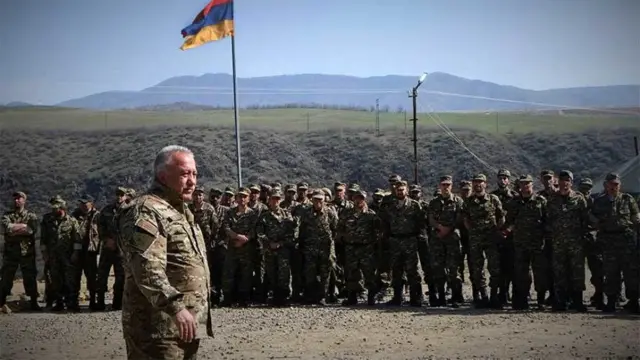
“I am proud to announce that I will be sending my son Tarik to join the Armenian military, to help reclaim our land from Azerbaijan. I am sure he will make us all proud.”
The translation is clear: he states that he will send his son to the Armenian army and that he will help “reclaim” the lands in the hands of Azerbaijan.
Interestingly, Tarik is surprised by his father's statement. It is as if he himself is unaware of such a decision and this speech is unexpected for him as well.
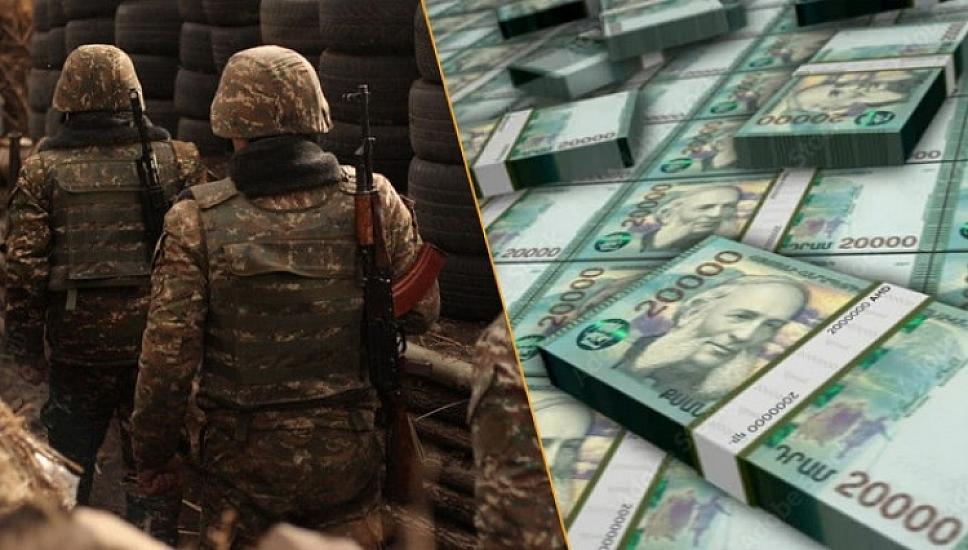
Moreover, the series also presents the plot where the character Arman Morales directs the money gained through criminal activities towards the Armenian army. This further hardens the narrative. In other words, the idea of funds earned through criminal activity being directed to military purposes is clearly romanticized.
“The Cleaning Lady” is an American crime drama produced by Miranda Kwok and shot in 2017 based on Argentina’s “La chica que limpia” series. The series premiered on January 3, 2022, on the Fox channel. This period coincided with a phase where military-political realities were changing in the region. Within this context, the conclusion that the messages voiced in the series are not accidental becomes stronger. At that time, five districts around the former Nagorno-Karabakh were recaptured by the Azerbaijani Army. Therefore, it turns out that the film talks about those five districts, since Armenians still lived in Karabakh then.
It is clear that the scene in “The Cleaning Lady” is not accidental. It reflects an ideological and emotional line formed over years on screen. Cinema here is not merely a means of entertainment. It shapes memory, consolidates positions, and sometimes exerts a stronger impact than reality. This line can also be observed not only in “The Cleaning Lady” but in other films as well.
For example, in “Gates of Heaven” (2016), Karabakh is presented as “land defended” by Armenians, in “The Last Inhabitant” (2016) the tragedy of Armenians is highlighted, in “Spitak” (2018) alongside the earthquake backdrop, political memory is strengthened along with national trauma, and in “Songs of Solomon” (2020) the narrative of national identity and claims is built on historical and religious motifs.

Although explicit political slogans are not voiced in these films, the general background does not change: Karabakh is presented in Armenian memory as “their own land.”
Cinema also forms thought. Especially in conflict zones, cinema often assumes political and ideological functions.
In the Armenian cinema environment, the Karabakh subject has been transmitted to memories within certain frameworks for many years: Karabakh is presented to the audience as “lost homeland,” “unjust war,” “lands that must be returned.”
These narratives are not coincidental. They are used in shaping national identity and political views.
The main carrier of this ideological line is the diaspora environment.
The Armenian Revolutionary Federation – known as Dashnaktsutyun – has long propagated territorial claims against Turkey and Azerbaijan, the idea of “reclaiming,” and building politics based on national trauma.
The diaspora preserves and spreads this ideology through media, cultural projects, films, and series.
The problem is that this ideology conflicts with reality. Today, the official government of Armenia, under Prime Minister Nikol Pashinyan’s leadership, accepts that the Karabakh issue is closed, works towards peace with Azerbaijan, and pursues policies aimed at preventing a new war. It continuously works towards opening borders with Turkey. In other words, the Armenian state is now giving up revanchism. But the diaspora still lives in the past.
History shows that conflicts often begin not with arms but first with ideology. If cinema, media, and culture normalize revanchist thinking and romanticize the idea of “reclaiming,” it creates a dangerous foundation for the future.
Reality has changed.
Borders have changed.
The political line has changed.
But in some circles, thinking has not changed. And that is precisely the problem.
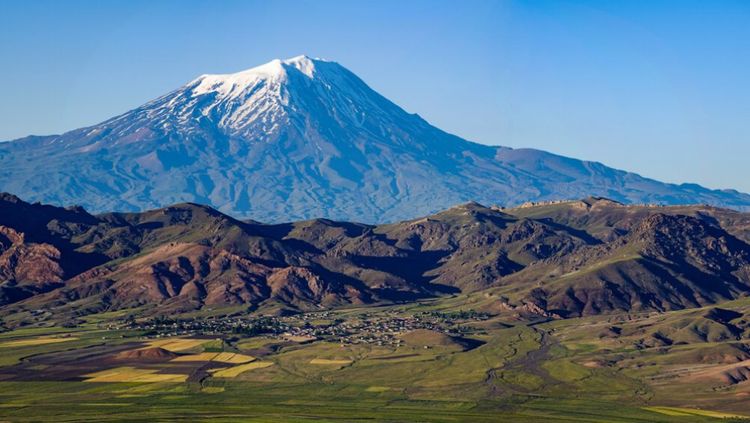
The same line also clearly manifests itself in matters such as “reclaiming historical lands” from Turkey, the political representation of Mount Ararat – Mount Ağrı as a symbol, and culturally sustaining the “Greater Armenia” idea. Another main line relates to the presentation of the 1915 events. In films made about this subject, events are presented one-sidedly, the political context is pushed into the background, and emotional impact is brought to the forefront. These films do not only tell history; they form a contemporary political position.
There is also a reality here: finding finances for such projects, say raising 5-10 million, has never been a problem for the Armenian diaspora. A strong diaspora network in the US, cultural foundations, and extensive lobbying capabilities facilitate keeping such narratives consistently on the agenda through cinema and media.
There are two different worlds at play: official Yerevan pursues pragmatic policies, the diaspora shows an emotional and revanchist approach.
Against the background of these processes, Armenia faces another serious test in the near future — possible elections.
These elections will not only be a struggle for power. They will go down in history as a confrontation between two fundamentally different paths: one side accepting reality and aiming for peace; the other clinging to past claims with a revanchist mindset.
The question is very simple but its answer has vital importance for the region: which path will Armenia choose? If the pragmatic line prevails, the chance for stability in the region will increase and the conflict chapter will be closed. If revanchist forces gain strength, slogans voiced in cinema and the diaspora environment may transform into real politics.
That is why which line wins inside Armenia is extremely important not only for this country but for the entire region.
Elbeyi Hasanli, Baku