
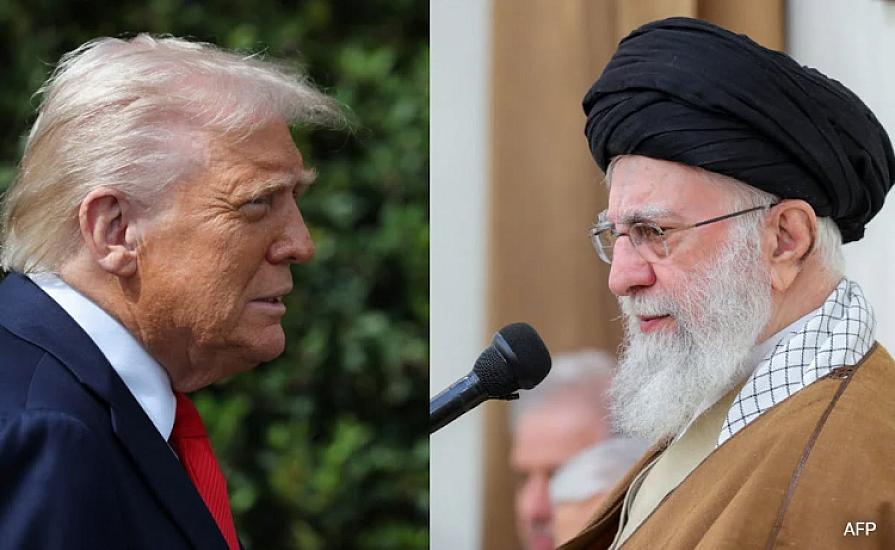
U.S. Secretary of State Marco Rubio said that President Donald Trump is ready to meet with Iran’s Supreme Leader Seyyed Ali Khamenei.
If Iran is also considering such an option, three possible scenarios come to mind for the meeting:
- Donald Trump visits Iran (low probability);
- Ali Khamenei visits the U.S. (impossible option);
- Trump and Khamenei meet in a third country (complex probability).
Although Ali Khamenei traveled abroad when he was president, since becoming the Supreme Leader, he has not gone to another country.
Khamenei is the main decision-maker in foreign policy, but discussions of the priorities he announces are conducted through presidential, diplomatic, and security institutions via visits. Iran’s political and religious worldview of the Supreme Leader is motivated by conditions that preserve Iran’s firmness and its own prestige.
Therefore, the Supreme Leader’s visit is impossible, and on the other hand, the diplomatic protocol does not have an equal rank on the other side either. For this reason, Khamenei’s trip for a meeting is an unreachable prospect from the U.S.
Other reasons:
A) Risks to Khamenei’s security also make his travels impossible.
B) Even hypothetically if a trip were decided, Khamenei’s health would not allow it.
However, the U.S. invitation is a signal to Iran, and it is likely that Tehran will instruct either the president, the foreign minister, or the Supreme National Security Council to negotiate with Washington. The Ministry of Foreign Affairs appears as a more prominent body in the dialogue channel with the U.S., and its participation in several discussions with the U.S. strengthens this impression. In negotiations conducted through the Russian channel, the Supreme National Security Council has a significant role in sharing responsibility. Nonetheless, in talks with the U.S., the institution or political figure that creates the image of "Iran’s savior" can also influence outcomes.
Donald Trump is an exclusive politician who brings surprises to world politics and the international community. From this point of view, even if not directly with Khamenei, he may encourage negotiations with President Masoud Pezeshkian, and this itself is important for Tehran in the current situation.
The transition to a relatively soft regime between the institutional rivalry within the U.S. and Iran strategies is relevant. Probably, intelligence diplomacy will take place in the initial stages between Washington and Tehran.
Aqshin Karimov,
political analyst