

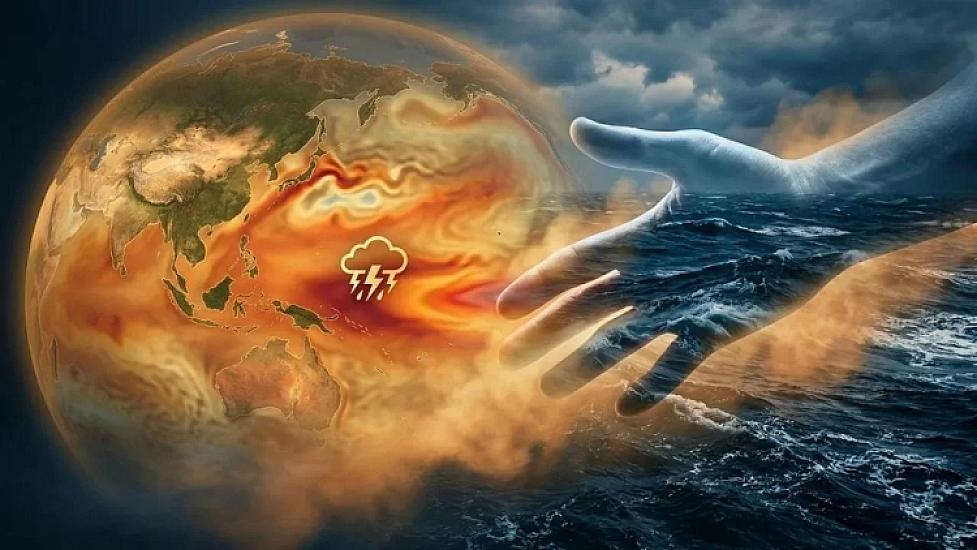

According to climate models published by the US National Oceanic and Atmospheric Administration (NOAA) and the European Centre for Medium-Range Weather Forecasts (ECMWF), the likelihood of a strong “super El Niño” is increasing. Scientists report that if the El Niño event, caused by significant warming of the sea surface in the Pacific Ocean, combines with human-induced climate change, global heat records could be broken again in 2027.
According to forecasts, the temperature in the central part of the equatorial Pacific Ocean is expected to be about 3 degrees higher than normal in the autumn months. A temperature increase exceeding 2 degrees is considered a “Super El Niño,” and in such a case, significant changes in weather conditions could occur worldwide.
How does a 3-degree temperature rise in the Pacific Ocean affect the global weather system? Why do extreme weather events increase specifically during El Niño periods? Is there a direct connection between this phenomenon and global warming? How could the “Super El Niño” affect Azerbaijan? Are record heatwaves expected in the summer months?

Speaking to Medianews.az on this topic, environmental issues expert Rovshan Abbasov stated that El Niño is a natural event occurring in the Pacific Ocean. According to him, this event is characterized by a sharp warming of ocean waters, especially the surface layer, along the western coasts of South America—mainly near Chile and Peru: “During this warming, the cold Chilean and Peruvian currents in the region heat up. These currents contain abundant fish stocks, and fish food is transported by these cold currents. When the waters warm, the food cycle is disrupted and fish stocks sharply decline.
Droughts are observed in Australia and Canada. In the previously dry areas on the west coasts of South America, heavy rains occur. El Niño affects areas as far as Africa and India. In other words, it covers a quite large territory. Overall, it brings intense rains to many dry regions and causes droughts in previously rainy areas. In some places, for example India, the opposite is observed. Rainfall increases even more on India's east coast.”

R. Abbasov emphasized that the direct impact of El Niño on Azerbaijan has not been proven: “Azerbaijan is quite far from this region. There are no scientific studies based on extensive statistical analyses proving a direct impact of El Niño on Azerbaijan. Most of the opinions currently voiced are based on assumptions.
The term “El Niño” translates from Spanish as “boy child” or “Christmas boy.” This name was first used by Chilean fishermen because the unusual warming of ocean waters usually occurred around the Christmas period.
The exact opposite of El Niño is called “La Niña” (“girl child”). This event is accompanied by a sharp cooling of ocean waters and reveals contrary effects on weather conditions compared to those caused by El Niño.”
Nailə Qasımova,
Medianews.az