


The US President Donald Trump administration has taken a new step to increase its military presence in the Middle East.
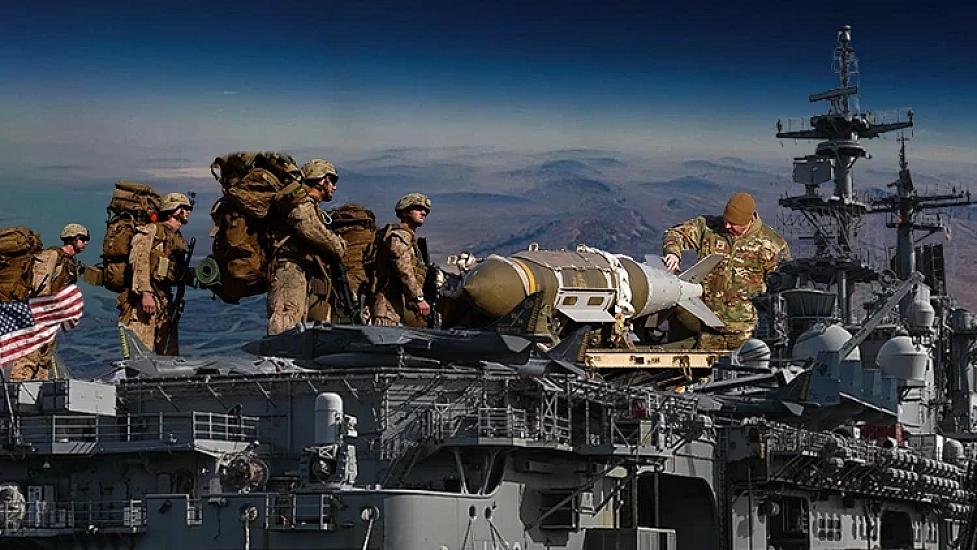
According to Medianews.az, the Pentagon has given orders to send the elite military unit known as the “911 force,” consisting of 2,500 marines, from Japan to the Middle East.
According to the information, these forces may lead possible operations planned by the US ground troops around the Strait of Hormuz. It is stated that the elite unit will play a key role in the operation to reopen the strait under Iran’s control.
The “911 force” is part of the US Navy’s 31st Marine Expeditionary Unit (MEU). Known as a rapid response force, this unit specializes in amphibious operations, air support, and logistics. Located on Okinawa Island in Japan, the unit can operate from floating bases and start operations while stationed near conflict zones.
The US has previously used such units in various military operations, including the invasion of Afghanistan in 2001. Although official Washington has yet to announce details of the new mission, it is likely that the unit's main task will be to restore control over the Strait of Hormuz, considered the gateway to the Persian Gulf.
The Hormuz Crisis
The Strait of Hormuz, through which about one-fifth of the world’s oil supply passes, has become a center of tension due to confrontations starting on February 28. Iran’s decision to close the strait to the US and Israel has virtually halted maritime traffic in the region. This situation has caused serious concern in the global economy and led to a sharp increase in oil prices.
US defense officials have indicated that possible military assault options on islands near the strait are also being considered. There are warnings that Iran may deploy fast boats equipped with mines in the region.
Possibility of Ground Operation
Experts believe that US forces may initiate risky military operations in areas around the strait. The Pentagon is preparing measures against the possibility of Iran mining the strait. The US side is cautious about sending large military vessels to the narrow strait because it fears Iran’s unmanned aerial vehicles and anti-ship missiles.
The deployment of the 31st Marine Expeditionary Unit to the region increases the likelihood of the US starting ground operations.
Composition of the “911 force”
Each MEU unit has a ground battalion consisting of infantry forces, armored vehicles, and artillery units. In addition, an aviation group comprised of helicopters and F-35B fighters, as well as logistics and command personnel, is part of this structure.
The 2,500 marines sent to the Middle East will be placed on the USS Tripoli warship. Typically, USS New Orleans and USS San Diego amphibious transport ships also accompany this vessel. USS Tripoli can carry F-35B fighters, MV-22 Osprey aircraft, and various helicopters and is used for both naval and ground assault operations.
According to expert calculations, the unit can reach the Strait of Hormuz within 10–15 days and will join the USS Gerald R. Ford and USS Abraham Lincoln aircraft carriers already deployed in the region.
Tension continues in the strait
Since the conflict began, Iran has announced that it has closed the Strait of Hormuz to US and Israeli ships and warned that ships passing without permission will be targeted. Since the war started, Iranian forces have targeted at least 18 ships around the Persian Gulf and the strait. According to the United Nations, although some countries’ ships have been allowed passage, overall maritime traffic in the strait has decreased by 97 percent.
Donald Trump has declared that the US has “destroyed most of Iran’s military capabilities.” At the same time, he admitted that Tehran has the ability to send armed unmanned aerial vehicles over the Strait of Hormuz.
Although this US military decision strengthens forces in the Middle East, it creates a gap in the Pacific region. This move has raised concerns that allies such as Taiwan and South Korea may become more vulnerable to potential threats from China and North Korea.
Medianews.az