
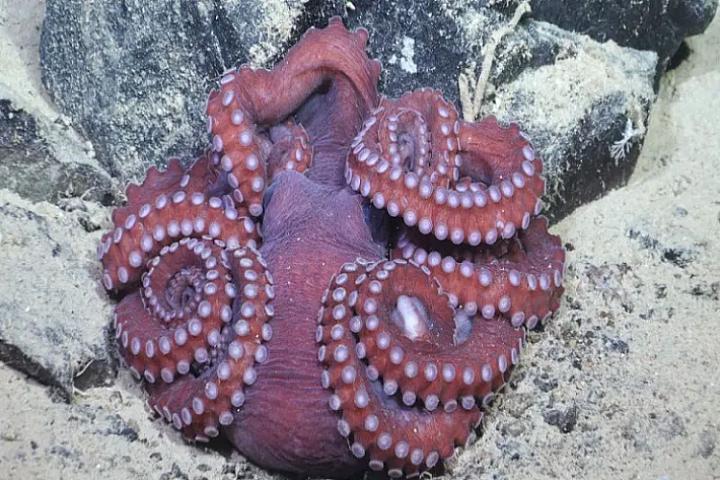
The physiological characteristics of osmiongs have once again amazed scientists. Studies have shown that they can remain active even when the heart's activity briefly weakens or stops, and this does not lead to fatal outcomes for their body.
Lent.az reports, citing foreign media, that according to scientists, the main reason for this resilience is the unusual circulatory system of osmiongs.
Unlike mammals, osmiongs have three hearts: two branchial hearts pass blood through the respiratory organs, and one systemic heart distributes oxygen throughout the body. Even if the central heart temporarily stops functioning, the branchial hearts continue to work and ensure oxygen intake.
The composition of the blood also plays an important role in this process. Osmiongs carry oxygen with a copper-containing hemocyanin. This protein works effectively even at low oxygen levels and can transport oxygen to tissues even under poor blood circulation conditions. As a result, cells can continue aerobic metabolism for a longer period even without full blood circulation.
Another important factor is the decentralization of the nervous system. More than half of the neurons in osmiongs are located in their arms. Because of this, even when blood flow to the brain is limited, essential movements and reactions are preserved. The animal can cling to surfaces, move, and change the position of its body.
Scientists believe that this trait evolved as an adaptation of osmiongs living in environments with unstable oxygen levels, such as coral reefs, tidal pools, or narrow shelters. These mechanisms have also attracted the interest of researchers in the medical field, because they help better understand how tissues tolerate hypoxia and how recovery occurs after temporary blood flow disruption.