

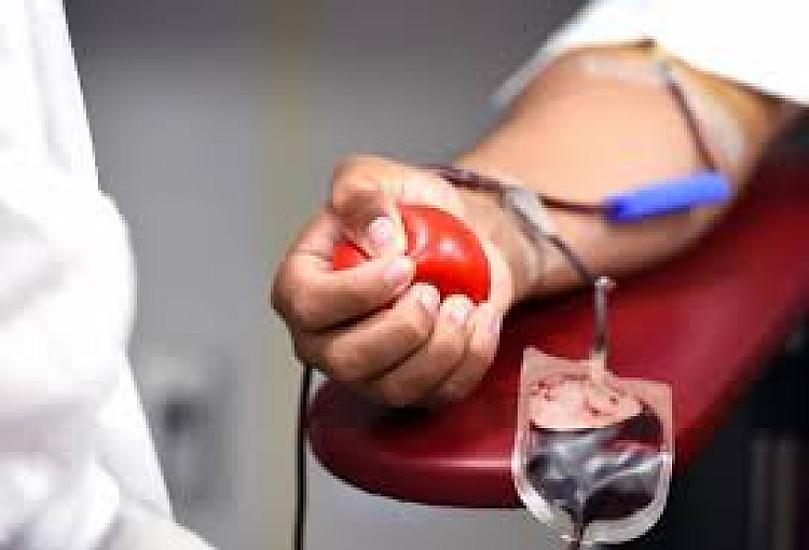

"To be a blood donor, it is important for a person to be healthy and to meet certain medical requirements."
We present the said interview:
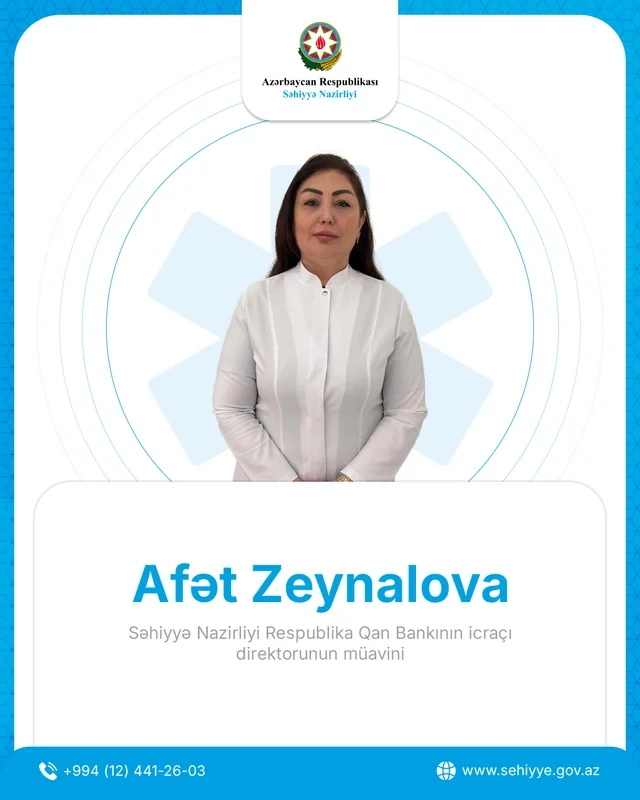
- Ms. Afət, what is the main purpose of establishing World Blood Donor Day and how do you appreciate the dedication of blood donors?
- June 14 - World Blood Donor Day was established to appreciate the invaluable services of voluntary and unpaid blood donors to society, to raise public awareness about the importance of blood donation, and to encourage more people to become donors. The observance of this day also serves to draw attention to the importance of ensuring safe and sufficient blood supplies within health systems.
World Blood Donor Day once again directs people's attention to the fact that every day the lives of thousands of patients are saved thanks to the blood given by donors. For this reason, the number of voluntary donors must always be increased so that society has a continuous and safe blood supply.
The dedication of blood donors deserves special respect. Donors give blood for the health and lives of strangers without expecting any compensation. Their humanitarian act sometimes saves the life of a patient in a critical condition, gives hope to a family, and helps a person return to a healthy life. Since one unit of blood given by a donor can be separated into different components and used to treat several patients, their contribution is considered even more valuable.
Regular donors, in particular, are a great example for society. They help maintain continuous blood supplies, strengthen the sustainability of the health system, and play an important role in saving lives during emergencies. These people are a living embodiment of the values of humanity, social responsibility, and solidarity.
June 14 is not only a day to thank the labor of donors but also a special day that reminds every healthy person of the importance of blood donation. Because the few minutes a person devotes means a new chance at life for another person.
- What is blood donation and what vital importance does it have for society?
- Blood donation is the voluntary giving of blood by a healthy person for the treatment of patients in need. Despite the rapid development of modern medicine, no artificial substitute has yet been found that can fully replace human blood. Therefore, the blood needed by recipients can only be provided by healthy donors.
Donor blood plays a vital role in addressing severe bleeding from major surgeries, traffic accidents, childbirth, and in the treatment of those suffering from thalassemia, hemophilia, and other hereditary blood diseases. Blood donation is not simply a medical procedure, but an important humanitarian activity that ensures the overall health and safety of society.
- Who can be a blood donor?
- To be a blood donor, a person must be healthy and meet certain medical requirements. Generally, individuals between 18 and 65 years of age with satisfactory health can be donors. The donor’s body weight is usually required to be at least 50 kilograms.
Every person who wishes to donate blood undergoes a medical examination first. During this, their blood pressure, pulse, body temperature, hemoglobin level in the blood, and overall health status are checked. If the examination results are normal, the person is permitted to donate.
In some cases, individuals cannot be donors temporarily or permanently: due to flu, cold, infectious diseases, pregnancy, recent childbirth, serious cardiovascular diseases, some blood diseases, severe liver and kidney failure. Temporary restrictions also apply to persons who have consumed alcohol or undergone certain medical procedures.
The donor must provide accurate information about their health and answer all questions from medical personnel sincerely. This is very important for the safety of both donor and recipient.
- How is the safety of donors and recipients ensured?
- The blood donated by one donor can save the lives of several people. Donor blood is divided into three different components:
Red blood cell mass - for blood loss, surgical operations, accidents, thalassemia, anemias;
Platelets - leukemia, chemotherapy, bone marrow diseases, bleeding;
Plasma - burns, liver diseases, hemophilia, shock conditions.
People suffering from serious diseases such as thalassemia, hemophilia, and leukemia regularly need blood and blood components. Donor blood is one of the most vital medical tools to save lives during traffic accidents, natural disasters, and severe bleeding during childbirth.
- Why does regular blood donation play an important role in the sustainable functioning of the health system?
- Regular blood donation is of great importance for the continuous and efficient operation of the health system. The storage time of blood components is limited: red blood cells can be stored for 35-42 days, platelets only for 5 days. Therefore, constant renewal of blood supplies is essential.
Regular donation prevents deficits of blood components, increases preparedness for emergencies, supports the treatment of chronic patients, and each day makes it possible to save the lives of hundreds of people.