
After US President Donald Trump said that new talks with Iran could be held in Pakistan within two days, hopes arose for an agreement between the parties. However, for an agreement to be reached, Iran must give up control over the Strait of Hormuz and the collection of fees from tankers. Without this, there will be neither an agreement nor will the US abandon the blockade of the entrance to the Strait of Hormuz.
Meanwhile, there was a phone conversation between Indian Prime Minister Narendra Modi and US President Donald Trump. During the call, bilateral relations were discussed, as well as an exchange of views on the current situation in the Middle East. The US President's plan regarding the Strait of Hormuz interested the Indian Prime Minister. The leaders emphasized the importance of keeping the Strait of Hormuz open and safe. Solving the problem is of great significance for India. First, India obtains a large part of its oil demand from Iran and the Gulf countries. Second, oil-laden Indian tankers are currently stuck in the Strait of Hormuz.
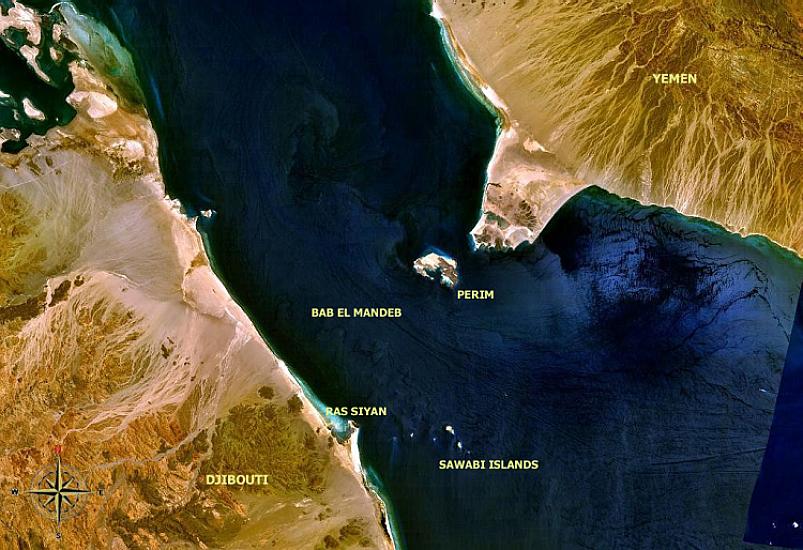
If the problem regarding the Strait of Hormuz is not resolved, tensions will move to the Bab el-Mandeb Strait. This strait is as important for world trade as the Strait of Hormuz. Bab el-Mandeb connects the Red Sea with the Gulf of Aden and plays a significant role in global oil trade. Twenty percent of the world's oil and gas passes through the Bab el-Mandeb Strait. Additionally, there is a network of underwater fiber-optic cables at the bottom of Bab el-Mandeb that carries about 20 percent of the world's internet traffic, and tensions in these waters pose a direct threat to global digital connectivity and financial markets.
If the Houthis in Yemen, who are affiliated with the Iranian regime, take control of the Bab el-Mandeb Strait, it will be a second shock for the world. Closing the Bab el-Mandeb Strait would paralyze maritime transportation between Asia and Europe. It is no coincidence that a few days ago, the speaker of the Iranian parliament, Mohammad Ghalibaf, shared on social networks that a significant portion of the transport of oil, liquefied natural gas, wheat, rice, and fertilizer worldwide passes through the Bab el-Mandeb Strait. In other words, Ghalibaf implied that if Iran's demands are not met, the Bab el-Mandeb Strait will also be controlled through the Houthis. The Houthis are currently in a waiting position. However, they can press the button at any moment. The only way to prevent this is to reach a temporary agreement between Iran and the US.
Elkhan Shahinoglu,
political scientist