

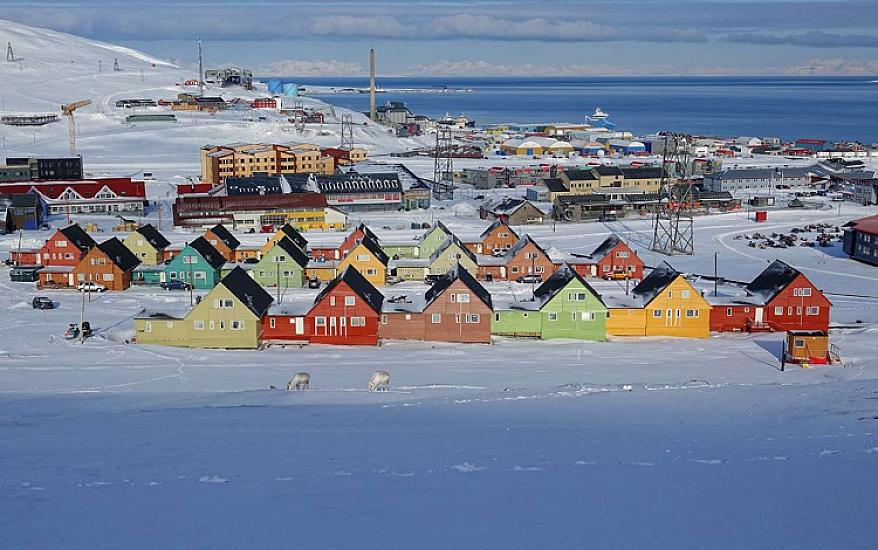

Although it is impossible to postpone the inevitable reality of life, death, there are exceptions where it can be prohibited.
Medianews.az Reports, citing Qafqazinfo, that in the city of Longyearbyen in Norway, one of the coldest places in the world, death is officially banned.
Even patients with terminal illnesses or elderly patients are removed from the city.
In this unusual settlement located in the heart of the Arctic, "dying" has technically been banned since 1950. Although this decision sounds like it came out of a science fiction movie, there is a serious scientific reason behind it. The air in Longyearbyen is so cold that the ground is in a state of "permafrost," and therefore corpses do not decompose.
When remains of those who died during the 1918 Spanish flu pandemic were studied years later, it was found that the virus was still alive due to the permafrost. The city administration banned new burials in the local cemetery to prevent possible epidemics.
Therefore, if a person contracts a terminal illness or shows signs of old age, they are sent by airplane to another area of Norway. People who die there are buried. Thus, Longyearbyen is a refuge intended only for the "living."
The peculiarities of Longyearbyen do not end there. Shoes must be left at the door when entering a hotel, museum, or cafe in the city; this is a tradition from mining periods to prevent coal dust from being brought inside. Anyone who goes outside the city limits must carry a rifle because there are about 2,000 polar bears in the area. Also, the Polar Night lasting 4 months in winter and the Midnight Sun lasting 4 months in summer affect the daily life of the city. To protect the ecosystem and rare bird species, keeping cats is prohibited; residents satisfy their pet needs with dogs.
With its extreme climate and unique rules, Longyearbyen attracts attention as one of the strangest and most different cities in the world.