
China appears silent, but is not out of the game
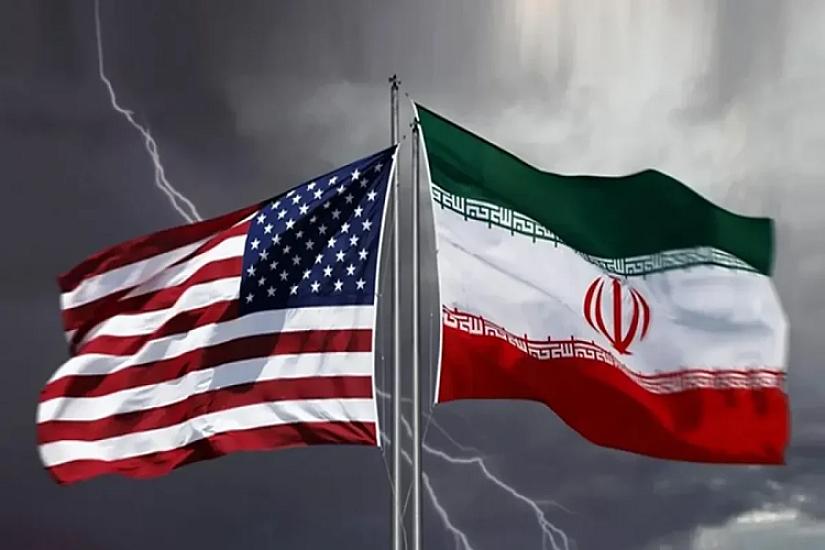
The failure of negotiations between America and Iran shows that a new phase has begun in the Middle East. Diplomacy between the US and Iran has not formally ended. But in reality, the stage is already empty, with a black curtain drawn before it. This phase is one in which diplomacy weakens and military dynamics take the forefront. As long as there is no agreement at the table, the power balance in the field is being rebuilt. The clearest manifestation of this process is the strikes Israel has delivered on Hezbollah positions in Lebanon.
Recent events indicate that Lebanon is no longer a local front. Israel's successive and systematic attacks aim to weaken Hezbollah's infrastructure. Some sources mention that hundreds of facilities have been hit. This is not merely a military operation. This is a strategic blow aimed at Iran's mechanism of influence in the region. Because Hezbollah is one of the main pillars of Tehran’s indirect power system.

At this point, the nature of the confrontation changes. This is no longer just the US-Iran axis. This is a large-scale power struggle carried out across parallel fronts. And a third major actor—China—is indirectly involved in this struggle.
China is not an overt military party in this conflict. However, its role is increasing. Economic ties with Iran, energy cooperation, and potential technological support show that Beijing is not a neutral observer in this confrontation. For China, Iran is not only a partner but also part of the global balance against the US. For this reason, Beijing does not want Iran to be completely weakened. It acts as a balancing party without direct intervention.
This elevates the confrontation to a new level. Now it is not just about a regional war but about indirect competition among global powers. This creates a two-front strategic problem for the US: on one side Iran, and on the other the potential Chinese support backing it.
US President Donald Trump issued an extremely harsh statement about China in his latest remarks. He stated that China supplies weapons support to Iran and that Beijing should immediately stop this activity. Otherwise, it should be ready for confrontation with the US. Trump added that China will face the consequences of these actions.

Such statements, although they seem sudden and emotional on the surface, essentially carry a deeper geopolitical message. The main point to note here is that although the statement is formally related to Iran, the direct target is China. In this context, Iran is becoming more of a battleground for competition among greater powers.
According to Western analysts, this type of rhetoric is not a direct call for war. It is more of a strategic pressure tool. With this message, the US shows China that expanding its sphere of influence in the Middle East will not be accepted. At the same time, it is an attempt to harden positions amid ongoing tensions with Iran.
On the other hand, China-Iran relations have been developing within the framework of economic and technological cooperation for some time now. The issue of military support is not presented as an open and fully proven fact, but in the West these ties are viewed as a potential risk. For this reason, Trump's statement can also be interpreted as a preemptive warning against more likely scenarios.
The most dangerous aspect of this situation is the rhetoric itself. History shows that harsh statements between great powers can sometimes become the starting point of real escalation. This risk is especially high in phases when the parties are testing each other’s “red lines.”
Trump’s statement is not just a political speech. It is a message about the global balance of power. The main question is not Iran. The main question is: to what extent are the US and China ready to expand their spheres of influence in the Middle East, and at what point could this competition turn into an open confrontation?
If this confrontation turns into an open war, the first 72 hours will determine the course of events. The US and Israel will strike Iran’s military and strategic infrastructure, and Iran will respond immediately. In parallel, the Strait of Hormuz will become at risk and global energy markets will be shaken. Then the conflict will expand: Hezbollah, groups in Iraq and Yemen will be activated, and the war will take on a regional character.
However, the most dangerous aspect of this process is neither military power nor technology. The greatest risk is loss of control. The initial phase of the war may be planned, but later phases are managed by reactions. This makes it difficult to prevent escalation.
Within this broad geopolitical picture, Azerbaijan holds a special position. It is not a direct party to this conflict, but it is within its zone of influence. Geographical location and energy resources make Azerbaijan even more vital during this crisis.

From an energy standpoint, the situation could change in Azerbaijan’s favor. As risks increase in the Middle East due to war, Europe will turn to alternative energy sources. This could elevate Azerbaijan’s gas and oil exports to a more strategic level. In other words, Azerbaijan’s role on the global energy map could strengthen.
But this is not only an opportunity. Risks are also increasing in parallel. Having a border with Iran, potential instability in the region, and migration flows may create security challenges for Azerbaijan. Additionally, the rivalry of great powers may intensify intelligence and political pressure factors in the region.
Thus, Azerbaijan will neither be a passive observer nor an active participant in this confrontation. It will act more as a strategic actor maintaining balance and trying to use the changing conditions.
In conclusion, this confrontation is not just a possibility of war. It is a reshaping of the global balance of power. The US is trying to maintain its power, Iran resists, and China quietly balances. The region becomes the main arena for this great game.