
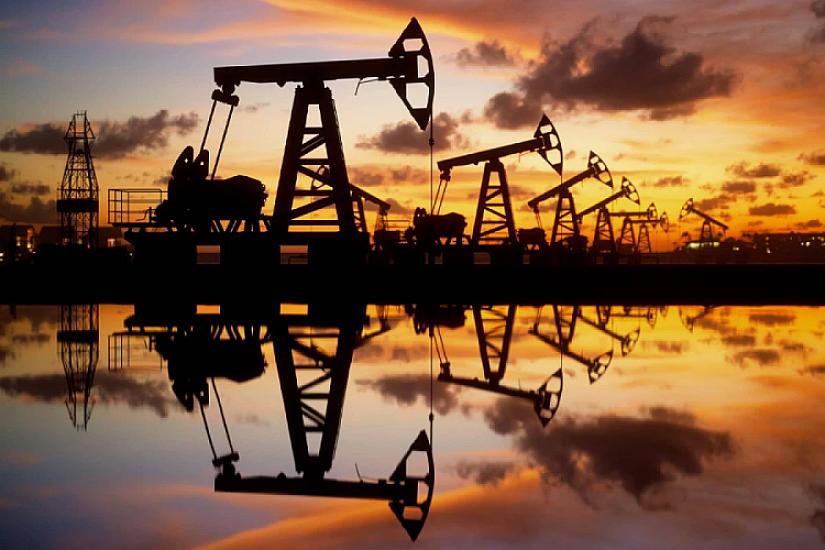

Since June 7, the price of "Brent" crude oil on world exchanges has been continuously declining and is currently sold slightly above $91. Even the military clashes between Iran-Israel and the US-Iran during the last day could not raise these prices. What is the reason?
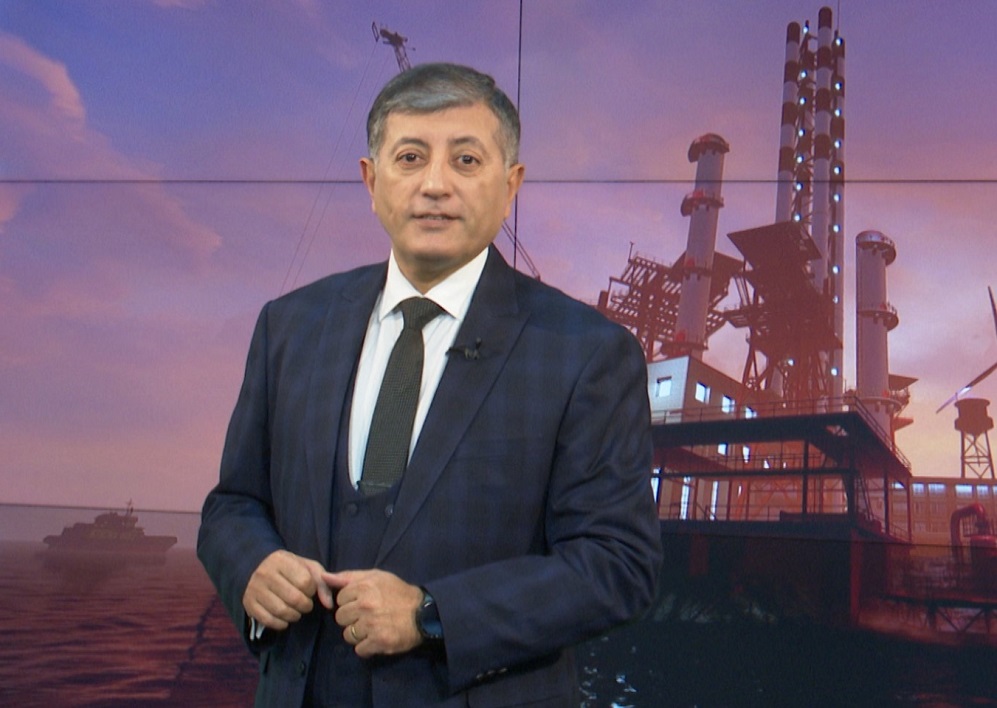
The head of the Oil Research Center, Ilham Shaban, told Medianews.az that indeed the market's reaction seems paradoxical at first glance: “Tensions are rising in the Middle East, the risk of confrontation between the US and Iran remains, but instead of Brent surpassing $100, it is currently trading between $91-92.
The main reason is that the market is now assessing not so much the geopolitical risk itself, but the real physical impact of that risk on supply.
Among the factors affecting the recent downward trend in oil prices is the statement by US officials about the increase in tanker flow passing through the Strait of Hormuz. The key issue for the market is not the rockets Iran launched at Israel, but the daily movement of millions of barrels of oil. If tankers are moving, then pressure on prices also decreases. Recently, the oil infrastructure of the Gulf countries has not faced any pressure.
In addition, since the beginning of June, analysts have noted that oil consumption in several countries, led by China, has fallen below the forecasted level. If consumption weakens, problems in supply do not affect prices as strongly as before.
Moreover, the steps taken under OPEC+ also exert their influence on the market. For the second month now, there has been an agreement within OPEC+ to increase daily production by 188 thousand barrels. This means an additional volume of oil entering the global market. As a result, prices tend to decline even during short-term military clashes instead of rising.”
It should be noted that the OPEC+ coalition will change crude oil daily production quotas starting July 1. According to the decision, Saudi Arabia may set production at 10 million 353 thousand, Russia at 9 million 824 thousand, Iraq at 4 million 378 thousand, Kuwait at 2 million 644 thousand, Kazakhstan at 1 million 608 thousand, Algeria 995 thousand, Oman 831 thousand barrels.
The production limits for the remaining countries are as follows:
Mexico – 1 million 753 thousand barrels
Nigeria – 1 million 500 thousand barrels
Azerbaijan – 551 thousand barrels
Malaysia – 401 thousand barrels
Congo – 277 thousand barrels
Bahrain – 196 thousand barrels
Gabon – 177 thousand barrels
South Sudan – 124 thousand barrels
Brunei – 83 thousand barrels
Equatorial Guinea – 70 thousand barrels
Sudan – 64 thousand barrels.
OPEC includes Equatorial Guinea, Algeria, Iraq, Iran, Congo, Kuwait, Libya, Gabon, Nigeria, Saudi Arabia, Venezuela, while Azerbaijan, Bahrain, Brazil, Brunei, South Sudan, Kazakhstan, Malaysia, Mexico, Oman, Russia, Sudan are considered partners.