
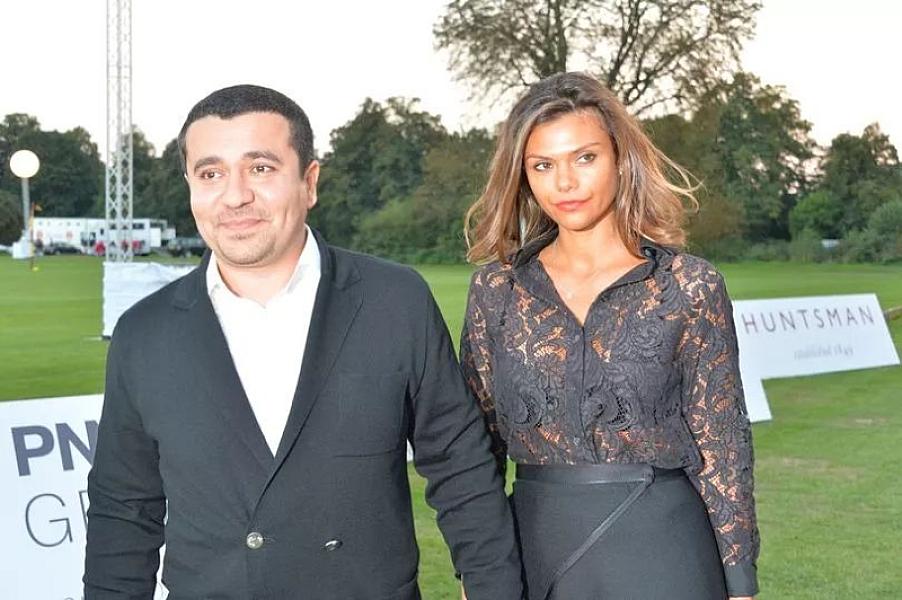
In this edition, HafizTimes.com speaks with London-based businessman Nasib Piriyev, son of Russian-Azerbaijani industrial tycoon Nizami Piriyev. He shares his reflections on values, entrepreneurship, and the future of Azerbaijan’s business landscape.
– You have long been presented by the public as “the son of a wealthy family.” Has carrying this identity given you more advantages, or has it placed more pressure and responsibility on you?
– Like most things in life, it’s a bit of both. Sure, I had certain advantages growing up; my parents were able to send me to study in England, and I never had to worry about basic needs the way many others did in the early 1990s. But the context often gets misunderstood. We, like many families in the post-Soviet space, started from scratch. There was no inherited capital or generational wealth. We only had the ambition and the hunger to build something.
What really shaped me wasn’t money, it was mindset. Our whole family is entrepreneurial to the bone, and that greatly influenced me. Every single Piriyev is doing their own thing – not one of them has gone into government or settled into a corporate career. It’s a family full of risk-takers, traders and founders. Everyone is like an independent business unit.
I was reminded of that recently when I gave a talk at Homerton College in Cambridge – it was a gathering of entrepreneurs and business owners. I shared the story of my very first project, which still makes me smile. I must have been 16, visiting my grandmother in Ganja for the summer. I’d come from Moscow, where I lived at the time, and I spotted this little opportunity: there were no candy or popcorn stands in front of the main school. So I bought one of those giant popcorn machines, which was unheard of in Ganja before! I designed the packaging, sourced the supplies, and with my cousins we set up a little stall opposite Ganja School No. 1. It was a hit… for about a week. Then someone must’ve complained to my grandmother, because she shut it down! That was my first encounter with “regulations.” But the clanky machine survived and lived on in her kitchen. She had popcorn on demand for years. May she rest in peace.
Since then, I’ve done many ventures. Some worked, some didn’t. Regardless of its outcome, I’ve always loved that feeling: turning a novel idea into a real thing. Finding people to believe in it. Navigating the legal mess. Raising money. Launching. Creating jobs. Solving problems. There’s a kind of magic in it. That magic’s kept me hooked my whole life.
At the same time, I’ve always been conscious of the responsibility that comes with the family name. Our clan is spread across the UK, US, Italy, Germany, Russia, Turkey, and, of course, Azerbaijan. Wherever I launch a project – the echo often reaches back to Baku. To have such a connection with my roots is a privilege, but also a pressure. Sometimes our people are supportive, sometimes they’re skeptical. Either way, it’s a reminder that what I do reflects not just on me, but on something larger; everything in life has a ripple effect.
So yes – I was given some advantages. But I believe that the real inheritance, the real privilege, wasn’t capital, but mindset. Growing up in a family where everyone builds, fails, learns, and builds again is invaluable. It’s the type of family trait which will never leave my bloodstream. I wouldn’t trade it for anything.
– Your father, Nizami Piriyev, is one of the key figures in Azerbaijan’s industrial and business history. Which of his principles has had the greatest influence on your life and decisions?
– My father has always been a determined entrepreneur, and a risk-taker in the purest sense. He launched his first cooperative business in the late 1980s, still during Soviet times. Then, almost the moment that the USSR collapsed, he flew to Arkansas of all places and set up our group’s first private company in the United States. That was in 1992 and we were living in Moscow. At a time when most people in our entire region were still figuring out how to run a kiosk, he was building a business across the ocean. He was even given an “Honorary Citizen of Little Rock” award from a then-young and promising governor named Bill Clinton and later became the first official lobbyist of Azerbaijan registered at the White House.
I think this tells you a lot about Nizami Piriyev, and what I’ve learned from him. The instinct to push boundaries. To try something bold, even when no one else sees it yet. I think that’s hardwired into how I operate too. Even though we’ve taken different roads and have very different approaches, the underlying instinct to build, to take risks, and to challenge the norm, is something we both carry. Playing it safe was never really in our nature.
– Are business decisions in your family made collectively, or does each member have their own domain and autonomy?
– Every member of the family has their own business and full freedom to run it. Like in many families, of course, the elders carry influence – especially on personal or family-wide matters. But when it comes to business, we’ve always had our own domains.
Sometimes we come together, especially when the scale or complexity of a project calls for it. For example, my father and I joined forces to build the methanol plant in Baku; a huge undertaking that we started in 2008 and completed in 2014. But that’s more the exception than the rule. Most of the time, we operate independently, and that’s one of the many moral pillars that built my younger years that I hope to implement into the lives of my children.
In fact, my eldest son now works on our sports and entertainment ventures, including 360Sports, but he’s also already launched his own initiatives in the crypto and digital asset space. Every one of my uncles and cousins is doing something different: construction, real estate, logistics, trade. My sister works in the arts and culture world, curating exhibitions and producing video art projects. The spread is wide.
That said, we do consult with each other. We exchange ideas, give feedback and lean on each other’s experiences. But I imagine most families do that to some extent.
We don’t operate like a single structure or a formal group – it’s looser than that, I think. But there’s definitely something holding it together, like invisible wires. We’re all tuned in to the same frequency somehow. I often say: we’re more like a jazz band in a late-night jam session, rather than a classical symphony orchestra. Improvisational, individual, but still in harmony.
– If your family were not so well-known and privileged, who do you think Nasib Piriyev would be today?
– I think I would’ve been a filmmaker. Not a producer on the sidelines, but fully immersed – the kind of filmmaker who gives everything to the story, because nothing else feels as urgent. That’s what cinema meant to me. It still does.
The only time I came close was when I produced Sonuncu, a short feature we made in Azerbaijani, with the ambition of creating something deep, textured and unique. We wanted something still and honest. No postcard shots. Just something that felt true. I was lucky to work with a gifted team, and somehow this small, quiet film travelled far; it won many prestigious festival awards as a first film in Azerbaijani language from Seoul to San Paolo and was selected for the official program in Cannes Film Festival. That moment meant a lot to me. Not because of the attention, but because we’d made something that was artistic and true, in our own language.
But the family business had its own gravity, so I never had the time to give filmmaking the devotion it deserves. When you grow up inside a family enterprise, there’s not much room to disappear into art. You’re always managing, always building or repairing. Filmmaking, especially when it’s real and artistic, doesn’t allow for distractions. It demands full surrender; full commitment from the soul – that’s what I believe it takes to be an artist. So I kept moving forward in a different world, building business ventures instead of stories. But that other path never left me.
If I hadn’t been born into a family with a name, expectations, responsibilities… I think I would’ve chosen to walk the path of an artist. Of a filmmaker, a storyteller. Maybe in another life. Or maybe, who knows, I’ll find my way back to it in this one.
– How has your education and work experience abroad shaped the way you view business models in Azerbaijan?
– Azerbaijan is a unique place. People here have an incredible instinct for opportunity. Even in the absence of strong institutions or economic frameworks, they still find ways to create value. That entrepreneurial spark is something I deeply admire about our culture. It’s a gift. But like any raw talent, it needs structure to grow.
One of the biggest challenges I see in Azerbaijan’s business landscape is the lack of corporate models and systems. There’s a shortage of real corporate culture – the kind that prioritizes governance, processes, accountability, and long-term planning. When I worked in Baku, one of my main goals was to bring that in. We partnered with the International Finance Corporation and the European Bank for Reconstruction and Development to build out governance structures in our companies. We also brought in dozens of international professionals; people with deep experience from Europe, Asia, and the US to work alongside our Azerbaijani teams. It was amazing how fast our local staff learned. Many of them went on to build strong careers, whether in Azerbaijan or abroad.
That experience taught me something: the combination of native Azeri drive and international corporate knowledge is incredibly powerful. It’s not a question of talent, we have that. It’s about building the right environment around the talent that makes it shine.
And that’s where the real gap lies; you can’t have thriving businesses without a healthy ecosystem. Banks, industries, a strong middle class, regulatory support, capital markets are all essential. Right now, that microcosm barely exists in Azerbaijan.
There were signs of that ecosystem starting to form in the late 2000s and early 2010s, when Baku was buzzing with private-sector momentum. You saw new industries, family-led businesses, international ventures… but after the 2015 financial crisis, much of that momentum faded. The private sector shrank. The sense of possibility dimmed.
I still believe Azerbaijan can get back on a development curve. There’s so much potential here. But it will take enormous work and effort from the government, from private enterprises, educators, investors, and the younger generation of business leaders.
– What are your thoughts on the social responsibility of wealthy families in Azerbaijan? Do you believe such families should contribute more actively to the country’s intellectual and social development?
– I believe Azerbaijan already has a strong tradition of sharing and giving. Most prominent families I know engage in charity or philanthropy, often very quietly; without publicity or attention. It’s part of our national DNA, and I think that’s something to be proud of.
Of course, I wish we had more wealthy, independent families in the country, because a stronger private sector naturally leads to broader and deeper social impact. But we also need to be realistic. In a political environment like ours, large-scale philanthropic efforts can be misinterpreted, so I understand why some families prefer to keep a low profile.
That said, I don’t believe social responsibility is just about one-off charity projects. To me, it’s a mindset. It’s an active effort, a guiding principle. It’s about asking: how can we contribute to the cultural and intellectual development of the country, while doing our work?
At PNN Group, we’ve always tried to run our companies with a creative and social side operating in parallel to the commercial one. Even in industrial ventures, we sought to add this dimension. When we built the methanol plant in Baku, part of the site became an open-air sculpture park, using scrap metal left from construction. We invited Azerbaijani sculptors to create fantastical creatures from the materials, turning it into a space of art and imagination inside an industrial complex. Alongside that, we launched a scholarship program for chemistry students – one of many initiatives aimed at nurturing the next generation.
Another unforgettable project was bringing Ennio Morricone to Baku as part of the promotion campaign for our new gourmet food hall, Port Bazar. At first, the late Maestro would only agree to perform with his own orchestra from Italy. I pushed for him to collaborate with the Azerbaijani State Symphony Orchestra – a risk, given they weren’t familiar with his music and he was understandably reluctant. Eventually he agreed, arriving with a small group of core musicians and leading seven intense rehearsals. They worked through pieces like The Good, the Bad and the Ugly, Cinema Paradiso, and Gabriel’s Oboe. The concert that followed was magnificent, and I believe it genuinely raised the artistic standard of our national orchestra.
When we operated a retail group, one of my final projects was the creation of a Kids Mall in Baku. As part of that, we launched the first official Barcelona FC football camp in Azerbaijan – still one of my proudest moments. We brought in coaches from Catalonia and even a few of the club’s former stars. Hundreds of children came to train from all over Azerbaijan, and the energy on the pitch was extraordinary. Our goal was to make it a permanent academy, but circumstances forced us to leave the country before it could take root.
I could go on but I don’t want this interview to look like a promotion of our companies. The point is that we’ve always tried to design each of our businesses with a strong corporate social responsibility agenda. I strive to create integrated platforms for cultural and social good. This ethos still runs deep through everything we do at PNN Group.
The more families in Azerbaijan who embrace this kind of approach to social responsibility, the better. But for that to happen, we need a broader, more diverse private sector. We need more businesses, more industries, more projects. Only then can the private sector really begin to share and shape the society around it.
– Why do you think the entrepreneurial environment in Azerbaijan is still underdeveloped? In your view, what are the main obstacles?
– It’s painful to say this, but the reality is that Azerbaijan still lacks a healthy, independent private sector. That has everything to do with how closely business is tied to politics. This has always been an issue to some extent, but over the last decade, it has become the single biggest obstacle to real economic growth, in my opinion.
In many cases, starting a business or entering a new sector feels unpredictable, not necessarily because of market risk, but because the rules can shift, and informal expectations could emerge. That creates a kind of uncertainty that discourages real investment and innovation. When systems are unclear, people become cautious. And when trust in institutions is low – whether that’s courts, regulators, or even banks – entrepreneurs either stay small, leave the country, or shift focus to informal or speculative activities.
During my time working in Baku, I saw enormous potential in the form of brilliant young professionals, exciting new sectors, and what looked like the beginning of real private sector momentum. We tried to nurture that by building strong corporate cultures, inviting international expertise, and supporting local talent. But to scale that up, you need a whole ecosystem, from education and finance to infrastructure and governance, working in harmony.
I’ve worked in many parts of the world, and I know no country is perfect. Every market has its own complexities. But what separates mature ecosystems is the degree of predictability and fairness; people need to feel that their success depends on effort and vision, not affiliations or informal permissions “from upstairs”.
I remain hopeful. Azerbaijan has all the ingredients: talent, ambition, energy. What’s needed now is the kind of systemic support that gives entrepreneurs the confidence to build without hesitation. When that shift happens, I believe we’ll see a whole new generation of creators and businessmen rise.
– You have mentioned your distrust of Azerbaijani media. In your opinion, what changes would be necessary for a healthier and more reliable relationship between journalism and individuals like yourself?
– First and foremost, journalists have a responsibility to do their homework. Research, preparation, and balance aren’t optional, they are a duty to the reader. Too often, I’ve seen reporting that’s either one-sided or entirely unverified. When that happens repeatedly, trust is lost in the media to the point that it fades from public life altogether.
In Azerbaijan today, much of the media operates under pressure, whether political or commercial. It’s no secret that you can pay to publish something flattering about yourself, or just as easily to damage someone else. That creates a difficult environment for people trying to build serious businesses or reputations. You don’t know whether the next article will reflect facts or favors.
I had a very personal experience with this. In 2015, the Azerbaijani Ministry of Internal Affairs issued a Red Notice against me through Interpol. The allegations were groundless – anyone reading them could see that. Still, the media in Azerbaijan reported it everywhere, immediately, without asking a single question. Later, after I filed a formal complaint, Interpol reviewed the case and the General Assembly revoked the warrant in full. They ruled it invalid and lacking any legal substance. It was a clear and public exoneration, yet not one outlet in Azerbaijan reported it. That’s the kind of distortion we’re dealing with.
Despite this, I’m still hopeful. I’d love to see a new generation of Azerbaijani journalists emerge and learn from the flaws of their predecessors. There’s room for much more investigative journalism. There’s room for honest debate. There’s also space for independent digital platforms that focus on quality instead of alignment.
Of course, this is part of a wider issue. A healthy media landscape depends on real freedom of expression, diversity of viewpoints, and journalists who can work without fear or favor. I do believe that when the media is independent and trusted, it benefits everyone. Healthy relationships are the key to a healthy country, especially the relationship between truth and the media responsible for spreading it.
– The media has often used your family either as a subject of praise or criticism. How do you think this portrayal has distorted the public perception of your true identity?
– That’s a tough one. Still, a very fair question. I will try to answer briefly and without stepping on all the sensitivities. Our family has been active in Azerbaijan’s private sector since the early 1990s. We’ve made investments, built companies, created jobs, and tried to bring international standards to every project we’ve touched. That track record exists, and it speaks for itself.
When the IBA-related crisis unfolded in 2015, the narrative shifted almost overnight. The media stopped reflecting the reality of my work and began framing me through the lens of political and commercial agendas. Complex facts were reduced to sensational headlines. Achievements were overlooked, intentions were misrepresented, and context was stripped away.
The result is that, for many, the public image they were shown was not the person I actually am – it was a distorted portrait shaped by conflict and controversy. In reality, I’m someone who values creating, and contributing, not tearing down or exploiting.
That’s why I’ve often kept my distance from Azerbaijani media. Too often, the version of me they showed wasn’t real. It was a headline, not a human being. The truth is simpler: I’ve spent my life building things of value, creating opportunities, and trying to leave places better than I found them and my identity has never been defined by accusation or praise in media, but by the work I’ve done and the principles I’ve kept.
– What values and perspectives did living and working abroad bring into your life?
– I’ve lived a nomadic life since I was 14, when I left home for boarding school in England. One of the first lessons I learned was simple but lasting: never lose sight of where you come from. Your roots stay with you. They shape how you move through the world, no matter how far you go.
At the same time, I believe deeply in learning from other cultures. The world is more connected than ever, and that’s a great thing to take advantage of. Being able to understand people on their terms, and immerse yourself in their culture, is a skill that’s quite easy to learn, but has proven itself useful to me over the years.
In contrast, growing up in Moscow during the 1990s, I saw how easy it was for young people to fall into dangerous circles. Life doesn’t offer guarantees. It brings pressure, loss, risk – and you can’t avoid these things forever. At some point, you have to look them in the eye. That’s another thing I’ve taken with me: don’t try to build a life around comfort. Learn to carry stress without letting it break you. Once I stopped resisting that idea, I became calmer. It made me clearer in how I handle pressure.
Spending the past 12 years across the UK and Europe gave me a close look at how different worldviews interact – and how difficult it becomes when they don’t. Western logic often clashes with the logic of other regions, ours included. Without understanding the history or mindset of the other side, finding common ground is impossible. That applies in business as much as in politics, because negotiation without context simply doesn’t work.
In today’s world, trust becomes the rarest asset. People talk about contracts and systems, but in practice, things often come down to one’s character. You either have a reputation that people can work with, or you don’t. If you’re known as someone who keeps their word, someone who is disciplined and can look you in the eye – that opens doors. Reputation is everything.
I’ve seen many Azerbaijanis abroad who manage to carry both parts of the equation. We don’t forget where we come from. But we also adapt to new environments and absorb what they have to offer. We face life directly. And we try to build reputations that mean something. That’s the golden balance, and what every businessman should strive for, in my opinion.
– Those who know you describe you as modest and calm. Has this personality trait helped or hindered your path to success?
– Thanks for the compliment – though I’m certainly not always calm, especially when I’m watching football and my favourite team is losing!
As for modesty, I try to teach my sons that moral virtue is the only real metric by which a person should be judged. When I was growing up in Baku in the 80s and early 90s, things were simpler, and status didn’t matter as much. In the schoolyards, on the football pitches and street corners, everyone came from modest families. To earn respect, you had to be quick on your feet, good at sport, funny, brave, loyal to your friends. The strong were expected to protect the weak. That was how we were raised.
It feels like the city has changed. These days, too often, success is measured by something else – this intangible type of status rooted in things like how expensive your car is, how big your bodyguard is, what brand name is pasted on your clothes, and what vacation you show off from your Instagram account. That doesn’t mean basic values have disappeared – I believe most Azeri families still pass on the same deep principles we grew up with – you just don’t see them reflected as clearly in public life. Now, the surface seems to carry more value than the substance.
Maybe that’s just the way the modern world has evolved. But I still think modesty, integrity, and calm under pressure matter more than appearance. That’s how I was raised, and that’s the version of myself I try to carry forward and pass on to my kids.
– What are your reflections on the liberation of Karabakh by the Azerbaijani Armed Forces? Would you like to visit Shusha or other parts of the region? What would that mean to you personally?
– I was in London during those surreal autumn days of 2020 when news of the Karabakh war began to reach us. Like many Azerbaijanis abroad, I experienced those weeks with a strange sense of distance but intensity. Messages from friends, calls from family, photographs, headlines… I wasn’t there in person, but emotionally, I felt every moment.
My roots trace back to Zangilan on my father’s side and Qubadli on my mother’s. For decades, my family – like so many others – carried a quiet sorrow over what had been lost. The liberation of these lands didn’t erase that history, but it gave it resolution. The feelings that followed were difficult to describe: something between relief, pride, and a long-awaited sense of dignity.
The way the operation was planned and executed showed an extraordinary level of discipline and vision. We owe deep respect to the country’s leadership, and even more so to the soldiers and officers who fought, were wounded, or lost their lives. This was a moment that helped shape national identity. A turning point in how we see ourselves and how others see us.
During that time, I felt the need to do something, even from a distance. I remember walking the streets of London during the height of the conflict and encountering protests, banners, slogans targeting Azerbaijan. I responded in the only way I could: through culture. I gave an interview on BBC Radio 4, speaking for over an hour about the deep artistic and musical heritage of Garabagh: the legacy of Shusha, the voices of mugham, the influence of Uzeyir Hajibeyli and Vagif Mustafazadeh. It was a human message, not a political one. A reminder that this region is not just territory, but the soul of our cultural memory. Much of what I said was edited, but the essence remained, and I like to think some listeners in the UK heard something refreshingly new that day.
I last visited Garabagh in 1988. To return now would mean more than I can put into words. My grandfather, Nasib Pasha Oglu Piriyev, is buried in Zangilan. I haven’t visited his grave since I was a child. That’s something I carry with me and something I must do in my lifetime. In Mammadbeyli, School Number 1 is named after him. I would love to visit that school, meet the teachers, and support its development however I can. It feels like a duty, one that I want to do as much as I feel I have to.
The task ahead for Azerbaijan is enormous. Rebuilding Garabagh is about restoring life, dignity, and opportunity to a region that for too long was trapped in a state of absence. But this work is not a burden, that’s a national task. It’s also something that fills my heart with optimism. These are good thoughts.
– What is the most impactful book you’ve read recently? What idea or message from that book left a lasting impression on your worldview?
– Because of my academic background in media and film production, every now and then, I return to fiction – not just to read, but to write as well. I work on stories, scripts, fragments of dialogue, unfinished scenes that live in notebooks or corners of my laptop. It’s not a profession, just something that doesn’t go away. It’s a way to connect with my younger self and the creativity which still lingers in my soul, and that I like to think has passed down to my children. I read widely when I’m in that headspace. Recently, I went back to a book I hadn’t touched since I was a teenager: The Trial, by Franz Kafka.
It’s strange how some books grow heavier as you get older. The Trial is one of them. It’s a book about a man who wakes up to find himself arrested, without knowing why. No charges are ever made clear. No answers are given. A process begins – vague, cold, abstract – and it consumes him. The machinery of the system is relentless, yet no one inside it can fully explain how it works. There’s no villain. Just a structure that doesn’t care.
I read it now through different eyes. Not as a student, but as someone who has dealt with those very same systems, institutions and the coldness of them all. Interestingly, the story doesn’t seem so surreal to me anymore… It seems deeply familiar. The quiet violence of bureaucracy. The way your name can be dragged through a process that no one takes responsibility for. The loneliness that comes from trying to fight back, logically, while the system just keeps moving. I realize that it was never about him being arrested, but about what his arrest represents; the unfairness and the disregard of the cold systems we’ve allowed to govern us.
What also struck me is the fact that Kafka never finished The Trial. Like much of his work, it was published only after his death. And yet, it still speaks louder than most books written today. It’s incomplete, but entirely true.
I’m now considering adapting it for the screen. The last major attempt was in the 1960s, directed by the genius Orson Welles. I think the time is right for a modern version, one that reflects the systems we live under today, and how easy it is for people to lose their voice inside them. It would be a challenging project, but one I’d love to explore – as I mentioned, the passion for filmmaking hasn’t left my soul, and neither has the passion for literature.
– What are your future plans? In your opinion, which sectors will be most promising in the coming years? What advice would you give to young people in Azerbaijan in this regard?
– These days, I’m fully focused on the technology sector. We’re working hard to build something new, something that has the potential to shape how people live, work, and connect. The pace of technological progress right now is astonishing. Artificial intelligence, automation, new interfaces – they’re changing everything. Every industry is being reshaped, and every business model that once seemed irreplaceable is being questioned or improved.
I’m fortunate to work with a group of incredibly talented people. Together, we’re building a series of direct-to-consumer platforms across different sectors; from healthcare to content, to digital finance. These projects take up most of my time now. Like any passion of mine, I find them challenging but deeply rewarding.
Traditionally, our group has operated in three core industries: energy, finance, and technology, so I can speak about them from experience. The energy sector, particularly large-scale projects like methanol or waste-to-energy, requires major infrastructure investment. These are complex ventures with political dimensions, as energy often intersects with national security. The risks here are high.
Finance and capital markets, on the other hand, remain volatile. They’re sensitive to global events, and often difficult for new players to enter. It’s a closed, structured world, with high barriers and many gatekeepers.
That’s why I believe the best opportunities today lie in tech. With some starting budget and the right team, it’s possible to build something that scales globally. The tech sector rewards creativity and execution, not connections or access to resources. It’s still one of the few playing fields where hard work can beat privilege.
My advice to young people in Azerbaijan is simple: don’t limit yourselves. Learn from the best sources in the world. There are endless online courses, global lectures, podcasts, communities, and tools. Most of them are free. You can learn anything, from anywhere. Don’t let outdated institutions hold you back. Most of the people teaching you in the local university today haven’t updated their thinking in 30 years. Focus on growing your mind, expanding your perspective, and building your skills.
The world is no longer limited by geography. Or language. Your peers, competitors, and collaborators are everywhere. If you focus on developing the right skills and mindset, there’s no reason you can’t build something important – whether you’re based in Baku, Ganja, Khankendi or anywhere else.
So, don’t think you are limited by your surroundings or where you’re raised. In the modern world, you aren’t. In terms of culture, keep in touch with your roots. But in terms of knowledge, career, technology, tools, connections – explore. Use the benefits of a connected world. The courage to use the tools beyond your homeland is what makes successful people. Build something you want to work for. And stay humble.
Interviewed by Hafiz Ahmadov