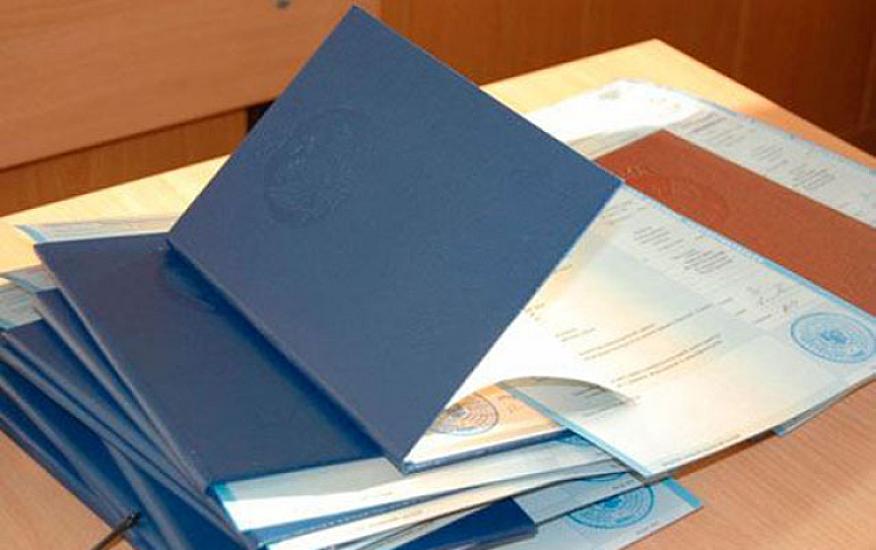
The press writes that the era of paper diplomas is over. All educational documents of the country (diplomas, certificates, etc.) will only be issued in digital form.
What is the electronic version of the diploma? Why do universities worldwide use it? We want to provide information about this.
- The impact of issuing diplomas in electronic version on education
Electronic diplomas allow clarifying the essence of education, mechanisms of legitimacy, and issues related to measuring human capital. The matter is not just the “digitalization of paper diplomas,” but the reconstruction of the education–labor–skill chain.
This will create an opportunity for legitimacy and transparency. Electronic diplomas minimize forgery, allowing instant verification of the diploma issuance date, program, and accreditation. This forces universities to compete based on real quality, not mere formality. In the Azerbaijani context, this can particularly weaken the position of universities that “issue diplomas but do not provide knowledge” (i.e., 80%), and can give impetus to transforming accreditation into a real mechanism.
This change will increase the accountability of universities. Electronic diplomas are not just “graduation documents.” An electronic diploma is part of the educational record (history). This means that the content of programs, teaching staff, and evaluation system will be more open to audit and comparison.
- Electronic diplomas may cause several systemic changes in Azerbaijani education
This change enables moving from centralized control to data-driven management. A database of electronic diplomas can answer questions such as how many people graduate in each specialty, how graduates fare in the labor market, which university creates real value. This allows planning based on empirical data rather than on paper.
It becomes possible to evaluate universities “not by name but by outcome.” If the system is properly established, the university brand rather than the graduate’s skill and labor market success can become the main criterion. This could be a very serious paradigm shift for Azerbaijan.
- Electronic diplomas will also change the hiring and personnel selection processes
This will enable fast and objective verification. An employer can check the authenticity of the diploma within seconds and receive transparent information about the specialty, program, language of instruction, and form of education. This reduces subjectivity in HR processes, narrowing opportunities for “connections” and “paper qualifications.”
This provides an opportunity for a shift from diploma to skill. The electronic system allows not only diplomas but also micro-certificates, modules, projects, portfolios to be presented within the same ecosystem. In this case, the employer will no longer ask, “Where did you study?” but rather “What skills do you have and how do you prove it?”
- The concept of a diploma will change in the future
The traditional diploma model is issued once, does not change for a long time, and expresses not knowledge but status. The future diploma model will be a dynamic learning passport, with skills periodically updated, enriched with micro-qualifications, reflecting lifelong education. This creates new concepts in the global educational space and labor market. Exact equivalents of these concepts do not yet exist here: they form around ideas such as micro-credentials, digital badges, skill passports (which can be translated as micro-certificates, digital badges, skill passports).
- Is there a need for diplomas at all?
There is a need not for diplomas but for reliable verification mechanisms. What is the diploma needed for? It is needed for initial filtering, to ensure minimum standards in certain professions (doctor, engineer, teacher, etc.), and for legal and institutional legitimacy. But the diploma alone is not yet sufficient. The diploma is not enough to measure real skills, demonstrate adaptability and problem-solving, or prove compliance with rapidly changing technologies.
- Main risks and opportunities of electronic diplomas for Azerbaijan
There can be some risks in this change: implementing electronic diplomas merely as a technical innovation, digitizing old content. At the same time, some opportunities emerge. Electronic diplomas can become a tool for substantive evaluation, real integration with the labor market, and measurement of education quality.
If electronic diplomas will be only PDFs of paper diplomas (which is very likely here, just as ordinary textbooks were replaced by their PDF versions, which were not considered electronic textbooks), then nothing will change. If it will be different, if it will be a mirror of skills and learning history — it can be useful for Azerbaijani education.
Ilham Ahmadov,
Candidate of Pedagogical Sciences, Associate Professor