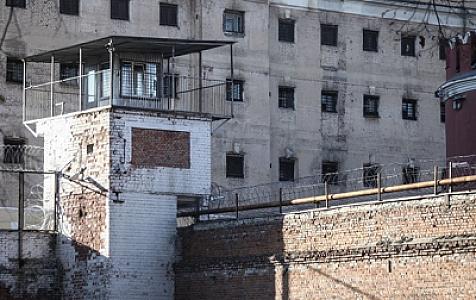
President Ilham Aliyev has proposed an initiative to announce an amnesty on the occasion of the "Year of Constitution and Sovereignty."
This amnesty act will be the largest in terms of the number of individuals to whom it will apply, including those who will be released from imprisonment. It is expected that the amnesty act will cover more than 20,000 individuals in total. Of these, more than 5,000 convicts will be released from imprisonment sentences, the sentences of over 3,000 other convicted persons will be reduced, more than 7,000 convicts will be released from restriction of liberty sentences, nearly 4,000 convicts will be released from other sentences not related to imprisonment or from conditionally applied sentences, and more than a thousand individuals will be absolved of criminal responsibility.
Undoubtedly, amnesty is a humanistic act of the state. However, unlike pardon, which has an individual character, amnesty has a mass character and is determined not by specific names but according to the type of crime, the length of the sentence, and social status.
Inevitably, the question arises: How will the early release of thousands of convicts and the exemption of thousands of people from criminal responsibility affect the criminogenic situation in the country? Do such humanistic acts further stimulate the sense of reform in people, or might they also lead to repeat offenses? More than 10 amnesties have been granted during the independence period of Azerbaijan. What does past experience show? Have past amnesties had a more positive or negative effect on the criminogenic situation?
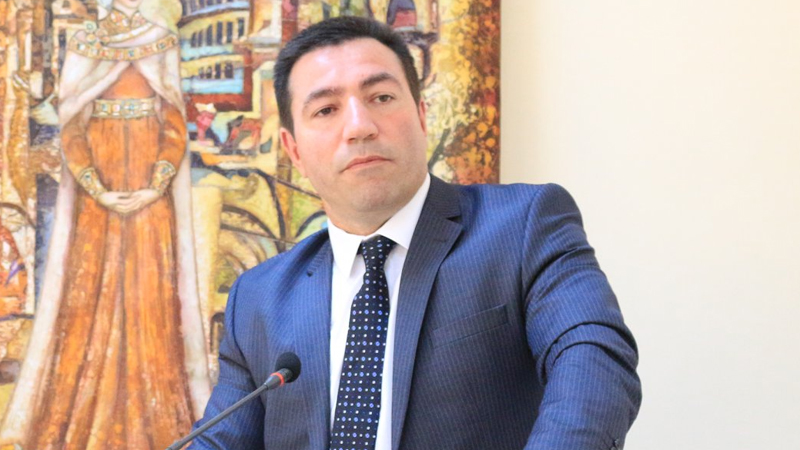
Uzeyir Shafiyev, PhD in Sociology, answering Medianews.az's questions on the topic, first recalled that several extensive amnesties have been implemented in our country so far: "Alongside this, with the initiative of our President, a number of institutional reforms are being carried out legally aimed at humanizing punishment, the rehabilitation of offenders, and their reintegration into society. The establishment of the Probation Service is an example of this. This year's expected amnesty will be very broad. We are talking about pardoning more than 20,000 individuals. More than 5,000 of them are persons sentenced to imprisonment. That means that more than 5,000 prisoners will be released. This should concern us even more. We need to think about their reintegration into society, social adaptation, and finding a place in the labor market. Presumably, work is being done in penitentiary institutions on this matter, and measures related to their psychological rehabilitation are being implemented."
The sociologist noted that serious methods should be applied to ensure that upon release, prisoners are not stigmatized in their families, close circles, or society as a whole, meaning they should not be labeled: "For example, before release, labor fairs should be organized in penitentiary institutions to allow them to find jobs on time and start working immediately upon release. This can make a serious contribution to their adaptation and integration into their families and society. Also, it would prevent their re-offending. In general, very thorough and quality reform efforts should be carried out so that when prisoners return to society, they do not experience moral-psychological or social trauma. For this, joint work within the framework of corporate social responsibility should be done among society, the families of the prisoners, and the penitentiary institutions."
Looking at the biographies of convicts, we see that theft, robbery, fraud, banditry, hooliganism, as well as crimes such as the sale and purchase of narcotic substances occupy a considerable place. To prevent those responsible for these crimes from committing offenses after being pardoned, first of all, we must succeed in properly rehabilitating them. Their professional skills should be developed in penitentiary institutions. This is a very serious matter. Work is being done in this direction, but quality indicators need to be further improved. The freedom of more than 5,000 convicts should not cause difficulties for society. The mechanism for regulating such issues must be triggered before they are released. I believe social messages can be conveyed to families and society for this purpose. At the same time, exemplary individuals among former convicts can be presented. For example, individuals who were formerly imprisoned but now contribute to society and the state can be shown."
The President's amnesty initiative is a very humanistic step. It is an initiative contributing to harmonious relations between the state and citizens. We believe that those included in the amnesty have completed their rehabilitation and are ready to return to a normal life. It would be very good if they also underwent psychodiagnostic tests upon release."

Shamsaddin Aliyev, chairman of the "Support to Police" Public Union, retired colonel and lawyer, told Medianews.az that since Azerbaijan restored state independence, tens of thousands of people have been released early from liability due to amnesty and pardon decisions: "Among them, there have been cases where people committed repeat offenses after a certain period, sometimes a very short period, after being released. Of course, such cases cannot fail to cause public concern. But let us not forget that the security of Azerbaijani citizens is a priority issue for state institutions. The criminogenic situation is under control. Approximately 90 percent of around 30-32 thousand crimes committed annually are solved. In the Soviet period, this figure was 65 percent."
Shamsaddin Aliyev believes that despite some exceptions, humanistic acts such as amnesty and pardon further stimulate the rehabilitation of the majority of those released: "If the primary purpose of punishment is to restore social justice, then preventing possible repeat offenses and rehabilitating the person come next. In other words, punishment should lead to the reform of the individual. Humanistic steps such as amnesty and pardon serve this and play a role in the rehabilitation of individuals.
Annually, about 2-5 thousand of the 30-32 thousand crimes are committed by persons with prior convictions. This shows that some individuals are irreformable. At the same time, economic and social problems, such as unemployment and material needs, play a significant role in causing such crimes. Therefore, the employment issue of former convicts should be studied in advance, and timely measures should be taken. Some may not have a place to live when released. Where will such people stay and with whom? Suppose one was married at the time of detention but is now divorced; the person may not return home upon release. This can push them to commit crime again. Therefore, such issues should be under the control of relevant authorities.
It is absolutely necessary to ensure self-employment so that former prisoners do not become problematic individuals for society. The social adaptation of former convicts is very important for maintaining public stability.
"Just punishment is when a person is not humiliated and knows with certainty that the punishment was given according to their deed," said the ancient Greek philosopher Aristotle. Another ancient Greek philosopher, Plato, said that punishment should be applied not for revenge but for justice and rehabilitation. Thanks to our President's humanistic initiative, those soon to be released from liability should know that the punishment assigned to them was a deserved punishment and that their forgiveness expresses hope and faith in their reform; they should justify this trust, blend into society as fully-fledged citizens, and step into a disciplined life."
Nailə Qasımova,
Medianews.az